
Custom Enamel Lapel Pins: Soft and Imitation Hard Enamel, Made In-House
Two enamel grades, soft and imitation hard, are available across our custom lapel pins range and run on the same production line in our own plant. The two are routinely confused in the trade, and buyers often find it difficult to tell them apart. This page explains the differences, shows the price basis behind each figure, and covers orders starting from 100 pieces.
Soft Enamel vs Imitation Hard Enamel: What Actually Differs
Choosing a grade comes down to one question. Do you want a surface with depth, or a surface so flat that a finger slides across it. The first is soft enamel. The second is imitation hard enamel. Both run on our own line, and both start at 100 pieces.
Table 1. The two grades side by side
|
Item |
Soft enamel |
Imitation hard enamel |
|
Surface |
Color sits in the recesses, metal lines stand proud |
Ground flat and level with the metal lines |
|
Feel |
Clear relief, the pattern can be felt |
Flat, no resistance under a finger |
|
Wear |
Enamel is exposed and dulls with long rubbing |
Surface is level with the metal, wears better |
|
Unit cost |
Baseline |
One step up, two extra operations |
|
Lead time |
Baseline |
Two extra operations, slightly longer per design, days confirmed by quantity and plating |
|
Minimum color space |
0.3 mm |
0.5 mm |
|
Metal line width |
0.2 mm minimum, identical on both |
0.2 mm minimum, identical on both |
|
Suits |
Distinct lines, clean color blocks, lettering |
Large color areas, simple lines, clean logos |
|
Typical use |
Race handouts, clubs, event commemoratives |
Uniformed services, daily wear, institutional identity |
Pin or badge, the grade works the same way
Both words describe a piece worn on clothing, and both run the two grades described above. What separates a pin from a badge is how it is worn and who wears it, which is set out on custom badges.
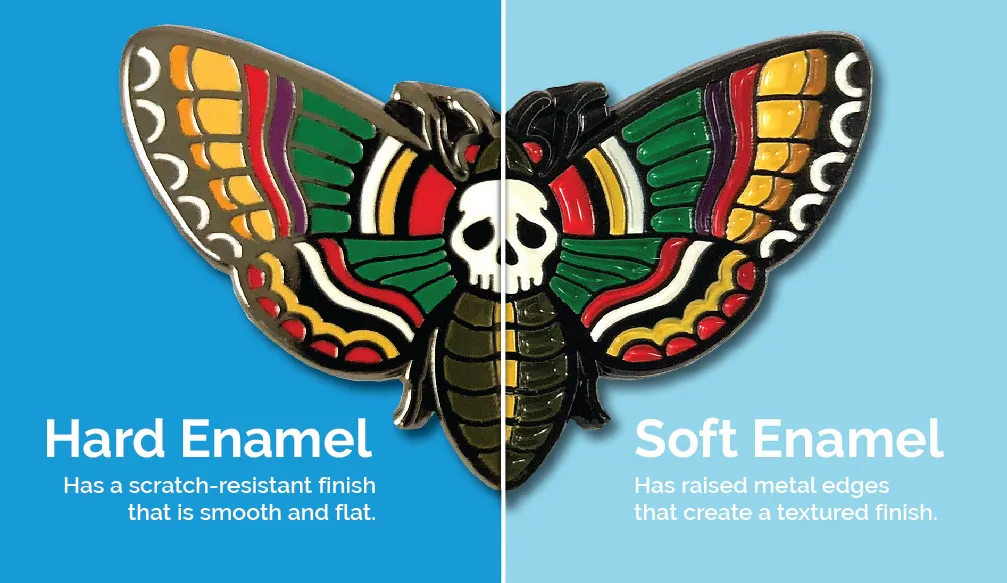
What the trade calls these two grades
The phrase hard enamel, used in a production context, almost always means imitation hard enamel, called Epola in the US trade. The piece is filled with color, baked, ground flat and polished. The material is a resin or an enamel paint, not a fired glass. The smooth ground surface most buyers are picturing is this grade. We make it, on our own line, and it is the grade behind every price on this page.
True hard enamel, cloisonné, is a different process. It is fired repeatedly at 750 to 850°C with a natural mineral enamel, filled in several passes, and fired again after each one. The cost is several times higher. We do not make it.
One fact you can check for yourself
In published price tables, the hard enamel or cloisonné grade usually costs only a few percentage points more than soft enamel. That gap matches a two-operation difference. It does not match a firing process that runs at 750°C and above. So the hard enamel you see elsewhere is very likely the grade described above. The difference is whether anyone said so.
About transparent enamel
It is not a third grade. It is a fill method inside soft enamel, and it belongs to the materials and finishes page rather than this one.
namel Lapel Pin Options: Shape, Size, Color, Plating and Backing
Six options, each stated with its boundary. Check your drawing against them and you will know what is possible before you ask.
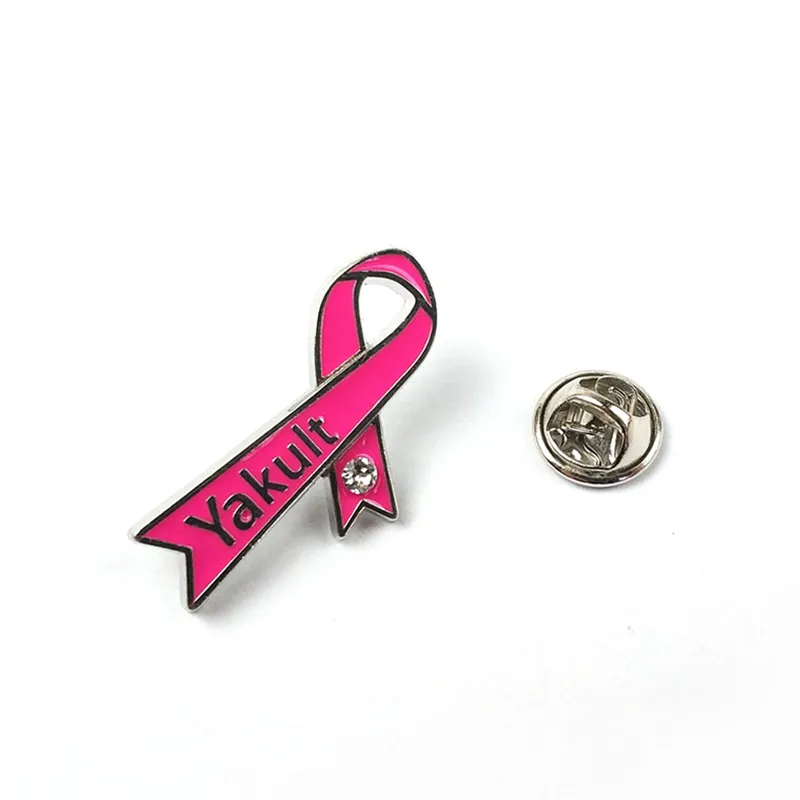
Shape, size and thickness
Custom shapes can follow your logo, character, crest or lettering. Standard sizes are 19, 25 and 32 mm, with 15 to 60 mm available for most designs. Smaller designs may need an artwork review before quoting.
Standard thickness is 1.2 or 1.5 mm, while imitation hard enamel may require a thicker body. Minimum hole size is 2 mm. Size is measured by the longest side of the finished design and quoted on the same basis.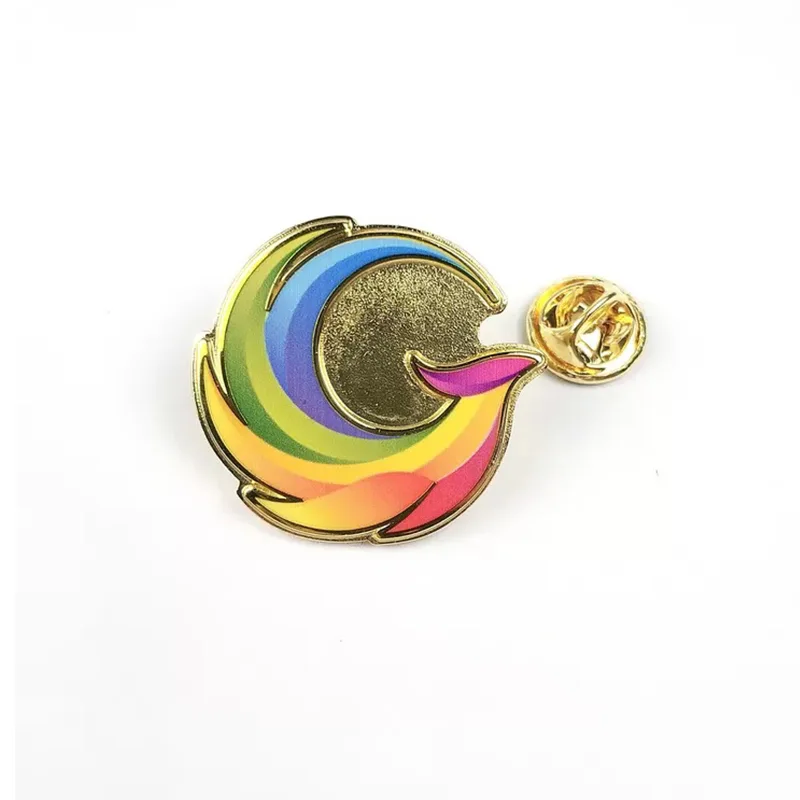
Color and Pantone matching
Color numbers are confirmed in writing before filling, not agreed over the phone. Grinding removes a hazy surface layer on imitation hard enamel and lifts the color slightly. We flag that shift in advance and it shows on the approval proof.
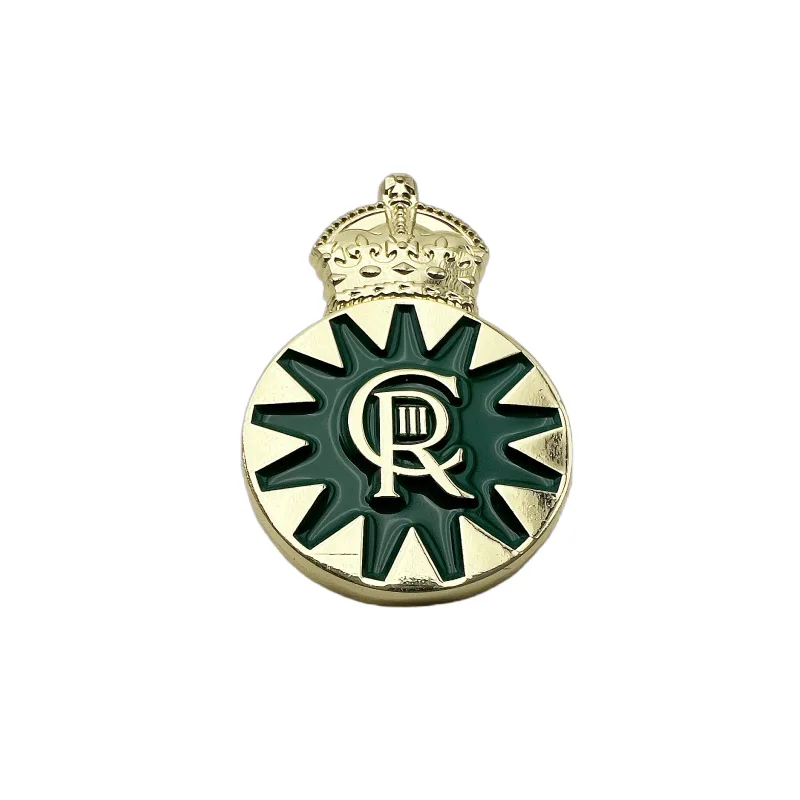
Plating and surface finish
Plating follows three combination rules: shiny with shiny, antique with antique, plating with color spray. Write the full plating name on the order. Matt silver and silver are two different finishes, and a short name on a purchase order is a remake.

Backing types
Butterfly clutch at 11 mm standard, rubber clutch, safety pin, magnet, and screw-and-nut for high-value badges where removal matters. Choose by how the pin will be worn. A uniform worn daily takes a butterfly clutch or a screw fitting. A garment that must not be pierced takes a magnet.
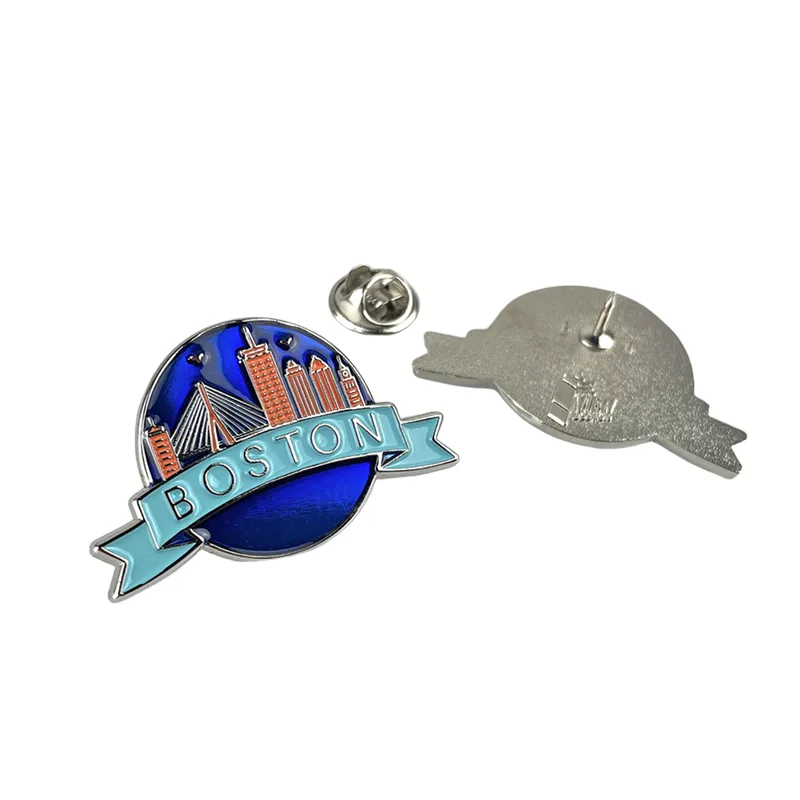
Back engraving and packaging
The back can carry a name, a number or a year. Backing cards and gift boxes are finishing items and are quoted as separate lines.
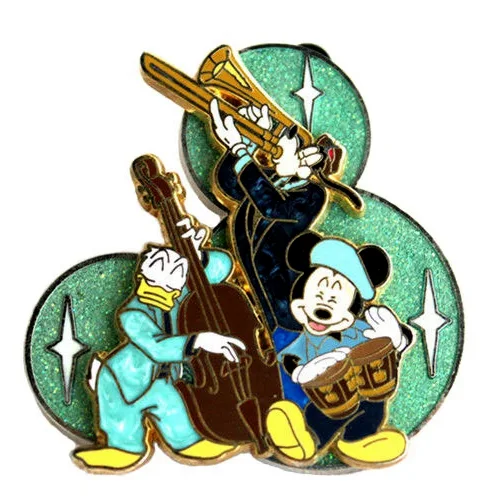
Special effects
Three effects are on record: glow in the dark, transparent enamel, and an epoxy dome. Epoxy is optional on soft enamel, and adding it costs you the relief feel. On imitation hard enamel we advise against it, because it covers the flat gloss that the extra grinding step was paid for.
Why Imitation Hard Enamel Costs More: The Grinding and Leveling Process
Imitation hard enamel costs more than soft enamel mainly because it adds a full grinding and leveling stage after the color is filled and baked. The enamel is filled slightly above the metal lines, then ground and polished until the color and metal finish on the same plane.Soft enamel follows a different sequence. The metal is plated first, then the recessed areas are filled with color and baked. Because the enamel stays below the raised metal lines, no full-surface grinding is required.
Table 2. How the two enamel processes differ
|
Step |
Soft Enamel |
Imitation Hard Enamel |
|
1. Die casting |
Zinc alloy is cast into the finished shape |
Zinc alloy is cast into the finished shape |
|
2. Trimming |
Flash and excess metal are removed |
Flash and excess metal are removed |
|
3. Base polishing |
Surface prepared for finishing |
Surface prepared for color filling |
|
4. Plating / Color filling |
Plating first |
Color filling first |
|
5. Color filling / Baking |
Color is filled into the plated recesses and baked |
Color is filled slightly above the metal lines and baked |
|
6. Grinding and leveling |
Not required |
Excess enamel is ground and polished level with the metal |
|
7. Final plating |
Already completed before coloring |
Plating is applied after grinding |
|
8. Final inspection |
Checked for color, plating and finish |
Checked for flatness, color, plating and finish |
The key cost difference is the grinding stage. Imitation hard enamel requires the filled surface to be leveled piece by piece, using abrasive grinding and polishing before the final plating step. This adds labor, handling time and a higher risk of rejection if narrow color areas or fine details are damaged during grinding.Soft enamel skips this full-surface leveling process. Its color remains recessed below the raised metal lines, so once plating, filling and baking are complete, the piece can move directly to inspection.
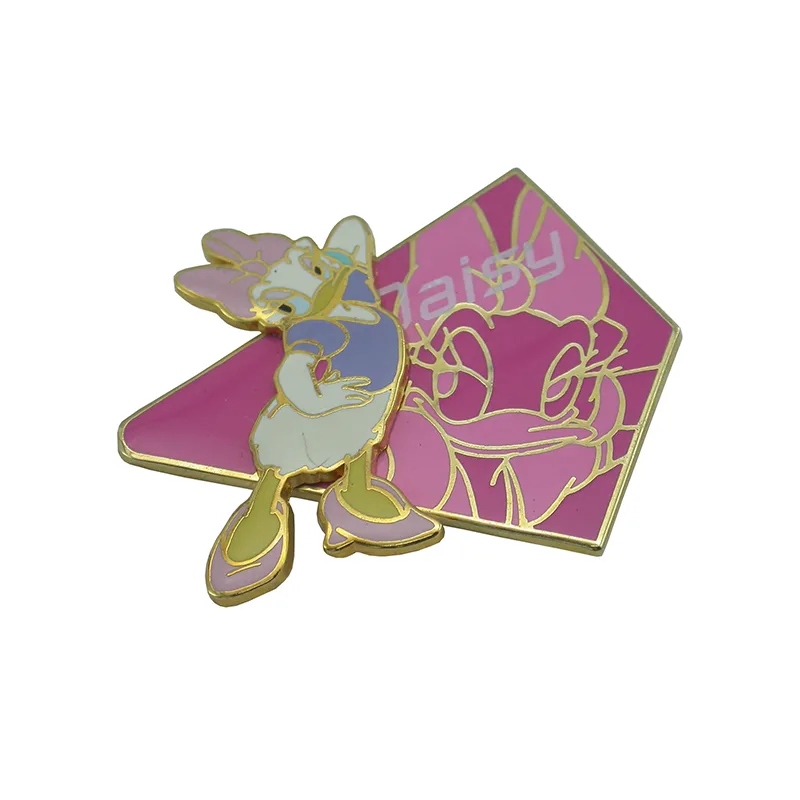
In short, imitation hard enamel costs more because it requires an additional grinding and leveling process, not because it uses two plating passes
Will Your Artwork Survive Production?
Whether a drawing can be made has nothing to do with how good it looks. It comes down to four numbers. Run your file against them.
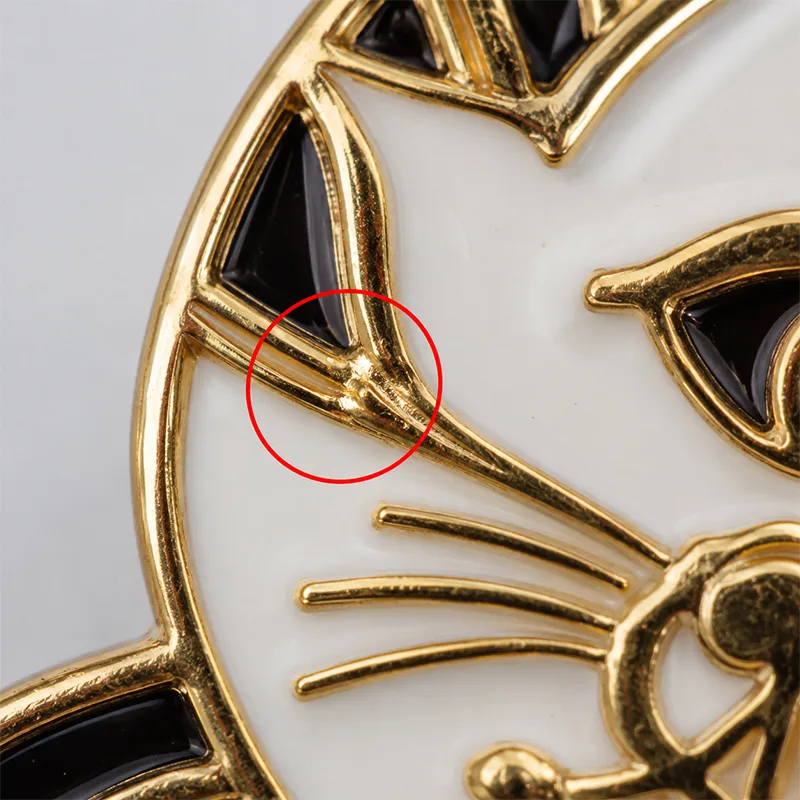
Two lines closer than 0.2 mm come out as one, and the detail becomes a blob.
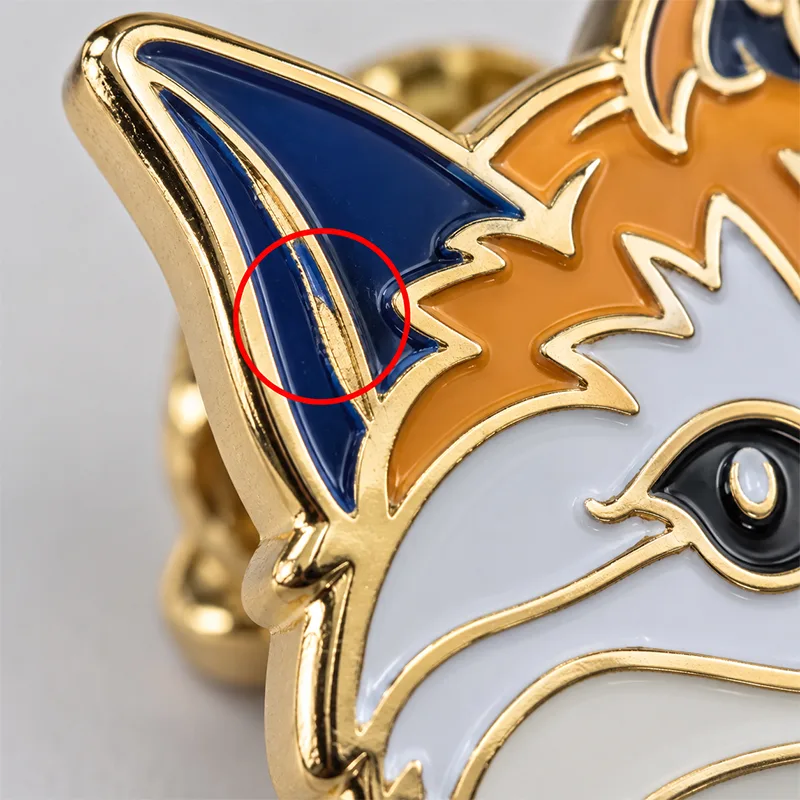
Specific to imitation hard enamel. Anything under 0.5 mm is the first thing lost in the grinding pass, and the piece comes out with missing color.
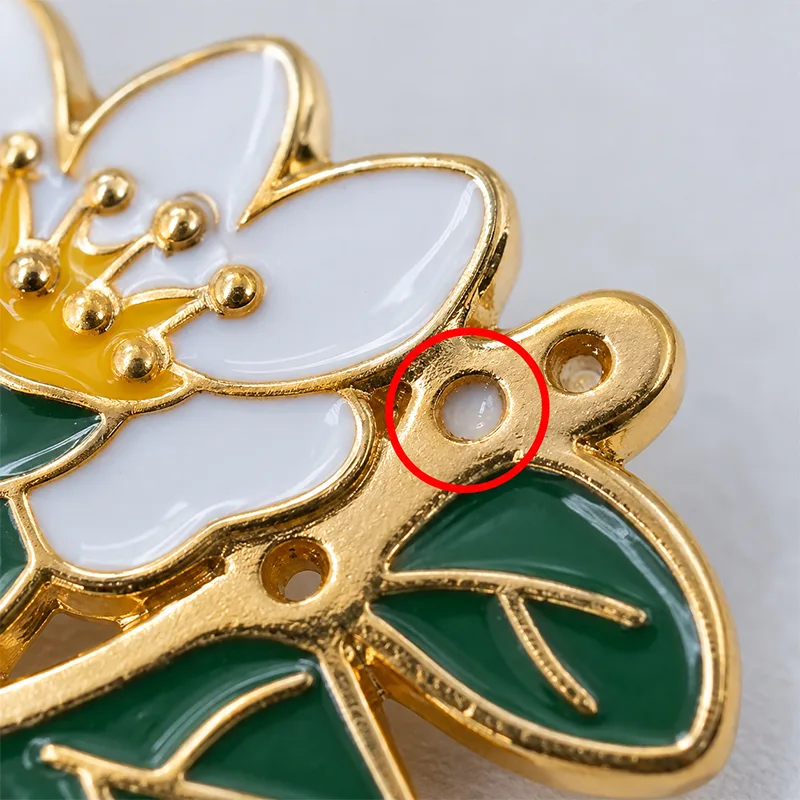
Under 2 mm, enamel coats the inside of the hole during filling and cannot be cleaned out afterwards.
|
Check |
Minimum |
What happens below it |
|
Metal line width, raised or recessed |
0.2 mm |
Metal does not fill the cavity. Lines break, blur or fuse together. |
|
Color space, soft enamel |
0.3 mm |
Enamel will not enter the recess, or will not stay in it. |
|
Color space, imitation hard enamel |
0.5 mm |
Narrow color areas are ground away and the metal shows through. |
|
Hole size |
2 mm |
Enamel plugs the hole, or the edge chips during grinding. |
Files we need. AI, EPS or an editable vector PDF, with finished size, colors and both faces marked. Add Pantone numbers if you have brand colors. Bitmaps, screenshots and images forwarded through a messaging app cannot be cut into a tool directly. Send them anyway as reference and we will redraw them.
Not sure if your artwork will work ?
Send us your file and we will review it for free.
Enamel Lapel Pins We Have Produced
These are production runs, grouped by grade. Four fields only, all of them verifiable from the piece: grade, size, plating, material. The back of each piece is photographed separately rather than described.
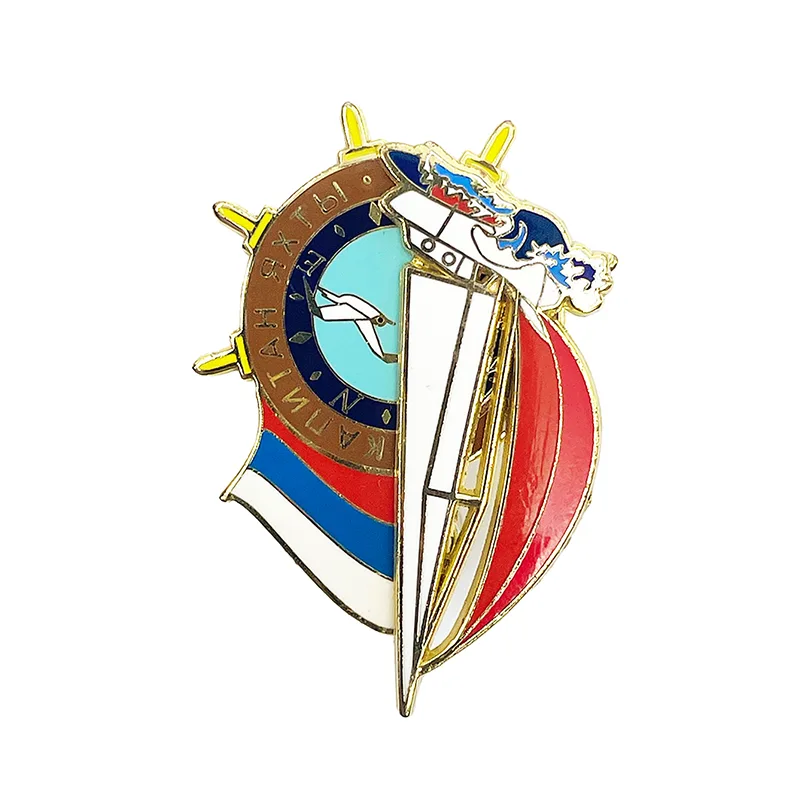
- Grade:Imitation hard enamel
- Size:47 × 33 × 5 mm
- Plating:Shiny gold
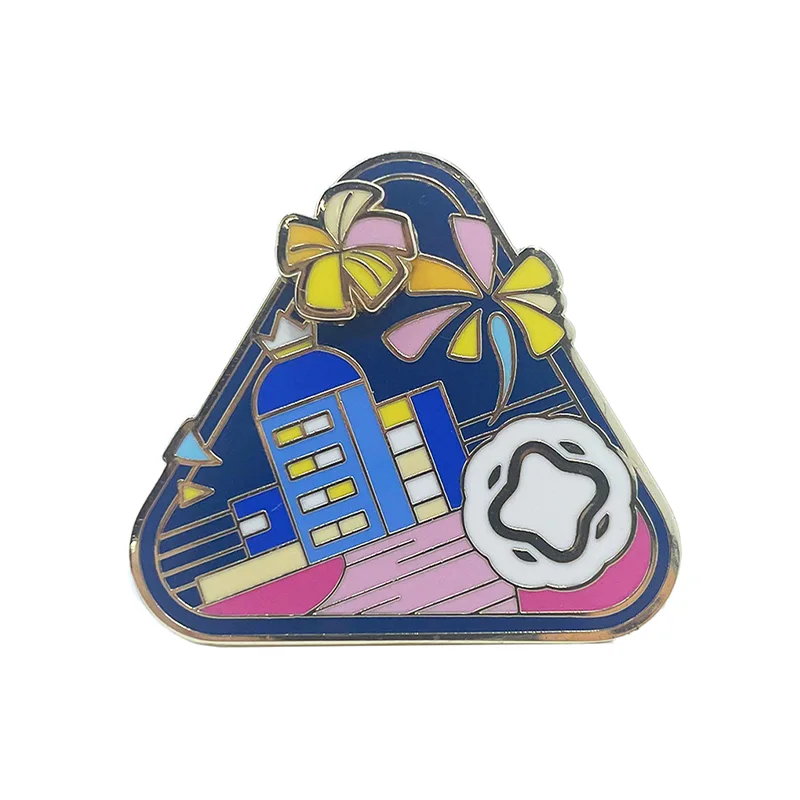
- Grade:Imitation hard enamel
- Size:40 × 32 × 2 mm
- Plating:Shiny gold
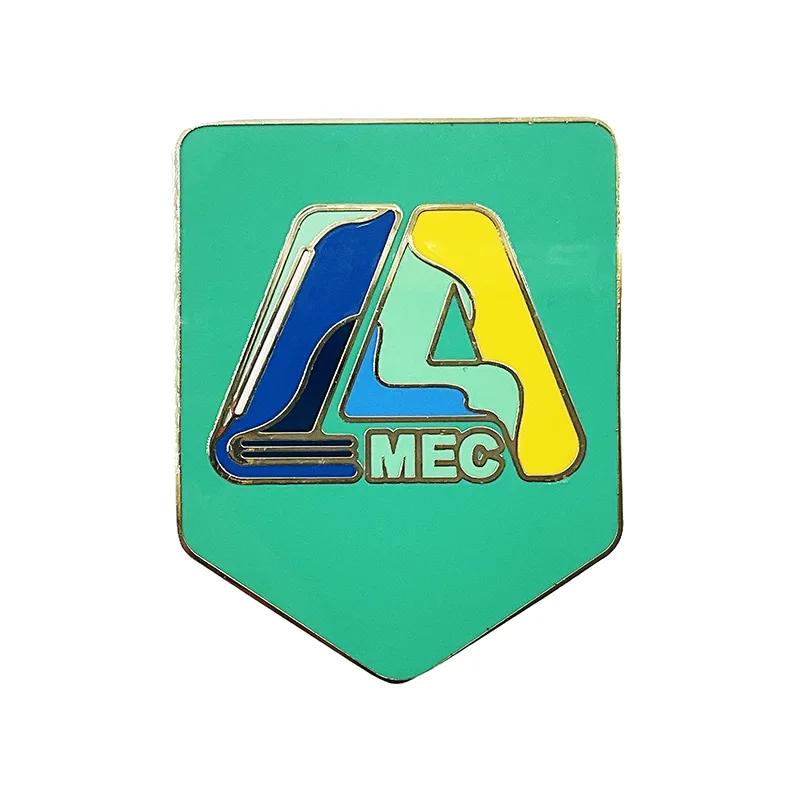
- Grade:Imitation hard enamel
- Size:55 × 42 × 2 mm
- Plating:Shiny gold
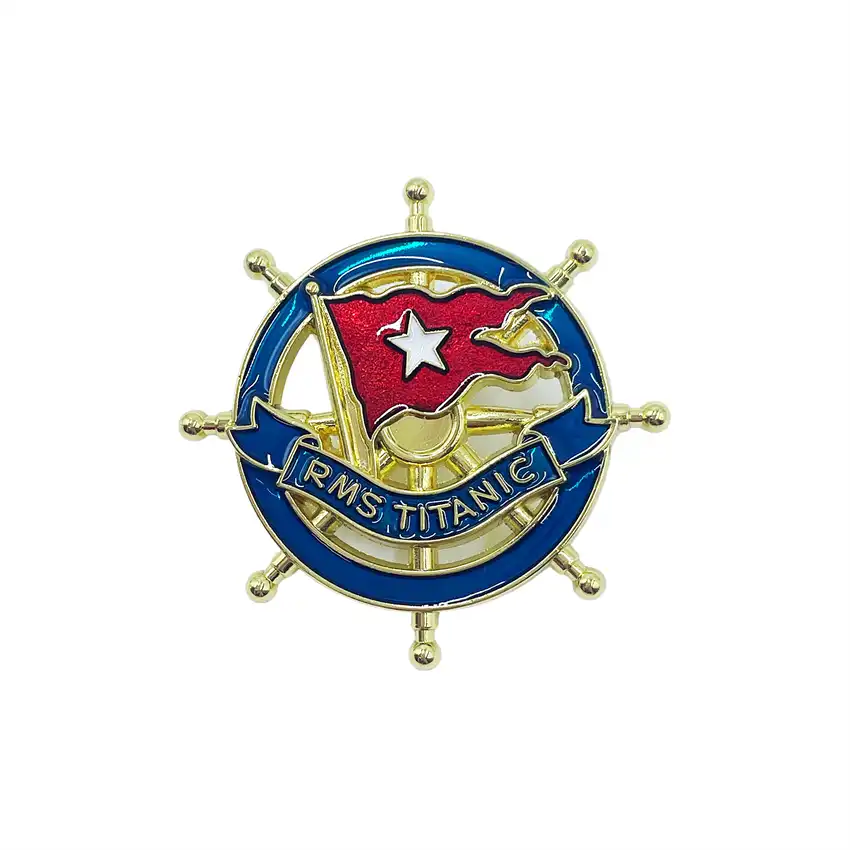
- Grade:
Soft with transparent enamel - Size:45 × 45 × 3 mm
- Plating:Shiny gold
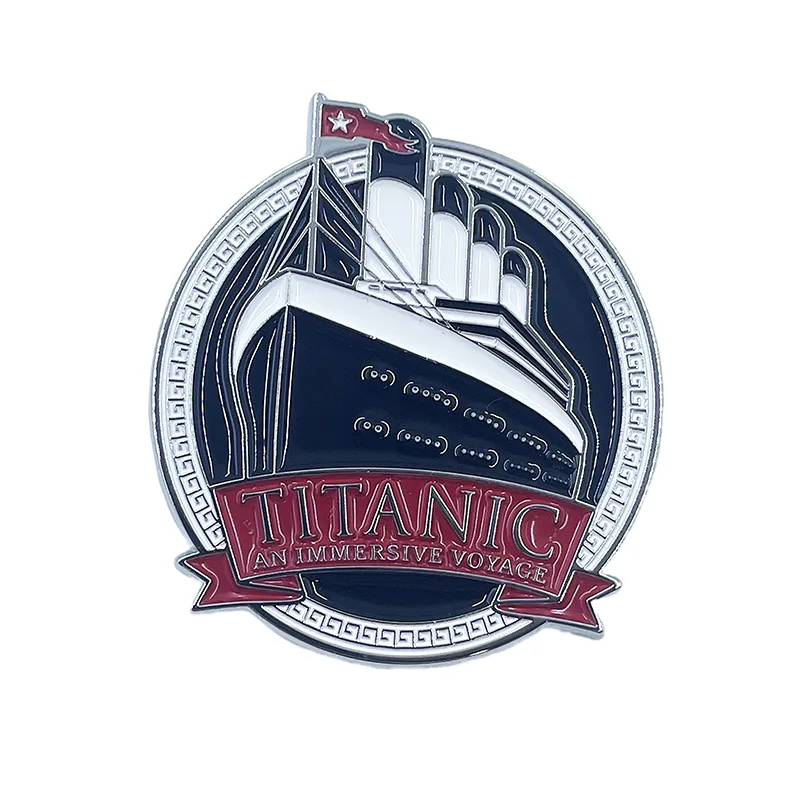
- Grade:soft enamel
- Size:40 × 45 × 2 mm
- Plating:Shiny silver
Where Enamel Lapel Pins Are Used
Five buyer groups, ordered by how much of our order book each one makes up. General reference advice on choosing enamel processes for different types of use

47%
Marathons, trail races, youth leagues, bowling tournaments. What this group needs is volume plus legibility at a glance, so nearly all of it is soft enamel. Color contrast holds at small size and the unit price stays down. The pin that goes in the race packet and the companion to a finisher medal are usually this grade.

19.6%
Worn daily, rubbed constantly, washed with the shirt. Nearly all of it is imitation hard enamel, because a flat surface does not catch on fabric and wears longer. This group also cares about identity accuracy, so color numbers and lettering are confirmed in writing.

6.9%
Trade associations, alumni groups, clubs. Both grades appear. Annual membership pins lean toward imitation hard because it reads as formal. Event pins lean toward soft because they need color.

20.1%
School crests, club badges, graduation years, class commemoratives. Crests lean imitation hard for daily wear. Event pieces lean soft for brighter color and a lower budget.
5.3%
Service anniversaries, project commemoratives, client gifts. This group weighs presentation and packaging more heavily than grade, and accepts either.
Pins are not the only product on this process. The same casting and plating lines run custom challenge coins, and the process carries over. See custom challenge coins.
What We Check Before Packing
The four checks that apply to every product line, which are outline dimensions, plating appearance, post and fitting, and quantity against packing list, are covered on the quality control process page. This section covers the four that are specific to enamel.

On compliance. Material test reports are issued by the suppliers who make the material, and the zinc alloy and plating materials we buy have passed the relevant tests. Audit ratings are stated as they are, not promoted.
Table 6. Four enamel-specific checks
|
Check |
What we look at |
Reject condition |
What happens |
|
Missing and bleeding color |
Every color area filled, no color across a metal line |
Color shows bare metal, or crosses into the neighbouring area |
Piece pulled for rework, scrapped and replaced if it cannot be fixed |
|
Bubbles |
Pinholes or blisters on the ground surface |
Visible bubble or pit |
Same as above, and on imitation hard enamel it means re-grinding and re-plating |
|
Grinding flatness |
Color level with the metal lines, imitation hard only |
A step you can feel, or a height difference under raking light |
Re-ground. A piece with color ground through is scrapped. |
|
Second plating adhesion |
Even coverage, no misses, no blistering |
Bare edge, or plating that lifts under a fingernail |
Stripped and re-plated |
If there is a dispute at acceptance. You get an answer within 24 hours and a resolution within 48 hours, which is a remake, a credit or a return. It does not roll into the next batch.
What Drives the Price of an Enamel Lapel Pin
Pins are priced on the longest side, but cost does not grow with diameter. It grows with area. Table 7 gives the reference unit price for each standard size.
Three things to read off that table.
- The range inside each row is not a negotiating margin. It covers the spread between a plain two-color logo and a detailed multi-color design at the same diameter, on standard plating. A simple mark sits at the bottom of the range and a busy one sits at the top.
- The step from 1 to 1.25 inch is the largest in the table. Area grows 56 percent there and the price grows more than that, because 1.25 inch crosses into a heavier blank and a longer plating cycle. If budget is the constraint, 1 inch carries the most value in the range.
- The 0.5 inch row is also the size where the artwork limits tighten most, since at 12.7 mm a 0.2 mm line takes a sixth of the width. Send the drawing before ordering at this size and we will confirm what will hold.
Start with the basis, or no price means anything.”All reference prices in this section are quoted on: 1.5 mm thickness · soft enamel · standard gold or nickel plating · tooling and freight excluded”Soft enamel normally runs at 1.2 mm or 1.5 mm, and metal weight differs by 25 percent between the two, which moves the unit price. Published price tables almost never state the thickness they are quoted on, so two tables that both omit it cannot be compared with each other.
Table 7. Reference unit price by size, 100 to 500 pieces
|
Size |
Diameter |
Reference unit price |
Area against 0.75 inch |
|
0.5 inch |
12.7 mm |
US$0.22 to 0.28 |
44 percent |
|
0.75 inch |
19 mm |
US$0.35 to 0.45 |
Baseline |
|
1 inch |
25 mm |
US$0.45 to 0.58 |
178 percent |
|
1.25 inch |
32 mm |
US$0.75 to 0.95 |
278 percent |
If there is a dispute at acceptance. You get an answer within 24 hours and a resolution within 48 hours, which is a remake, a credit or a return. It does not roll into the next batch.
Quantity: one price from 100 to 500 pieces
Above 500 pieces the ladder starts and the unit price itself falls. We quote the tiers against your actual number.
Table 8. What tooling adds per piece, on a 1 inch pin
|
Quantity |
Tooling per piece |
Landed unit price, 1 inch |
|
100 |
US$1.00 |
US$1.45 |
|
200 |
US$0.50 |
US$0.95 |
|
300 |
US$0.33 |
US$0.78 |
|
500 |
US$0.20 |
US$0.65 |
At 100 pieces, tooling costs more than twice the pin. At 500 pieces it is under a third of it. That is the whole reason a repeat order is cheaper than a first order, and it is also why the 10,000 piece refund exists: by then the tool has been paid for many times over.A 300-piece order of 1 inch pins lands at about US$0.78 per piece with tooling included. That is the figure most of our buyers actually pay
Why the minimum is 100 pieces
It is not a threshold, it is the real order size for one team, one chapter or one event. Below 100 the unit price goes up, because tooling and setup are spread over fewer pieces. The industry works the same way, and some suppliers say so in their own answers, that pricing under 100 pieces is higher than at 100.
Tooling: US$100 per design, and how it spreads
Tooling is US$100 per design and is quoted as a separate line. That figure sits inside the normal market range. It is the one cost whose effect changes with quantity, because the amount does not scale: it is US$100 whether you order 100 pieces or 10,000.
What the reference price does not include:
- Tooling, at US$100 per design
- Plating upgrades beyond standard gold or nickel
- Backing cards, gift boxes and other packaging
- Freight
- Imitation hard enamel, which adds two operations
- Outlines that need a non-standard blank, such as very deep 3D relief or cut-outs
Tooling policy
- Tooling is kept for 3 years, stored with us, and reused on repeat orders.
- If no repeat order comes within 3 years, the tooling may be scrapped. This is rarely written down in the trade. We write it because it decides whether you need your own archive copy.
- When cumulative orders for the same design reach 10,000 pieces, the tooling charge is refunded.
- The count is per design, repeat orders are included, and it does not reset at year end.
Read together, those four lines say one thing. The tooling charge on a first order is not a sunk cost. It is a cost that repeat orders can pay back.
MOQ, Lead Time and Tooling
Four steps from drawing to delivery, with the clock starting point stated for each one.
1
Quote
1 to 2 business days
2
Artwork approval
1 to 3 business days
3
Sampling
7 to 10 days
4
Bulk production
15 to 18 days
Frequently Asked Questions
Fourteen questions, grouped by what they are about. The answers are the same ones our sales desk gives.More answers on ordering, shipping and payment are on our FAQ page.
Process and materials
Artwork and customization
Order, lead time and tooling
Request a Quote
Send the drawing and four numbers: size, quantity, grade, plating. If there is no drawing yet, send a logo or a sketch and we will start from there.
What happens after you send it:
- You send the file and the four numbers.
- We confirm in writing what is manufacturable, against the four limits in section 4.
- You get a quote with tooling, unit price, finishing items and lead time on separate lines.
- You get a free digital proof, revised until you approve it.
- You approve the pre-production sample, and bulk production starts.