Custom Artwork Service: Free Design and File Guidelines
Free Design / First Proof in 24 hours / Pantone Match / Free Revision
Send us your logo,sketch,photo or idea.Our in-house design team will turn it into production-ready artwork for your custom promotional gifts.You do not need to know Illustrator, CorelDRAW or any design software, and you do not need a production-ready vector file before you get in touch.
Artwork service is free on custom orders, with a first draft in 24 hours for standard designs. In practice we do three things. We convert your source material into production-grade vector artwork. We adjust lines and color areas to manufacturable sizes for the process you are using, whether that is die casting, stamping, etching, enamel or UV printing. Then we send you a digital proof for approval before tooling starts.
*This page also lists every file format and design specification we accept, so that you or your designer can get it right the first time. If you already have a vector file, go straight to Artwork File Requirements.
Three Ways to Start: Vector, Sample or Idea
Clients come to us with different things in hand. Some already have a finished vector file. Some have a physical sample or a photo. Some have nothing but an idea. We take all three, and we handle each one differently.
1
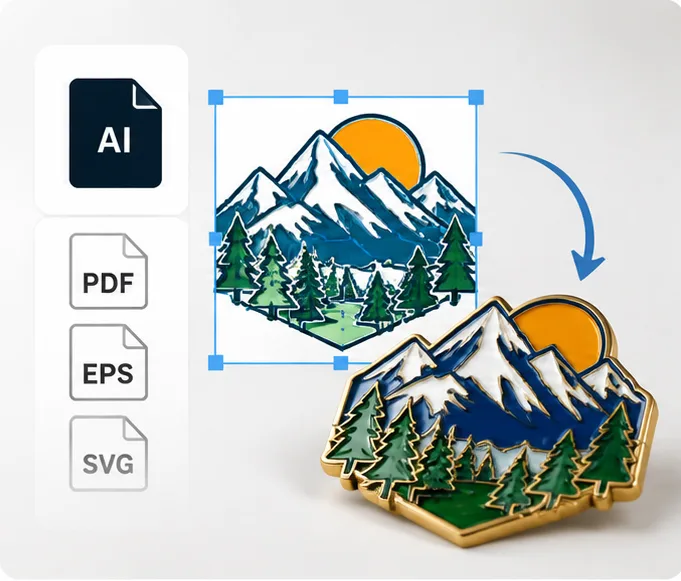
You Already Have a Vector File
2
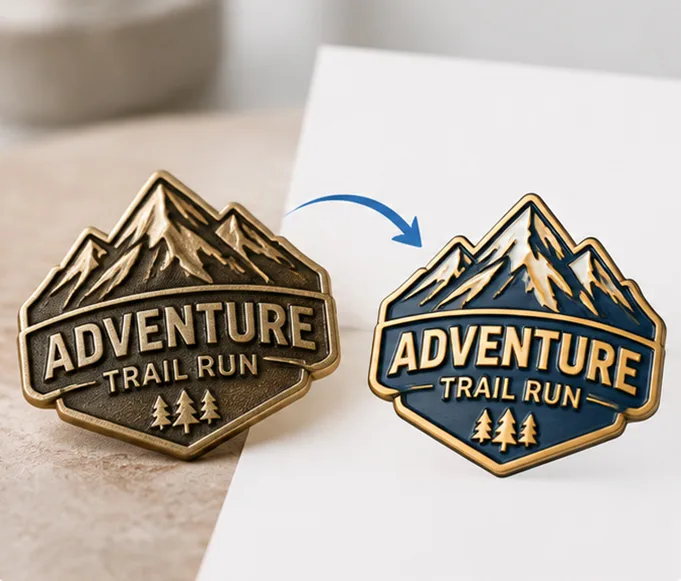
You Have a Photo, a Sketch or a Physical Sample
3
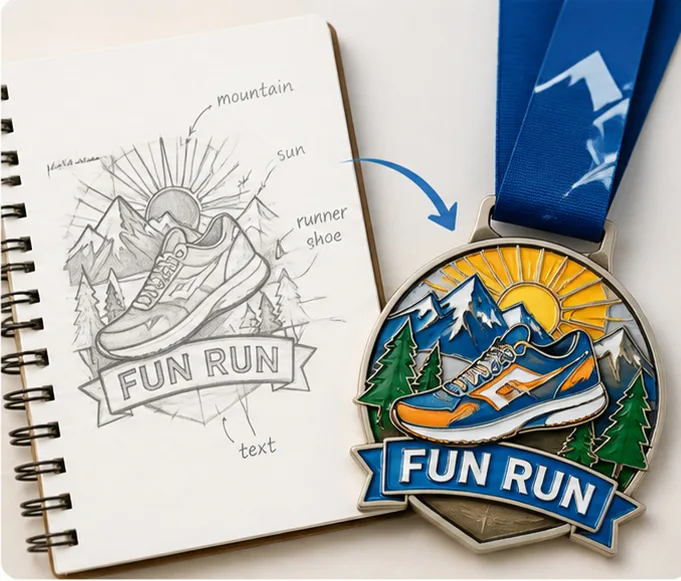
You Only Have an Idea
Three Ways to Start: Vector, Sample or Idea
Clients come to us with different things in hand. Some already have a finished vector file. Some have a physical sample or a photo. Some have nothing but an idea. We take all three, and we handle each one differently.
1
Send material and requirements
Get A Quote in 24 Hours
2
Artwork Creation
First proof in 24 hours
3
Proof Review & Revisions
Usually 1–3 days
4
Tooling & Pre-Production Sample
Sample in 7–10 days
hat We Need From You
The more details you can provide, the faster and more accurate the artwork.
Logo or Source File
The starting point for the artwork
Text & Font
Text has to be converted to outlines or substituted
Product Type & Size
Sets the manufacturable limits for line width, color area and hole size
Front/Back or Position
Which side to print/engrave
Pantone / PMS Color
The only reliable reference for aligning plating and enamel color
Quantity
Affects the tooling approach and the unit price

Target Delivery Date
Determines whether a rush option is needed
Artwork File Requirements
Below are the file formats and design specifications we accept. These numbers are not generic design advice. They are the manufacturable range derived from our own processes, including die casting, stamping, etching, enamel, UV printing and laser engraving. Send artwork to these specifications and the first version can go to tooling.
|
Format |
Type |
Suitable processes |
Notes |
|
AI (Adobe Illustrator) |
Vector |
All |
Preferred. Text must be converted to outlines |
|
CDR (CorelDRAW) |
Vector |
All |
Accepted. Text must be converted to outlines |
|
|
Vector or raster |
All |
Confirm it is a vector export, not a raster file saved as PDF |
|
STL / STEP |
3D |
Relief, three-dimensional structures |
Required when 3D relief is needed |
|
EPS |
Vector |
Die casting / stamping / etching |
Accepted |
|
PNG / JPG |
Raster |
UV printing / silk screen / pad printing |
Measured at finished size; 300dpi or higher required |
|
Physical sample or clear photo |
— |
All |
We can redraw from it |
Vector vs Raster: What It Means for Your Order
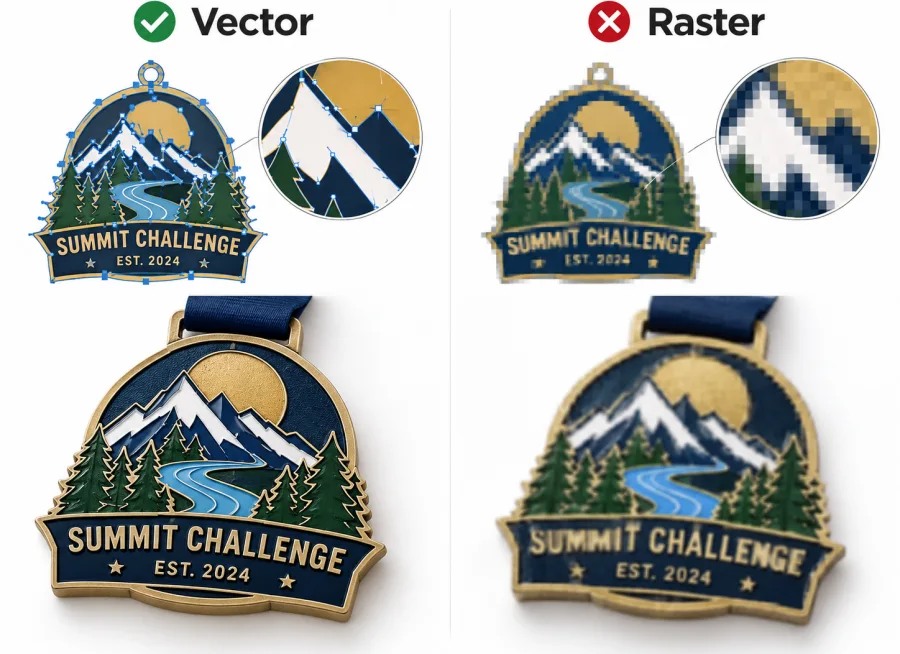
A vector file is a set of mathematical curves, so it stays sharp at any size. A raster file is a grid of pixels, so it blurs when enlarged. Die casting, stamping, etching and laser engraving all require vector artwork, because the tool and the cutting path follow the outline, and a raster image has no outline to follow. UV printing can use raster artwork, provided it reaches 300dpi or higher at the finished size.
The most common problem is a logo saved from a website, a slide deck or a chat thread. However large that image looks, it is still raster, and it is usually not enough. When we see one, we redraw it. See Common File Problems and How We Fix Them for how that works.
Small Text and Fine Detail Limits
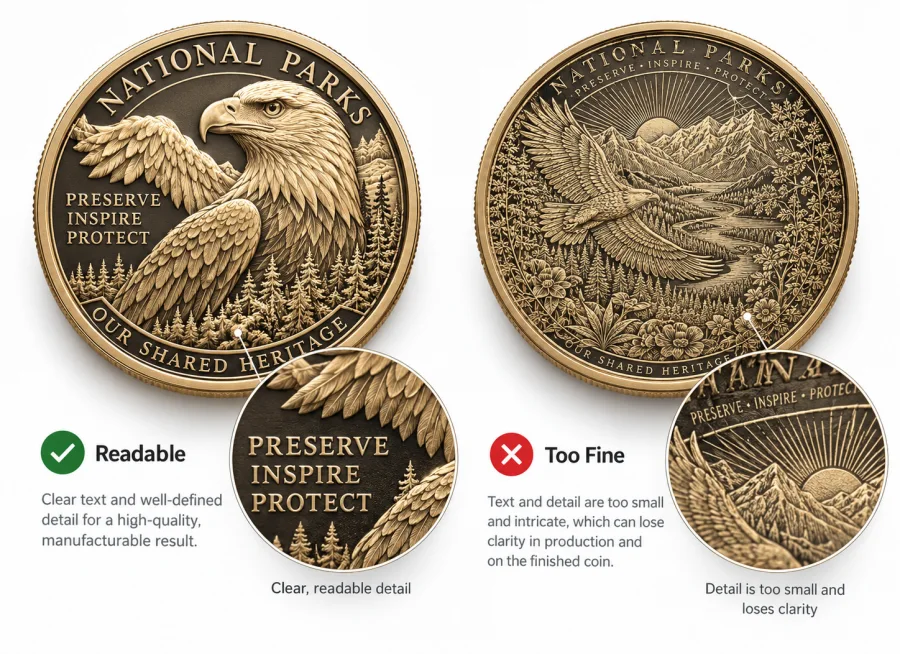
Text that is too small at the finished size, dense Chinese characters, gradients and fine shadows all distort on metal. In practice, keep the smallest text large enough at finished size, keep strokes from touching each other, and avoid fine serif typefaces. If the design genuinely needs very small text, we usually recommend UV printing instead of enamel, which holds up better.
Color Specifications
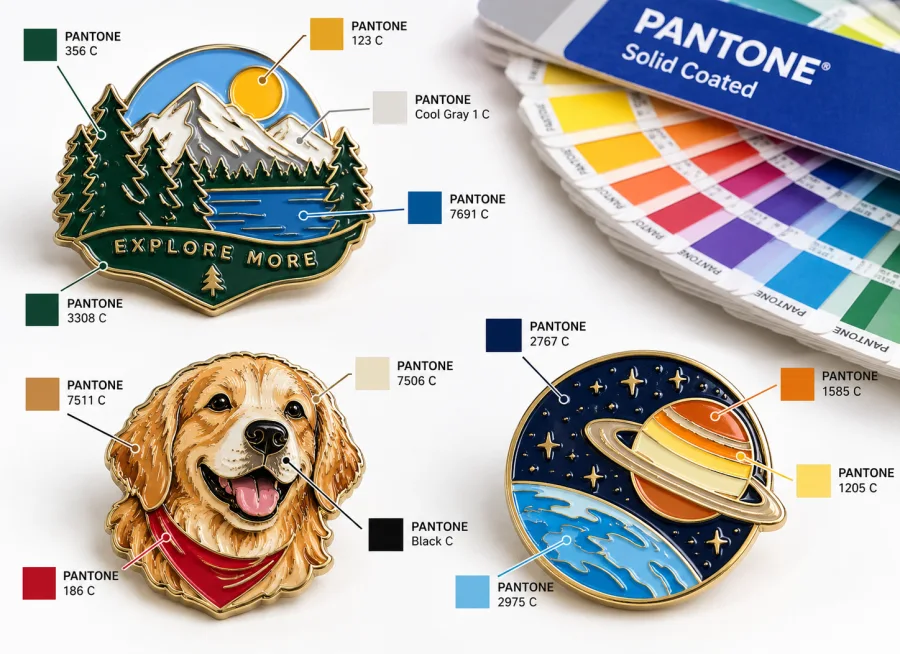
If you have brand colors, send the Pantone / PMS numbers rather than CMYK or RGB values alone. CMYK and RGB are screen and print colors, and they shift when translated onto an actual plating and enamel color chart. Pantone is the language we, the plating shop and the color chip supplier can all align on.
If all you have is CMYK or RGB, we will give you the closest Pantone match for you to confirm. For multi-color designs, mark the color number and position of every color area. Plating colors must be written out in full, because matt silver and silver are two different finishes and “silver” alone cannot go on a confirmation sheet. See plating and enamel color options for the full range of finishes.
Artwork Rules by Production Process
The same image behaves differently across processes. The table below maps our production lines to artwork requirements, and it is the same checklist we use when reviewing files. See our manufacturing process for the full process chain.
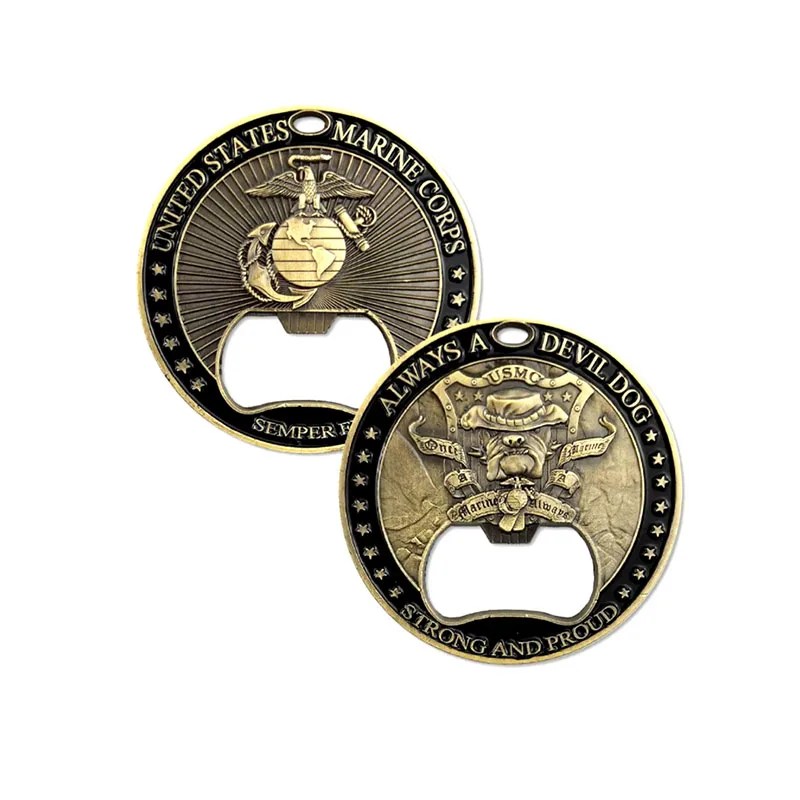
- Process:Die Casting
- Artwork requirement: Vector outline, minimum line width 0.2mm
- Common problem: Lines too fine to hold in the tool
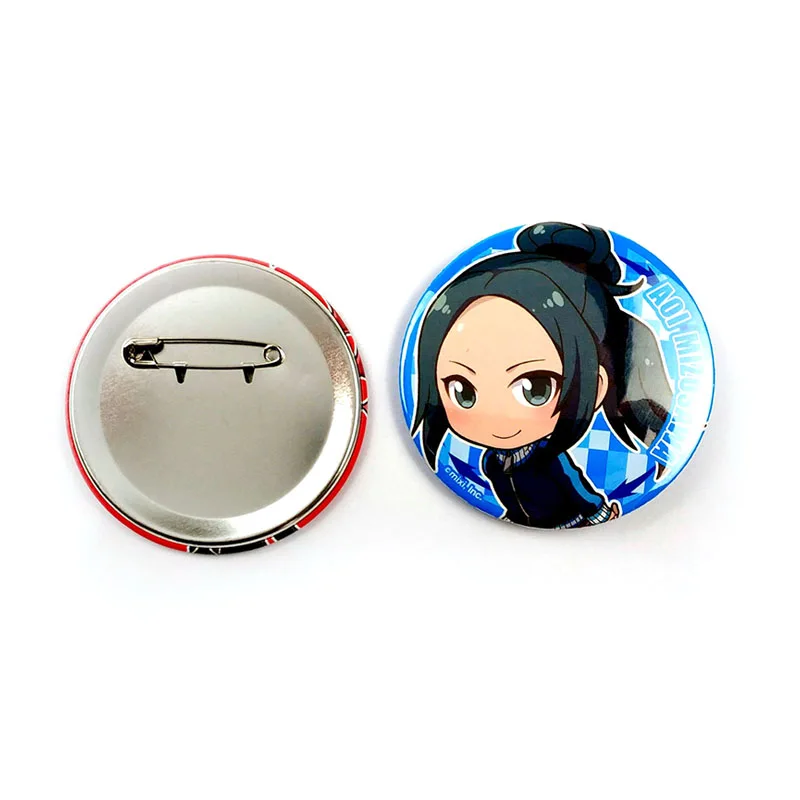
- Process:Stamping
- Artwork requirement: Vector outline + cutting line, minimum hole diameter 2mm
- Common problem: Cutting lines too close together can cause edge tearing
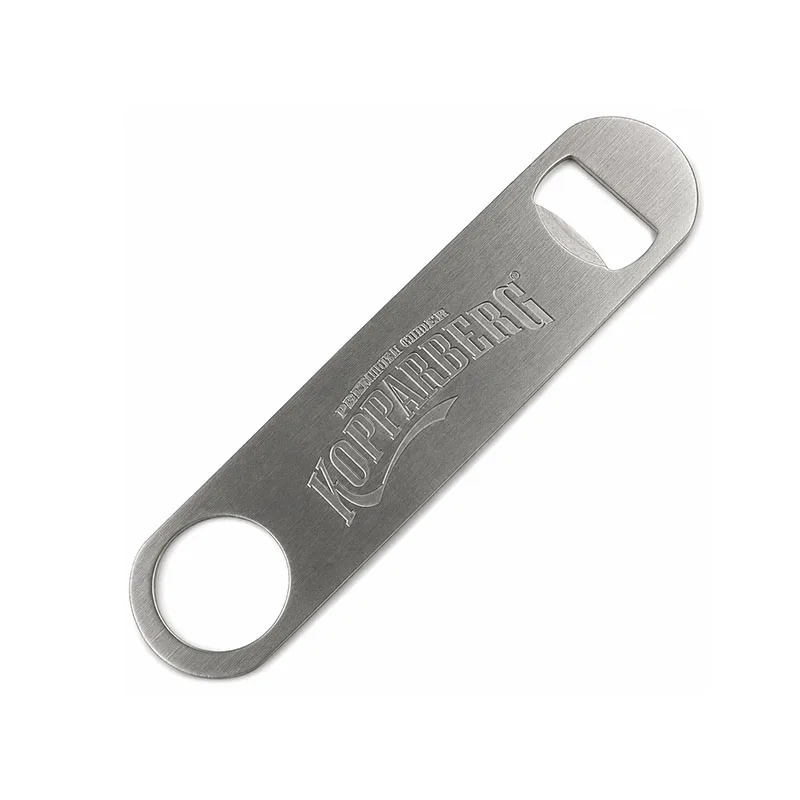
- Process:Etching
- Artwork requirement: Vector artwork with consistent line thickness, minimum line width 0.2mm
- Common problem: Uneven line depth
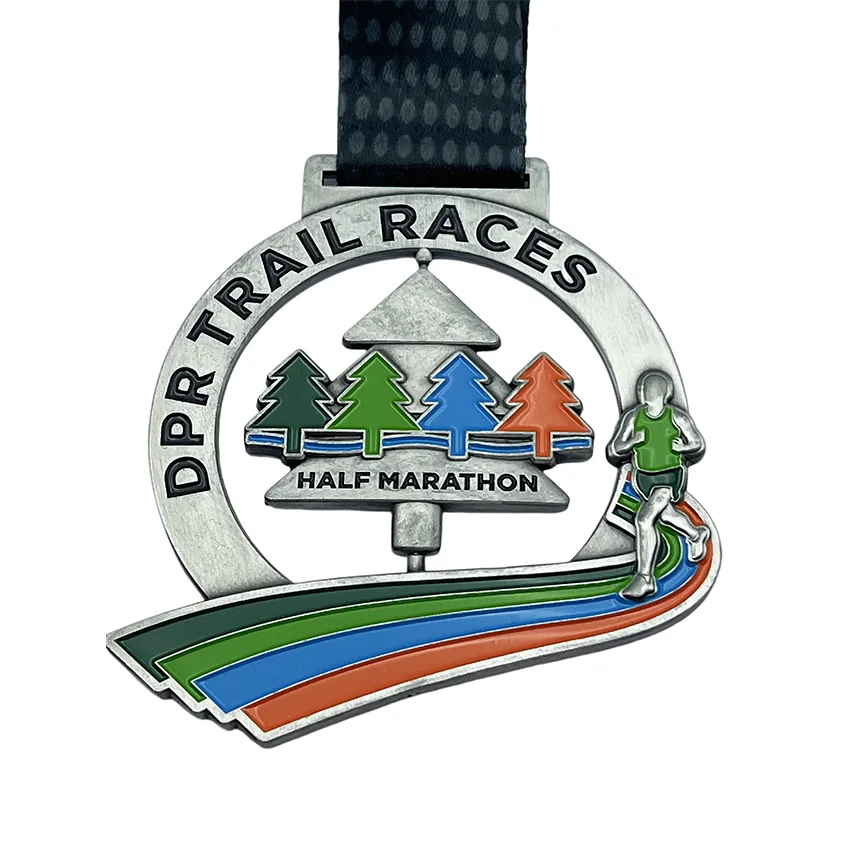
- Process:Soft Enamel
- Artwork requirement: Vector artwork + closed color areas, minimum color area 0.3mm
- Common problem: Open color areas can cause color bleeding between sections
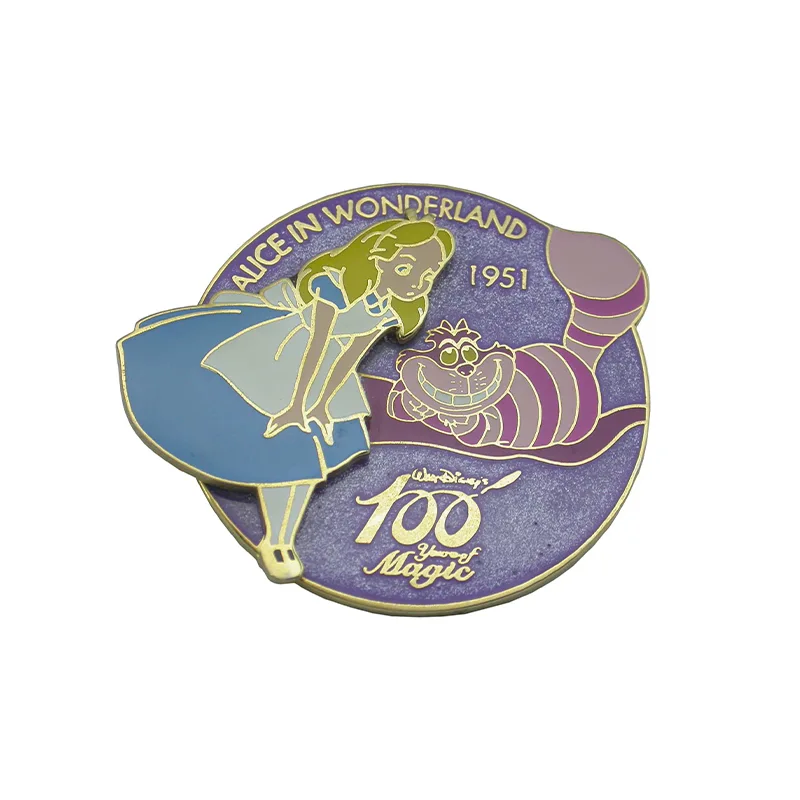
- Process:Imitation Hard Enamel
- Artwork requirement: Vector artwork + closed color areas, minimum color area 0.5mm
- Common problem: Very small color areas may be polished away
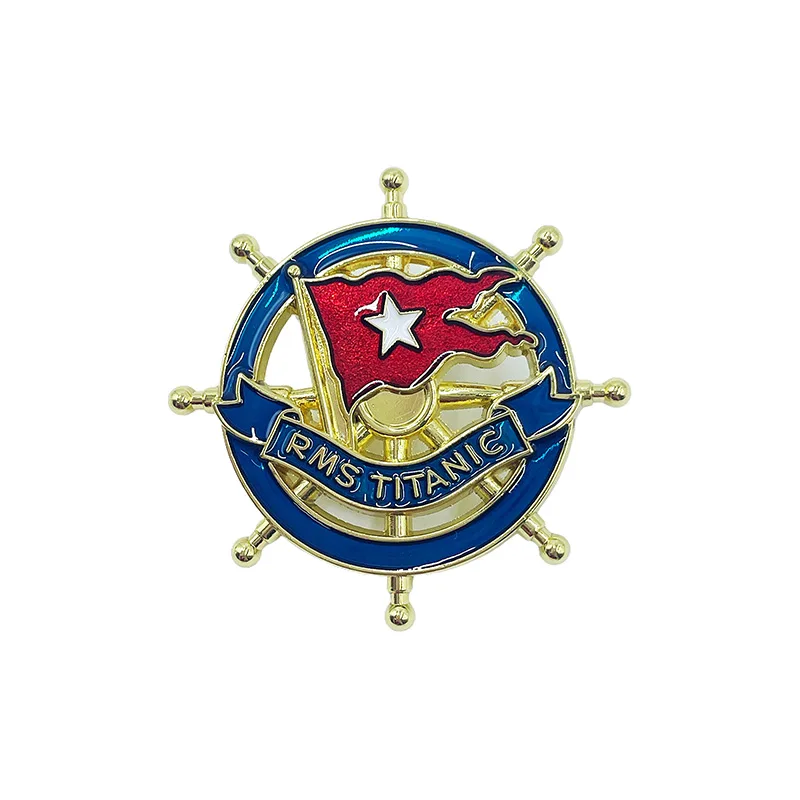
- Process:Transparent Enamel
- Artwork requirement: Mark transparent areas separately and leave enough space for high-temperature tape
- Common problem: Insufficient tape coverage can cause enamel leakage
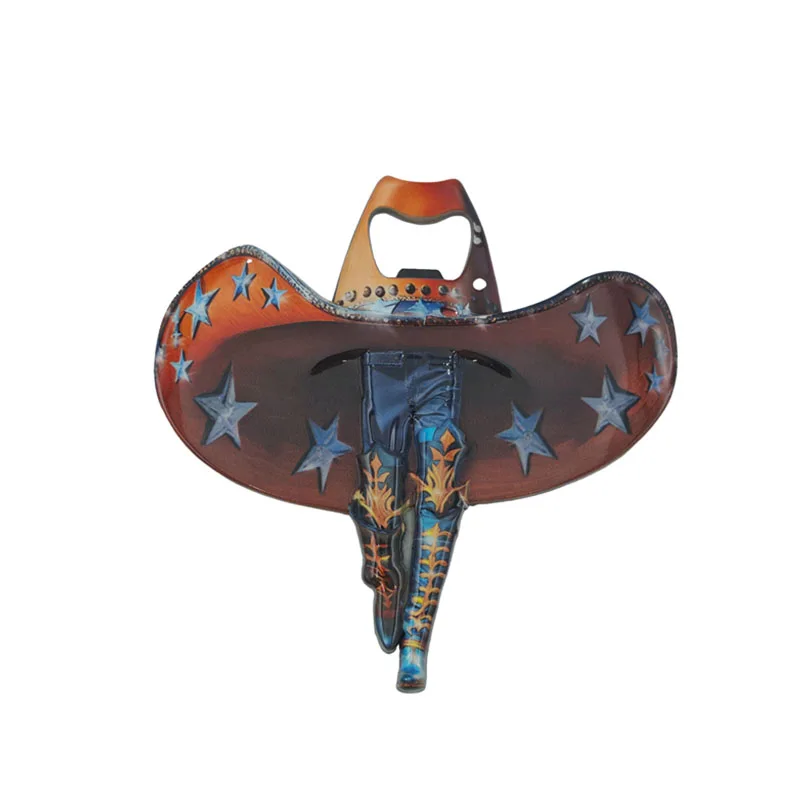
- Process:UV Printing
- Artwork requirement: Raster files are acceptable, minimum 300 dpi at actual finished size
- Common problem: Low-resolution artwork can appear blurry
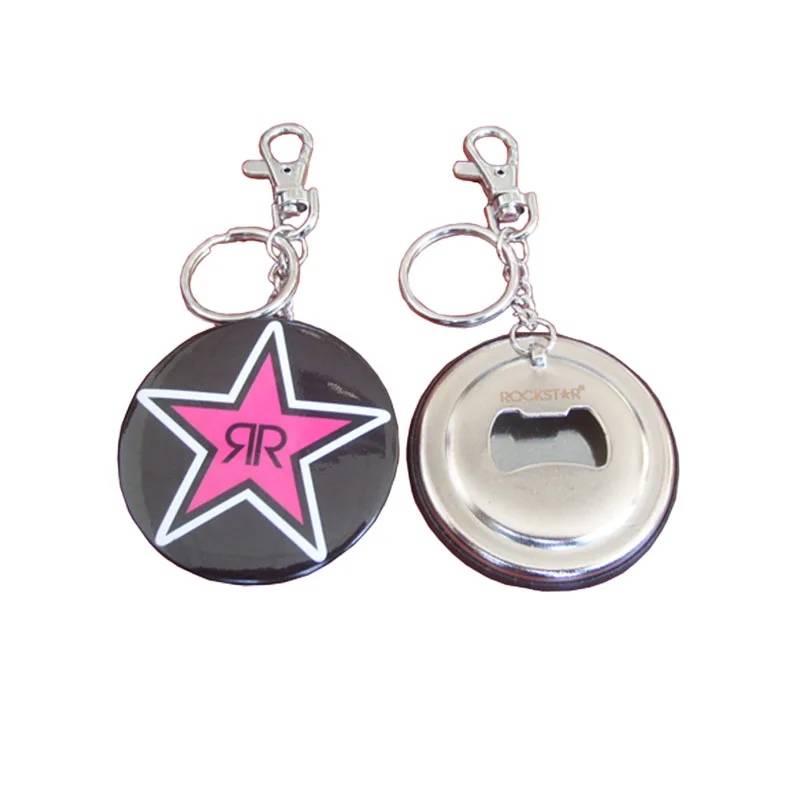
- Process:Screen Printing / Pad Printing
- Artwork requirement: Single-color vector or high-resolution raster artwork; multi-color designs need registration marks
- Common problem: Color misregistration
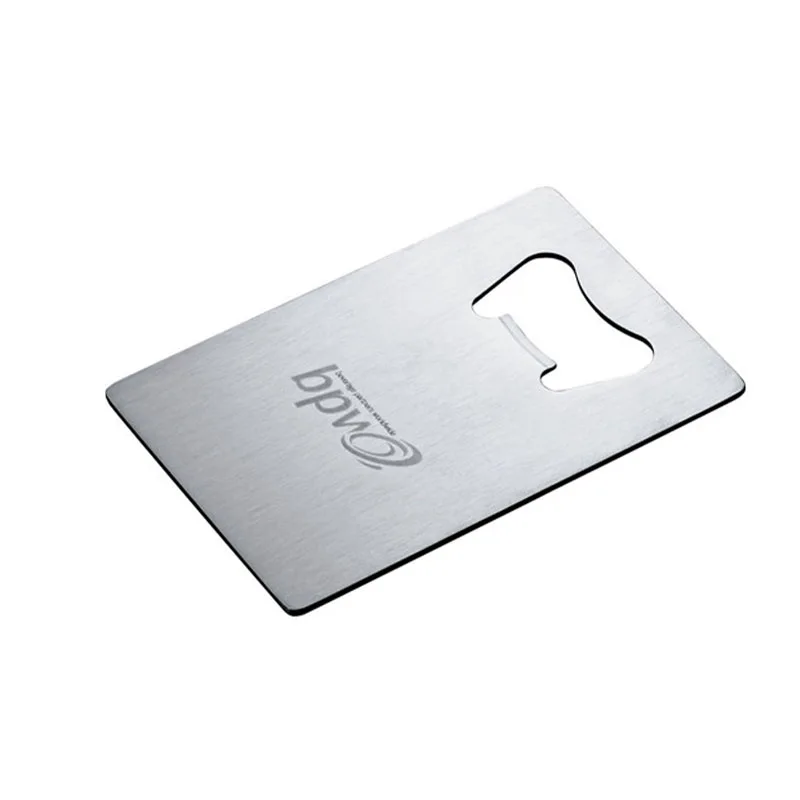
- Process:Laser Engraving
- Artwork requirement: Single-color vector artwork — black = engrave, white = leave
- Common problem: Color or gradient artwork submitted instead of engraving-ready artwork
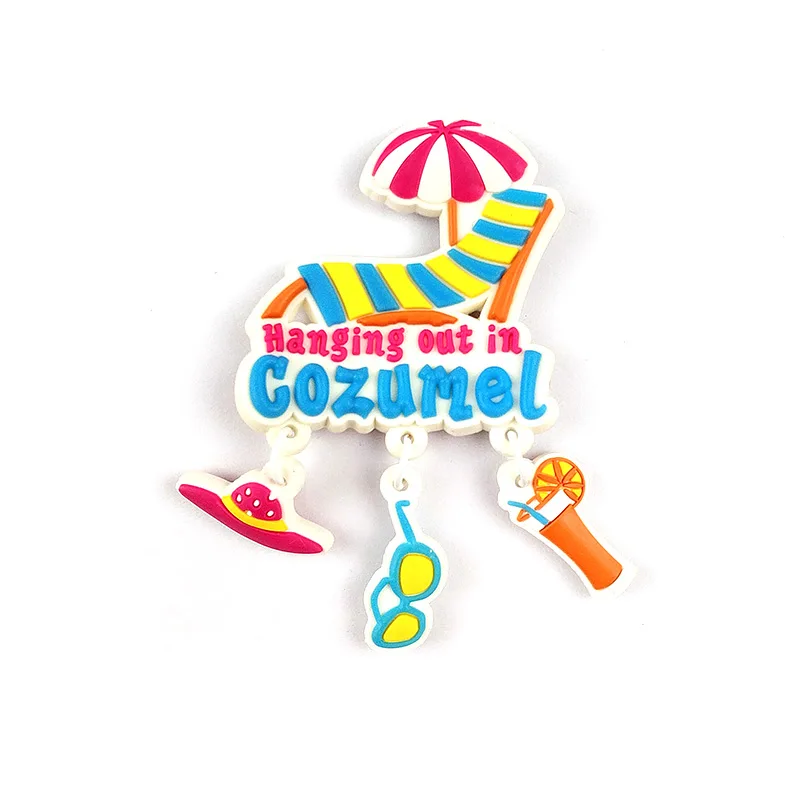
- Process:PVC Molding
- Artwork requirement: Vector outline + solid color areas
- Common problem: Finished dimensions may differ from the expected size
Digital Proofs and Pre-Production Samples
Before tooling you will see two things: a digital proof and a physical pre-production sample. The first confirms content, the second confirms color and feel. Both have to pass before bulk production starts.
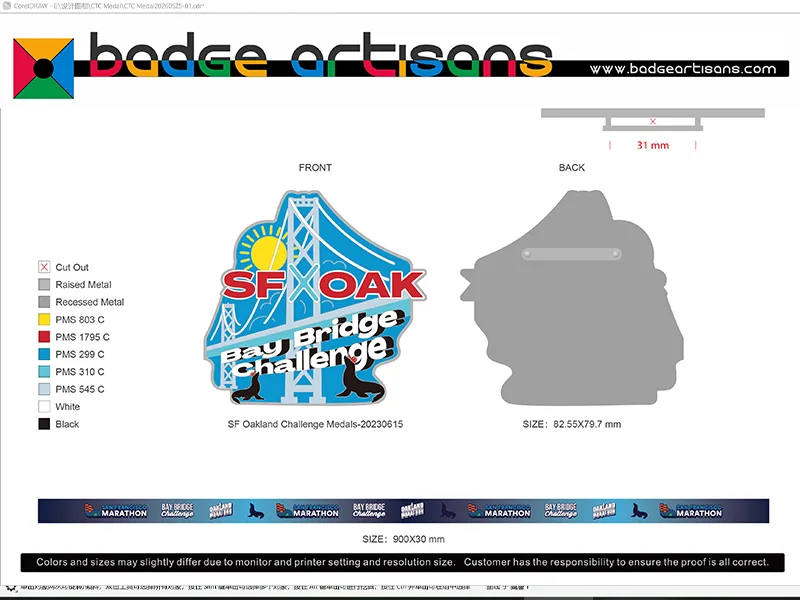
The digital proof confirms content and structure: shape, proportions, text, distribution of color areas and hole positions. Changes are cheapest at this stage, so this is where we try to raise every question.
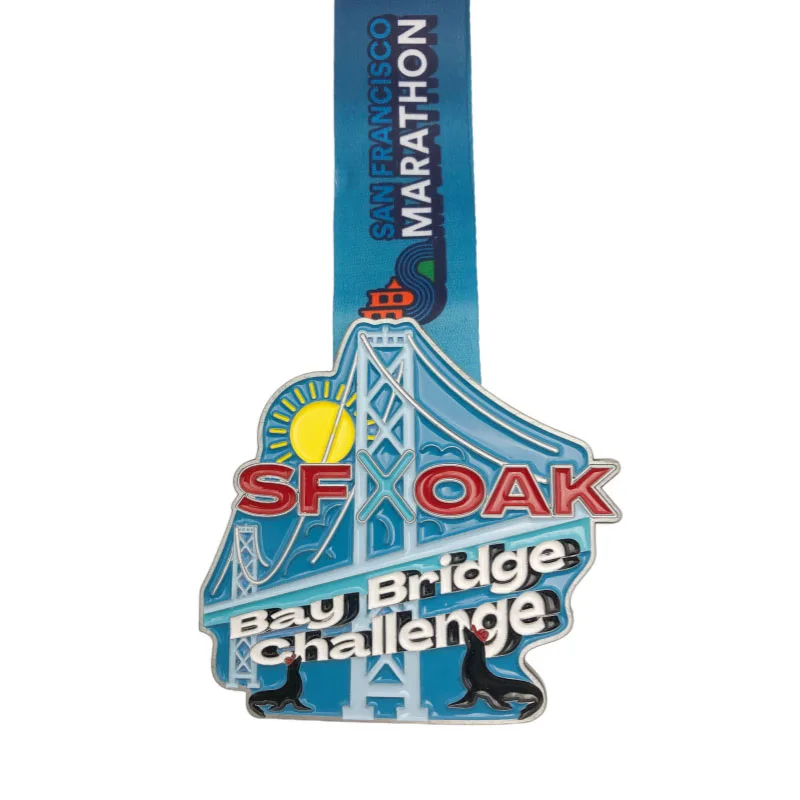
The pre-production sample confirms color and feel: plating color, enamel color, print color, and the actual hand feel, thickness and weight. Changes after this point affect tooling and bulk production, so the confirmation sheet must come back in writing. Our pre-production sample checks follow the same checklist as our quality control process.
Common File Problems and How We Fix Them
Most artwork that arrives cannot go to tooling as it is, and that is normal. Below are the problems we see most often and what we do about each one.
Screenshot Logo
We redraw it into a clean vector file.
Missing Fonts
We find or replace with similar fonts.

Low-Resolution Image
We recreate it with high resolution.
Unclosed Color Areas
We fix open paths and create closed artwork.
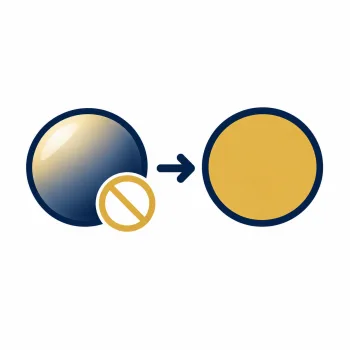
Gradients or Shadows
We simplify gradients into solid colors suitable for manufacturing.
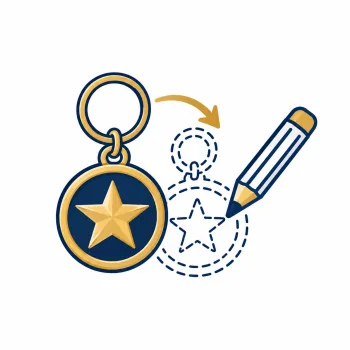
Physical Sample Only
We measure and redraw it into an accurate vector artwork.
One Artwork, Many Products
The projects below cover several categories from this page. Each case lists material, process, plating and size, because buyers work from specifications, not adjectives.
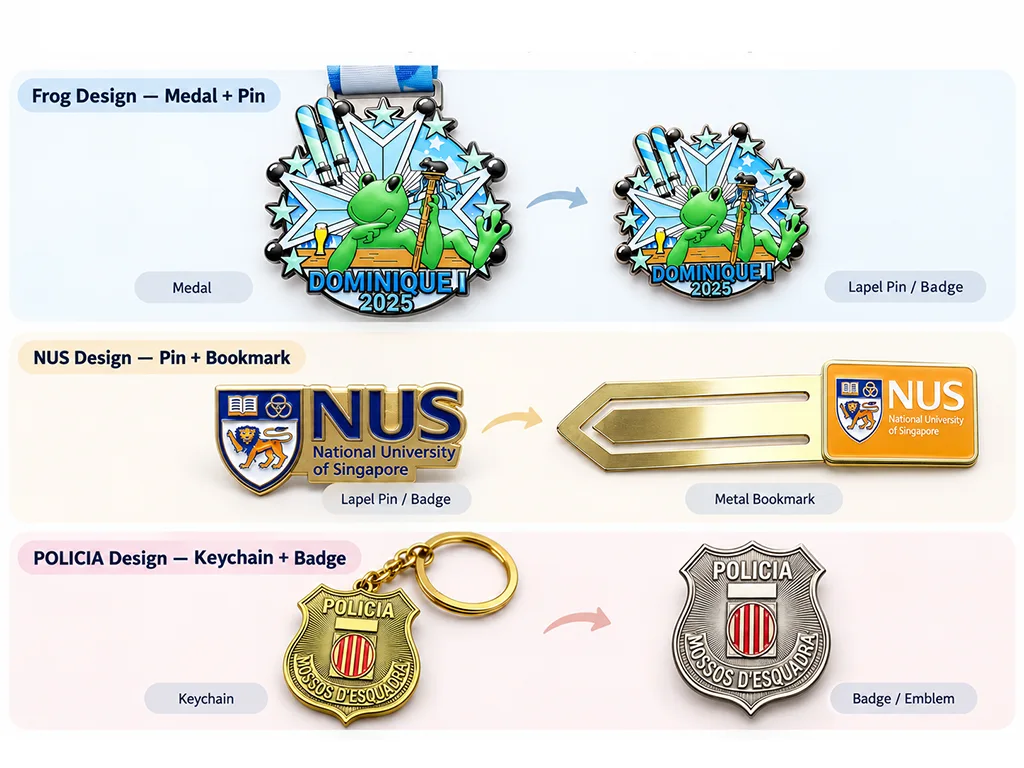
A finished vector file can usually be reused directly across several products in the same series. It is one practical advantage of working with a single supplier across categories.
Lapel pins, fridge magnets, keychains, bookmarks and challenge coins all follow the same artwork logic in die casting and enamel. The only differences are the finished size and the back fitting. Once your key visual exists as a vector file, we can produce versions at each product’s finished size, without you submitting artwork again for every category. A single brand key visual, for example, can become custom lapel pins, custom challenge coins and a fridge magnet from the same outline file.
We keep tooling on file for 3 years, and tooling cost is refundable on orders of 10,000 pieces or more. Mixed multi-category orders can ship together. See packaging options for packaging, and multi-category orders for the full category list.
Inside Our Artwork Team: From Design Desk to Tooling
Your artwork does not move through a separate design agency and then get handed off to an unknown factory. Our design team works alongside the sample and tooling teams, so artwork decisions can be checked against real products, molds and production limits before tooling starts.
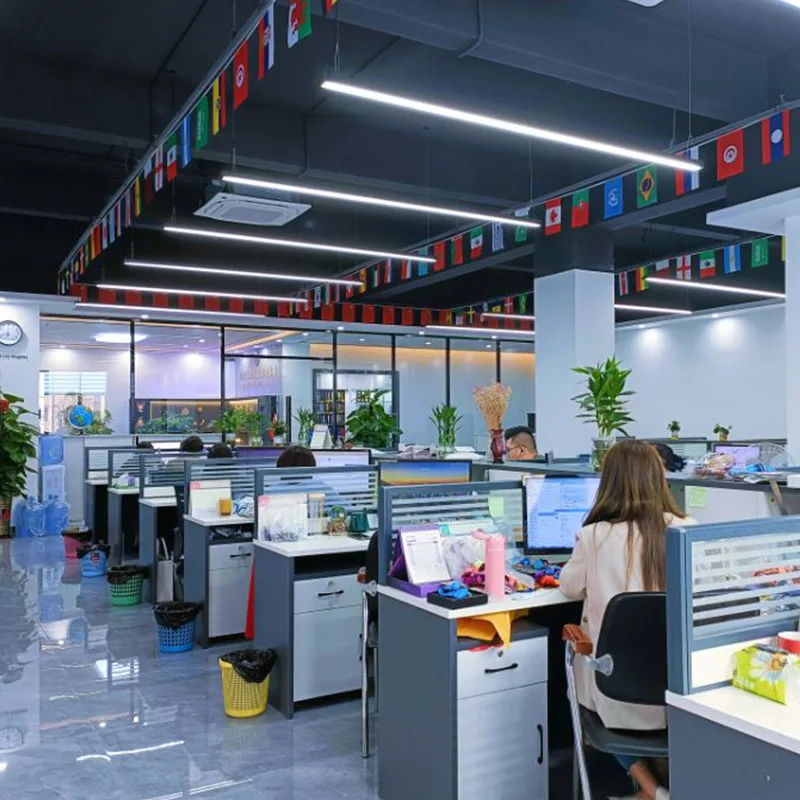
BadgeArtisans-Office In-House Design Office
Artwork Reviewed by the Team That Knows Production
Our in-house design team turns logos, sketches, photos and rough ideas into production-ready artwork. During file review, we check proportions, line widths, color areas, hole positions, text and process suitability before sending a digital proof for approval.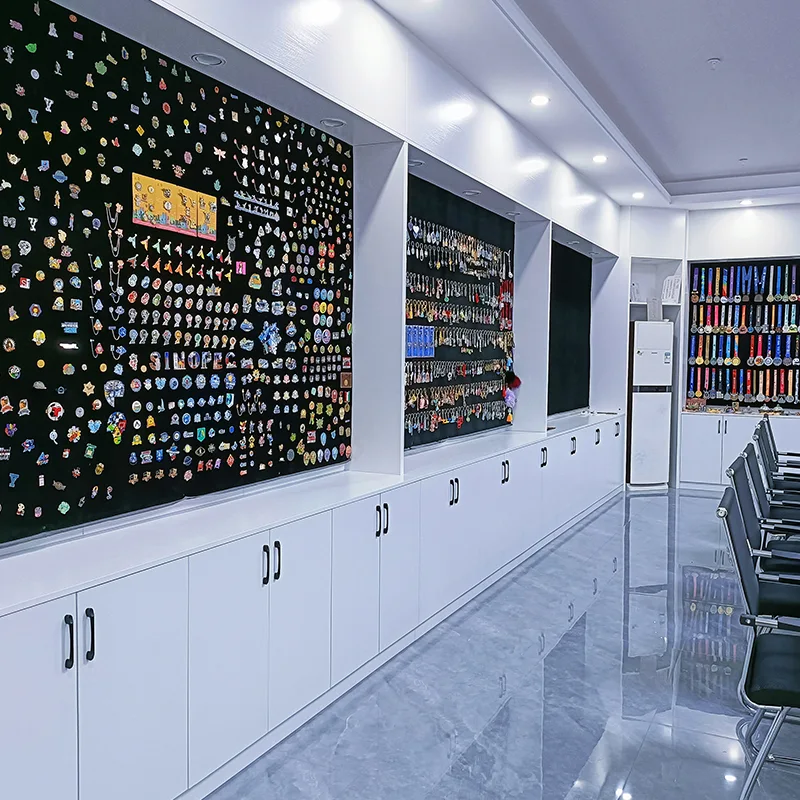
Sample-Room Sample Room
Real Samples Help Turn Ideas Into Practical Designs
Our sample room gives the design team a physical reference for shape, size, plating, enamel, printing, attachments and finished appearance. When a customer sends only an idea or reference image, existing samples help us compare structures and recommend a direction that can actually be produced.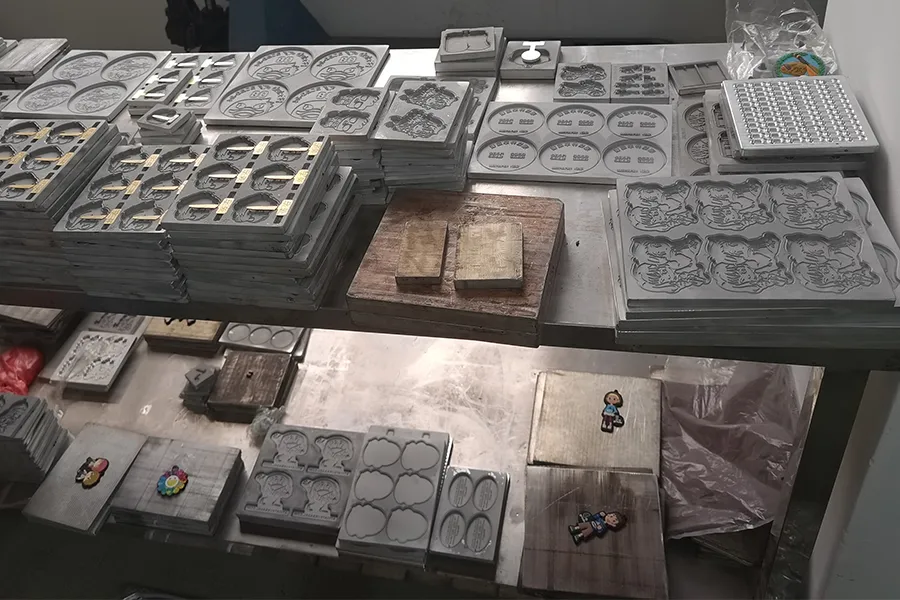
Custom-Medals-Mold-Room Artwork Checked Against Real Tooling Conditions
Before a design moves into production, tooling requirements must match the artwork. Our mold room supports the handoff from drawing to tooling, where details such as outline structure, relief, hole position and manufacturable spacing can be checked before a production mold is made.
Why Choose Our Custom Artwork Service?
For these categories, “can they ship together” often matters more than unit price. Promotional distributors, gift companies and importers usually need several categories in one program, and splitting them across suppliers means multiple molds, multiple sampling rounds, multiple sets of documents and multiple shipments.
Free Artwork Support
Send us your logo, sketch, photo or idea. We turn it into production-ready artwork for custom orders, with no upfront design fee for standard artwork work.
24-Hour First Draft
For standard designs, our in-house team provides the first artwork draft within 24 hours, helping you move from concept to approval faster.
Designed for Manufacturing
We do more than redraw artwork. Line widths, color areas, hole sizes, text and process requirements are checked against actual production limits before tooling begins.
From Artwork to Tooling
Design, digital proof, sample confirmation and tooling are connected in one workflow, so the approved artwork can move directly into production with fewer handoff errors.
How We Manufacture Custom Promotional Products
Different gift categories need different production routes, but most follow the same core factory workflow. Material, shape, finish and accessory requirements are confirmed before production begins.
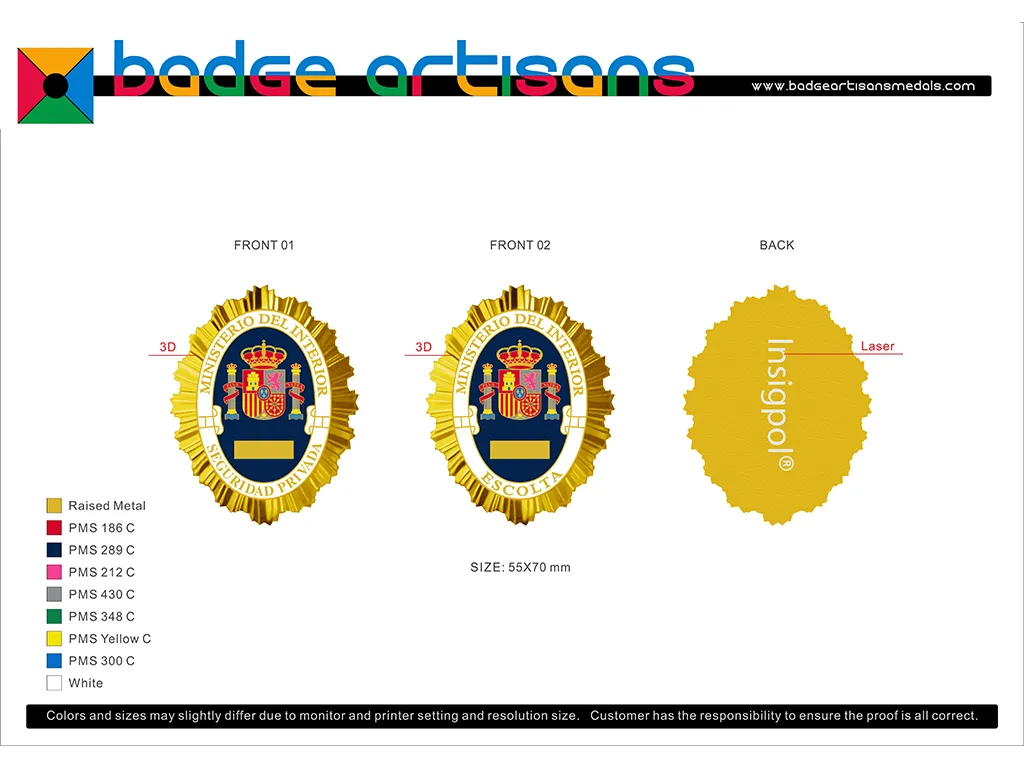
1. Artwork & Process Review
We review your logo, artwork, reference image, size and product type, then confirm the suitable material, manufacturing process, plating, coloring, printing and accessory structure.
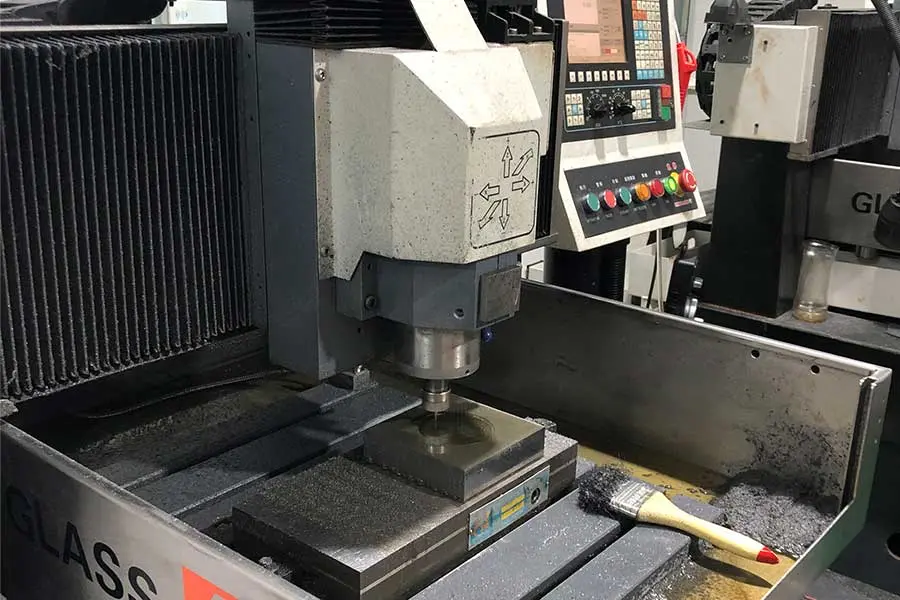
2. Mold Making or Material Preparation
Depending on the product, we create a custom mold for die casting or prepare metal sheet, acrylic or other materials for stamping, cutting, etching or printing.
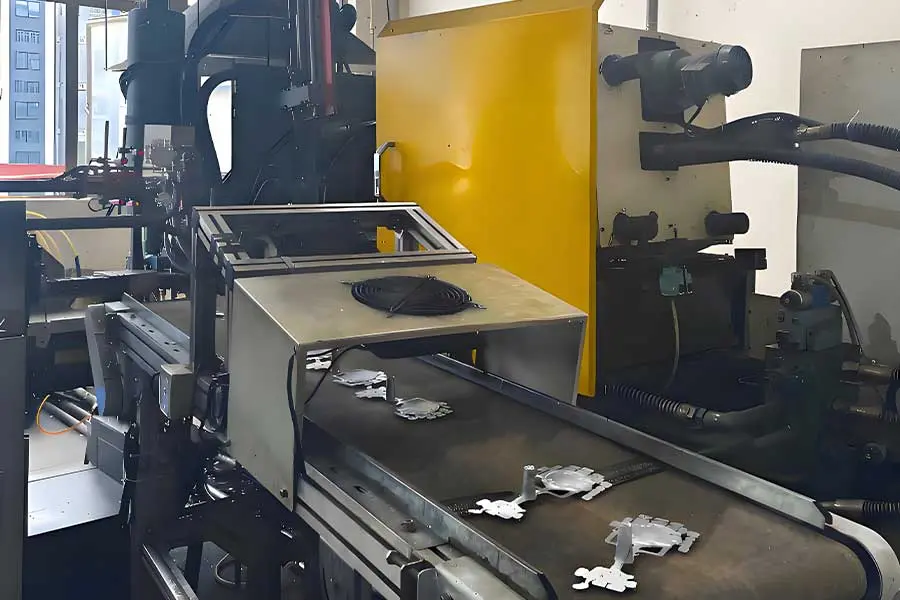
3.Forming & Surface Preparation
Parts are die cast, stamped, cut or formed, then trimmed, deburred, polished and leveled where needed before plating or coloring.
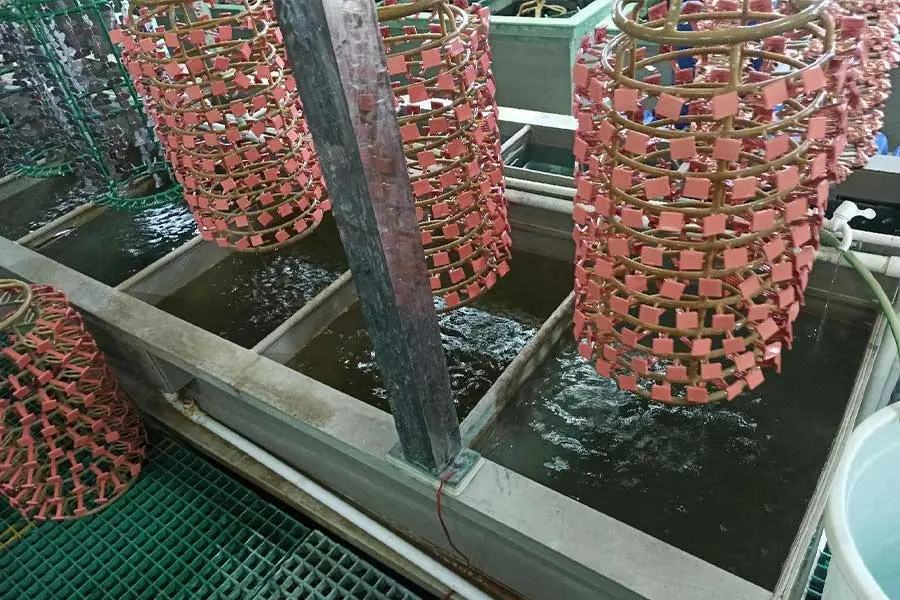
4. Plating, Coloring & Printing
The product receives the specified finish, such as shiny or antique plating, soft enamel, translucent enamel, UV printing, offset printing, engraving or epoxy.
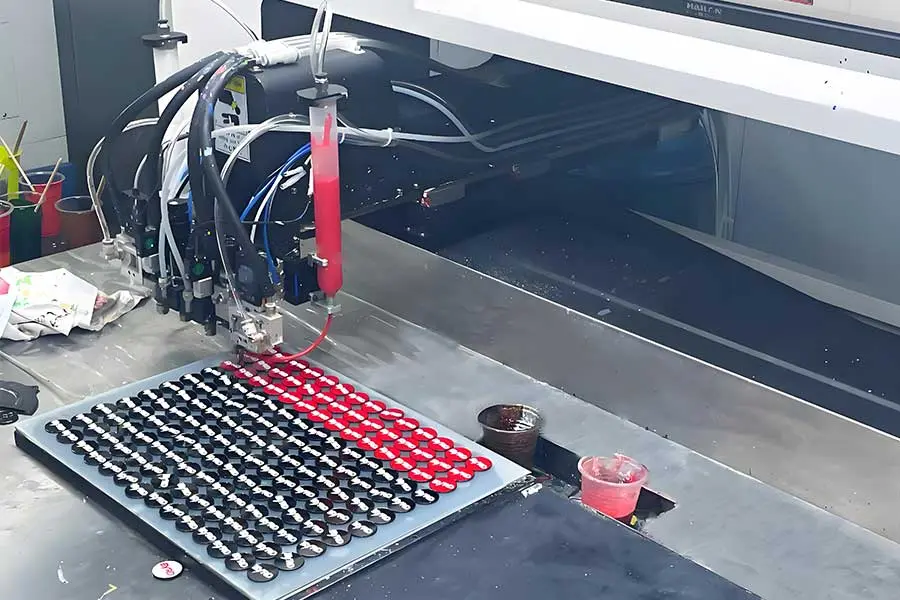
5. Accessory Assembly
Magnets, straps, rings, chains, cork bases, silicone parts, clips or other accessories are fitted according to the approved product structure.
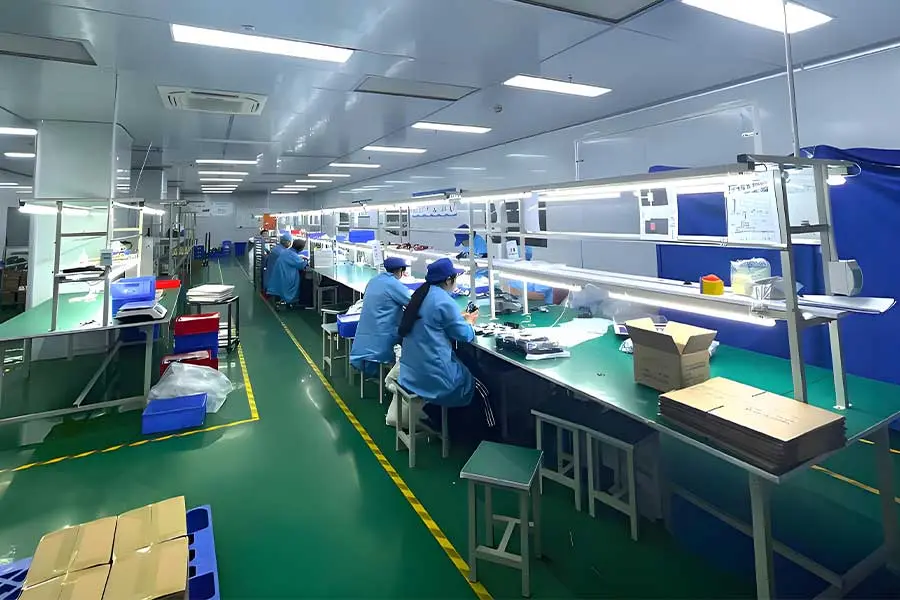
6. Quality Control & Packing
Finished items are checked for appearance, color, plating, printing, dimensions, accessory function and quantity before final packing and shipment.
How to Order Custom Promotional Products
You can order one category or combine several products in the same project. Send us your requirements and we will help confirm the specifications, artwork, production route and delivery plan.
1. Send Your Requirements
Tell us the product categories, quantities, sizes, artwork, target use, packaging needs, delivery date and shipping country.
2. Review & Quote
We review the project, recommend suitable materials and processes, and provide a detailed quote once the main specifications are confirmed.
3.Confirm Artwork
Our in-house design team prepares production-ready artwork for your approval, including shape, size, plating, colors, printing areas and accessory positions.
4. Approve Sample
Depending on the project, you can approve a digital proof, sample photos, video or a physical sample before bulk production begins.
5. Bulk Production & Inspection
After approval, we start production, assembly and quality inspection according to the confirmed specifications and order quantity.
6. Packing & Shipment
Products are packed by category or SKU, and multiple gift categories can be consolidated into the same shipment when required.
Frequently Asked Questions About Custom Artwork Service
Get a Free Artwork Proof and Quote
Send your logo, sketch or idea and we will come back within 24 hours with a first artwork draft and a quotation. If you already have files, upload them and we will run a manufacturability check first. You can also read how to order, or browse our FAQ.