
Home – Custom Lapel Pins – Custom Printed Lapel Pins
CUSTOM PRINTED LAPEL PINS
Printed Lapel Pins: UV, Offset and Silk Screen Printing, Made In-House
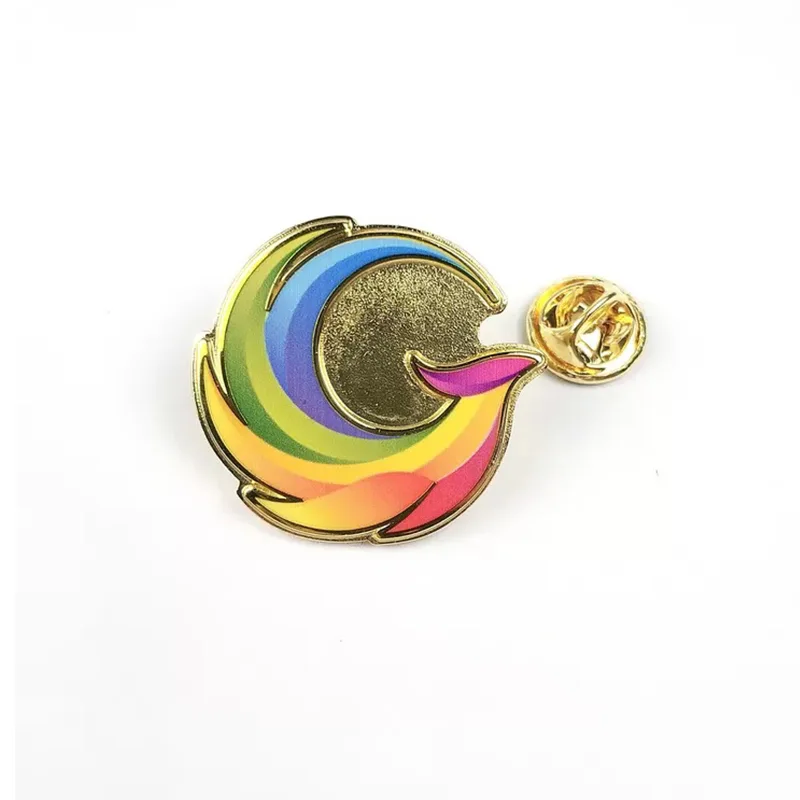
Printing is not what you fall back on when enamel will not work. It is a separate line from enamel, and one of the processes we run for custom lapel pins. The design goes straight onto metal with no metal lines dividing the colors, so photographs, gradients and small lettering — none of which enamel can hold — are exactly what printing does best.
Badge Artisans runs four print methods in its own plant: UV, offset, silk screen and pad. UV is the one we run most, because it takes a photograph, a gradient or a curved face without a plate to cut. The other three cover what UV cannot, and they all sit in the same workshop, so the advice you get is not whichever method we happen to own. It is the one your artwork suits.
Send the file. We will tell you whether it will print cleanly before we quote.
Printed vs Enamel: When Printing Is the Only Way to Make Your Artwork
Choosing a process is not a matter of taste. It is a question of what each one can physically do. Enamel divides colors with raised metal lines, so every color needs its own recess, its own fill and its own bake. The busier the artwork, the more colors it carries, and the harder enamel gets. Printing has no such premise. Color is laid on the surface, and nothing has to be separated.
|
Your artwork contains |
What that means |
|---|---|
|
A photograph or a realistic illustration |
Print is the only route. Enamel is solid color blocks and cannot reproduce continuous tone. |
|
A gradient, with two or more colors blending |
Print is the only route. Hand-applied enamel color cannot produce a smooth blend. |
|
Lettering below 6 pt |
Print reads cleaner. Enamel needs 0.3 mm of color space inside each stroke, so it is limited here. |
|
A brand color with a Pantone number |
Print approximates only, while silk screen matches it. The one row where print is not the better answer. |
|
Solid color blocks and clean metal lines |
Print is possible. Enamel is better suited, because on enamel the metal line is part of the design. |
|
A surface you can feel under a finger |
Print is flat by nature. Soft enamel has relief, and printing is a flat process with no relief to give. |
Run your file against the six checks in this table. That is enough to settle it.
Two or more entries that read “print only” and enamel is off the table.
Read the other way: if the artwork breaks into a handful of clean solid areas, uses no more than five colors, and you want a surface where a finger can feel the metal lines, enamel is the better route. That is set out on the enamel lapel pins page.
The Four Printing Methods We Run, and Which One Your Artwork Needs
Printing is not one process. It is four, and the four are separated by three practical questions rather than by quality. How many colors does the file carry, does it need a gradient, and does the face it prints on sit flat. One of the four answers yes to all of it, which is why it carries most of our volume.
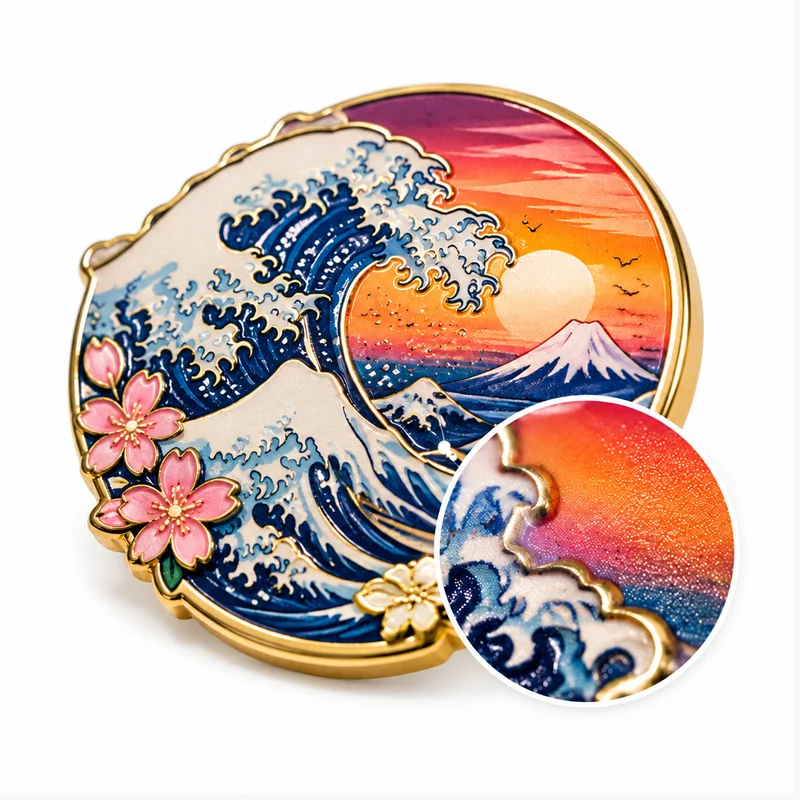
UV print
Full color in one pass, no plate to cut.
Photographs and gradients: strongest of the four.
Curved or relief face: yes, up to 7 mm. Dome optional.
Typical use: photographs, gradients, curved faces, several versions.
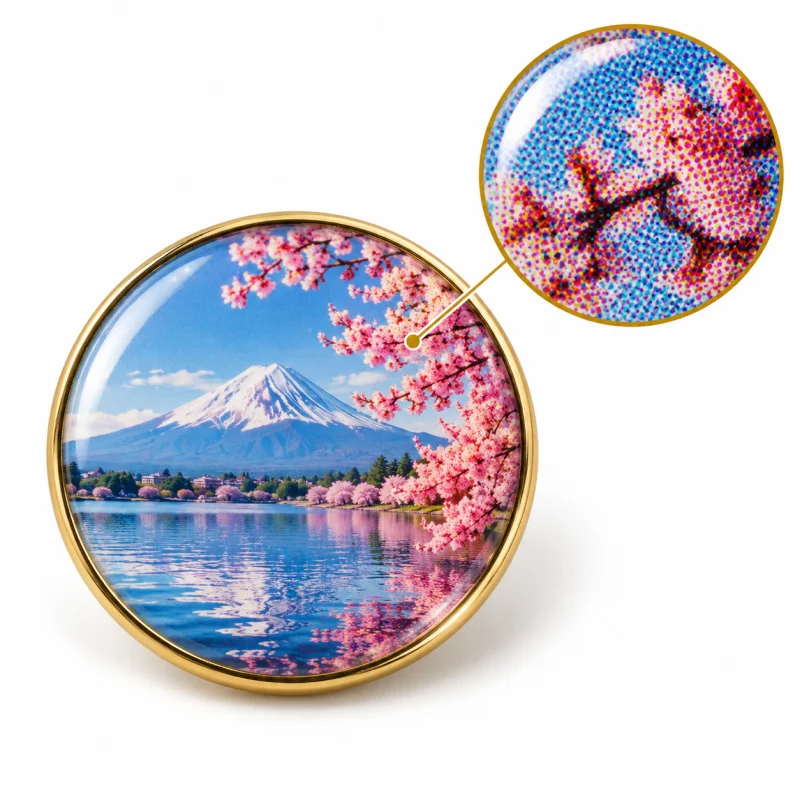
Offset
Four-color halftone, no limit on colors.
Photographs and gradients: good.
Curved or relief face: flat parts only, with an AP protective layer usual.
Typical use: large runs of flat parts.
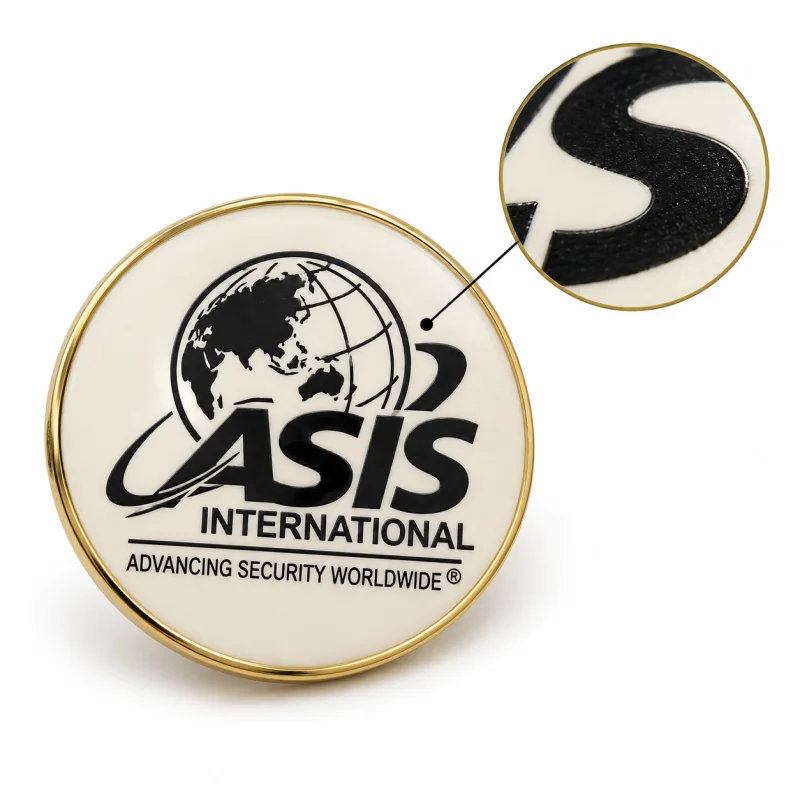
Silk screen
One screen per spot color.
Photographs and gradients: not possible.
Brand color: exact to Pantone, the only one of the four.
Typical use: strict brand color and solid logos, medium to large runs.
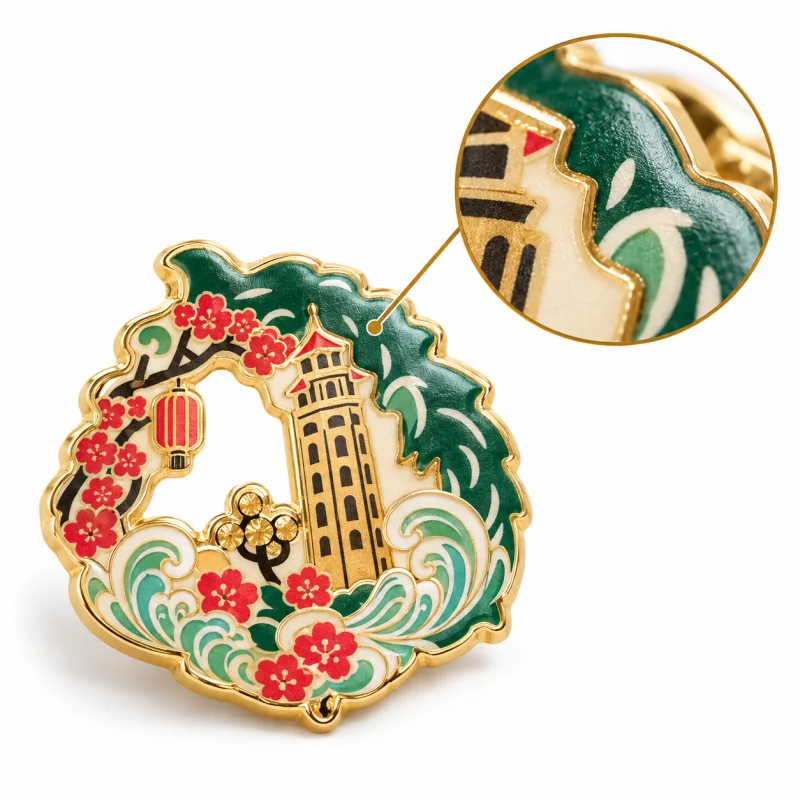
Pad print
One color, or a few.
Photographs and gradients: not possible.
Curved or relief face: flat parts only.
Typical use: a small single-color mark added on top of a main process.
Four sentences on how to choose
UV Printing: The Method We Run Most, and What Offset Cannot Do
UV carries most of the volume on this line. The reason is not that it looks better. It is that it drops three constraints the other three methods carry: a plate for every version, one pass per color, and a face that has to be flat.
1. Blank and trim
The outline is cut from sheet. The face can be flat, or it can be a die-cast relief, which is where UV separates from the other three.
2. Plating
Gold, nickel or the finish you specified.
3. Base coat
A white base is laid across the full face.
4. UV print
Full color in a single pass, printed straight onto the base.
5. Dome
Epoxy is dispensed and flows level. Common, not mandatory.
6. Inspection
Piece by piece. The checks are set out in section 9.
Why UV carries most of our volume
Three properties, and none of them is about image quality.
Why the base coat cannot be skipped
Metal has a color of its own: gold, silver, black nickel, antique bronze. UV ink sits thin, so printed straight onto metal it picks up the reflection underneath. Light colors go dull, red turns brown, blue turns green.
The white base blocks that reflection. The darker the plating, the less you can skip it. On black nickel or antique bronze, a light color without a white base will not land anywhere near the signed proof.
The same four-color limit that applies to offset applies here. CMYK mixes color from four inks at varying dot density, while Pantone is one can of ink mixed in advance. The same red can be brought close, but it will not equal the swatch. This is the principle, not the equipment. Exact means spot ink on silk screen.
7 mm: UV Prints On A Curve, Up To A Ceiling
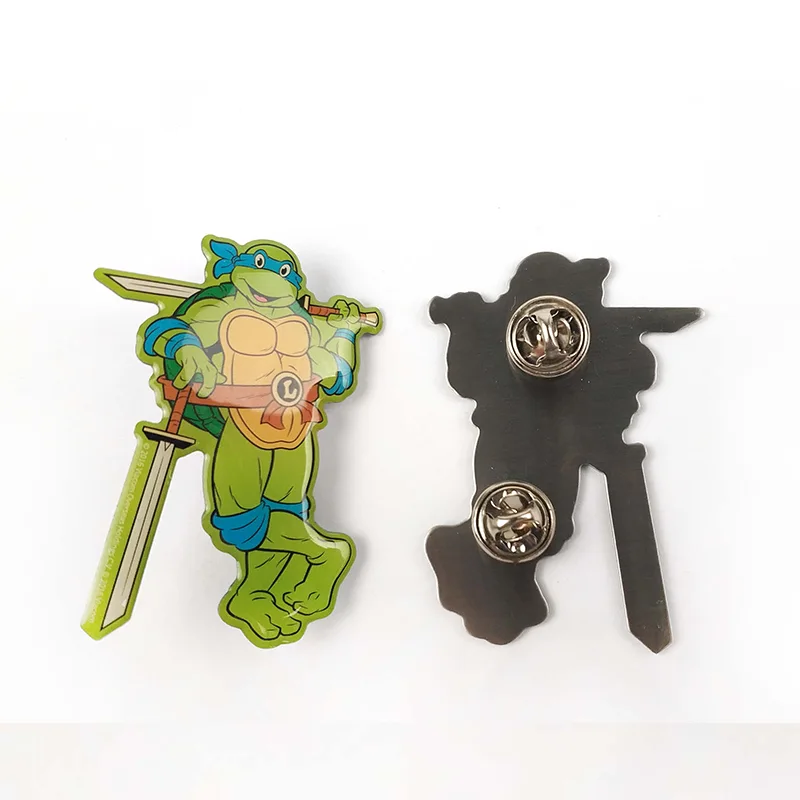
This is the one capability the other three methods do not have. Offset and silk screen print flat parts, and a raised face is outside what they can take. A UV flatbed prints onto the relief itself.
The ceiling is 7 mm of height difference across the face. Past that, the head loses focus, the edges of the artwork go soft, and fine detail drops out. So a file going onto a high-relief piece has two routes: bring the relief under 7 mm, or split the raised face out as a separate operation.
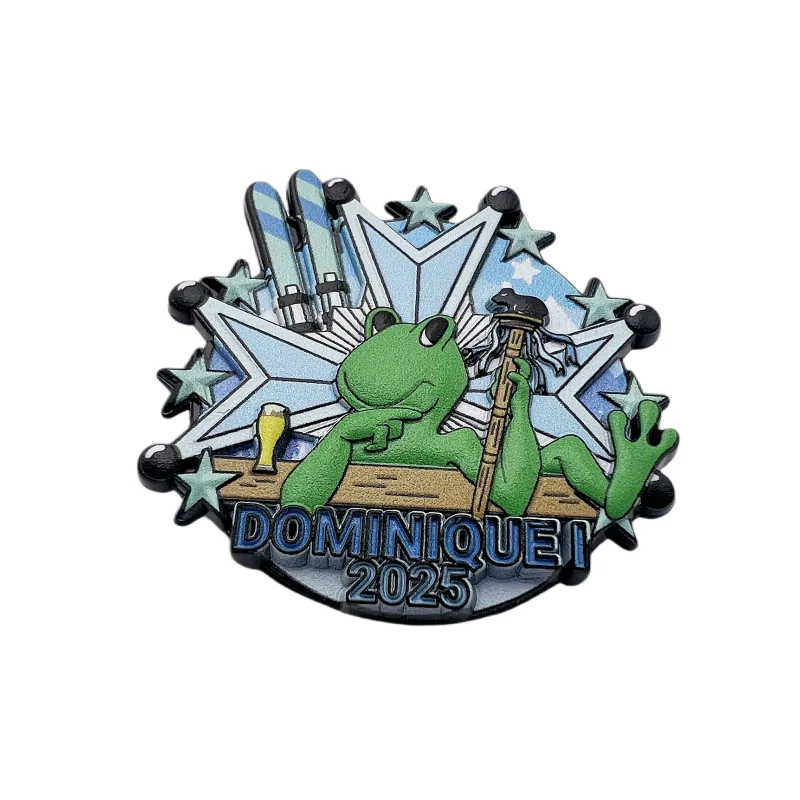
The dome is not a lacquer coat, it is a curved surface
The dome is optional, and it is what most buyers end up choosing. Epoxy is dispensed rather than sprayed, and surface tension pulls it level into a shape that is thick at the center and thin at the edge.
Two consequences follow. It magnifies: a dome is a lens, so artwork near the rim is refracted and pulled out of position, and the effect grows the closer the detail sits to the edge. It deepens color: saturation after the dome is higher than before it, so approval has to be given on a domed sample, not on a printed piece that has not been domed yet.
On a curved piece the dome is itself curved, and both effects get stronger at the rim. If the artwork carries detail near the edge of a relief face, ask for the domed sample before signing anything.
Where offset still wins
Offset brings the per-piece price down on large runs of flat parts, and that is the one place it beats UV. It cannot print a relief, it needs a plate for every version, and flat printed parts usually get an AP protective layer on top. If the order is tens of thousands of flat pieces carrying a photographic design, offset is the cheaper route, and we will say so rather than quote UV.
Silk Screen Printing: One Color at a Time, and Why Color Count Sets the Price
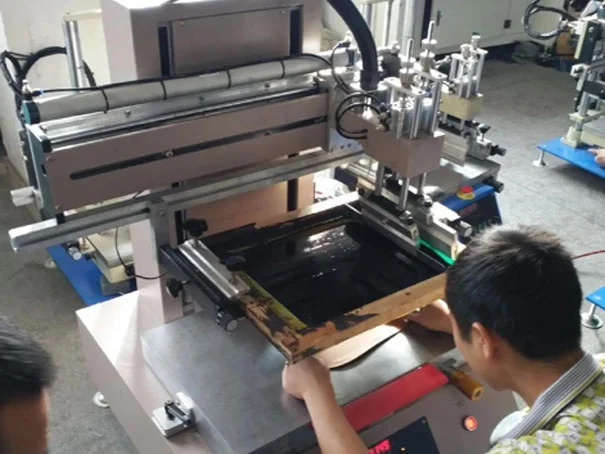
UV and offset both lay the whole image down at once. Silk screen prints one color per pass. That single difference decides how a silk screen job is priced.
The sequence
Blank and trim, plating, base coat, one screen per color, dome if specified, inspection.
Each color in that fourth step goes through three things: a screen is made, an ink is mixed, and the piece is squeegeed and cured. Light colors go down first and dark ones after, because dark over light covers and light over dark does not.
The formula
Color count = screen count equals ink mixes = cure passes.
How that turns into money
Silk screen cost steps with color count, not with area. A three-color job and a six-color job at the same size are not close in unit price. The same six-color job grown from 30 mm to 40 mm moves very little.
Buyers rarely know this, and it is the largest saving on the page. If two colors in the logo are close enough to merge, merging them removes a screen, an ink mix and a cure pass from every piece in the order.
What silk screen buys in return is color accuracy. Spot ink is mixed to a Pantone number and prints to the swatch, which none of the other three methods does.
The cost is gradients. Color goes down in blocks, and a transition shows its edge.
Will Your Artwork Print? The Limits We Check Before Quoting
The first thing we do with a file is not price it. It is decide whether it will print cleanly. Doing that first is what removes the rework later.
Two failures out of five
That is when we tell you to change the file, rather than take the money and remake the order later. The floors are measured at finished size, not at artwork size.
The numeric floors for each of these are listed by process on the artwork service page.
|
Check |
What goes wrong, and what we do about it |
|---|---|
|
Minimum type height |
The halftone fills in and the word reads as a smudge at arm’s length. We measure the letter height at finished size; below the floor we ask you to enlarge it, or move the lettering to silk screen. |
|
Minimum line width |
A fine line breaks into a dotted line in the halftone. Same handling as above. |
|
Minimum gradient step |
Two colors that sit close together band into visible stripes. We ask you to open the color difference, or convert the blend to a solid. |
|
Registration on a full-bleed edge |
Print runs first and the trim follows, so the cut shifts against the artwork. Keep key elements off the edge and inside a safety margin. |
|
Dome refraction at the rim |
The dome acts as a lens and detail near the edge distorts. Keep key detail far enough from the edge. |
Printed Lapel Pin Specs: Size, Thickness, Plating and Backing
The specification range for print is close to enamel, with one difference that matters. Printing is a flat process, so thickness affects weight and feel and has no effect on the artwork. Enamel is the reverse: thickness sets the color space, and a thin piece cannot take fine line work.
|
Item |
Range or option |
|---|---|
|
Size |
Measured on the longest side. 20 to 50 mm standard; larger confirmed against outline and thickness |
|
Thickness |
1.2 mm or 1.5 mm standard, with 1.5 mm usual for print |
|
Material |
Zinc alloy, Zamak 3, as the main route. Iron, brass, stainless steel and aluminum on struck work |
|
Plating |
Shiny gold, shiny silver, copper, brass, black nickel, matte gold, matte silver, antique gold, antique silver, antique bronze, matte black |
|
Surface |
Flat with an epoxy dome, or flat without one |
|
Backing |
Butterfly clutch, rubber clutch, safety pin, magnet, deluxe clutch, brooch pin, tie tack |
|
MOQ |
100 pcs per design |
|
Lead time |
Sampling 7 to 10 days, bulk 15 to 18 days, rush as fast as 7 days |
If what you actually need is a long-term identity mark worn every day, on a security uniform, a fire service shirt, a school blazer or a club jacket, the form on custom badges fits better, and print handles it just as well.
Printed Lapel Pins We Have Produced
These are production runs. Four fields only, all of them checkable against the piece: method, size, plating, material.
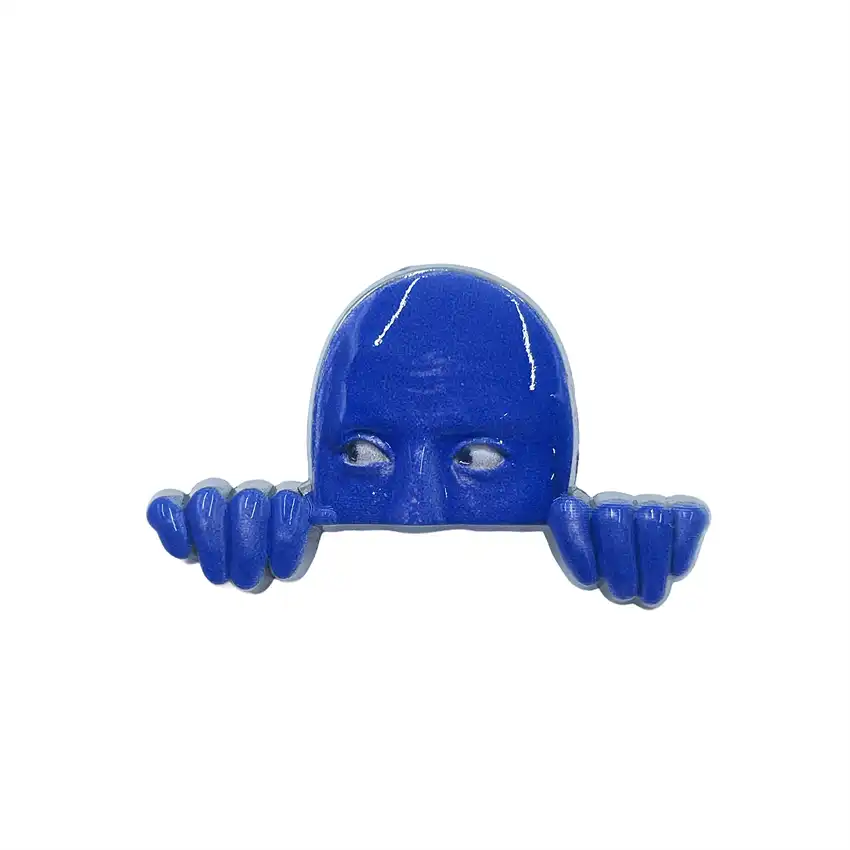
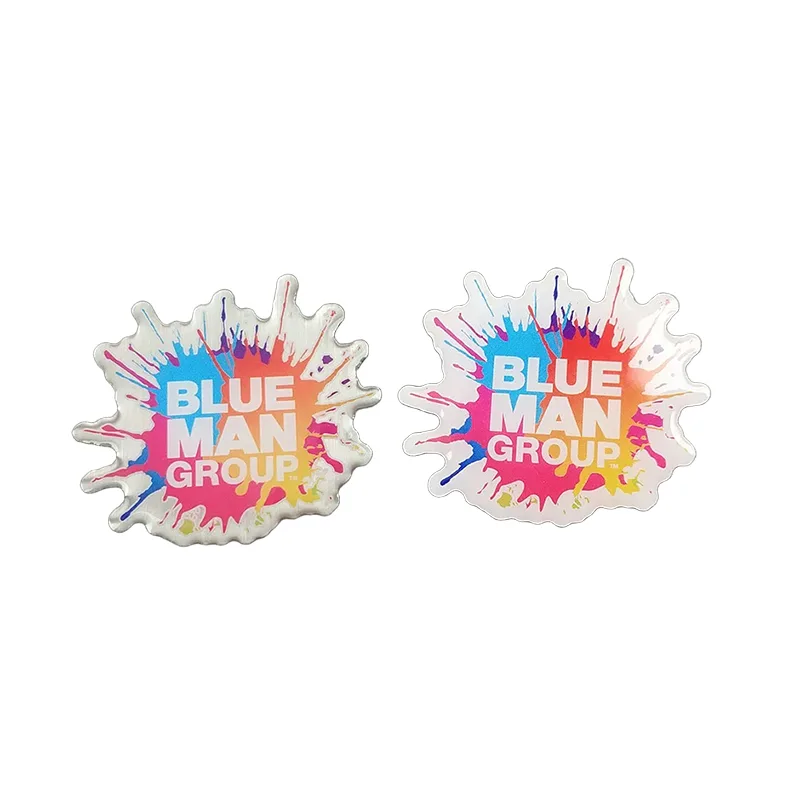
Blue Man Group show merchandise
Method: UV print
Size: 36 × 20 × 2 mm
Plating: shiny silver
Material: zinc alloy
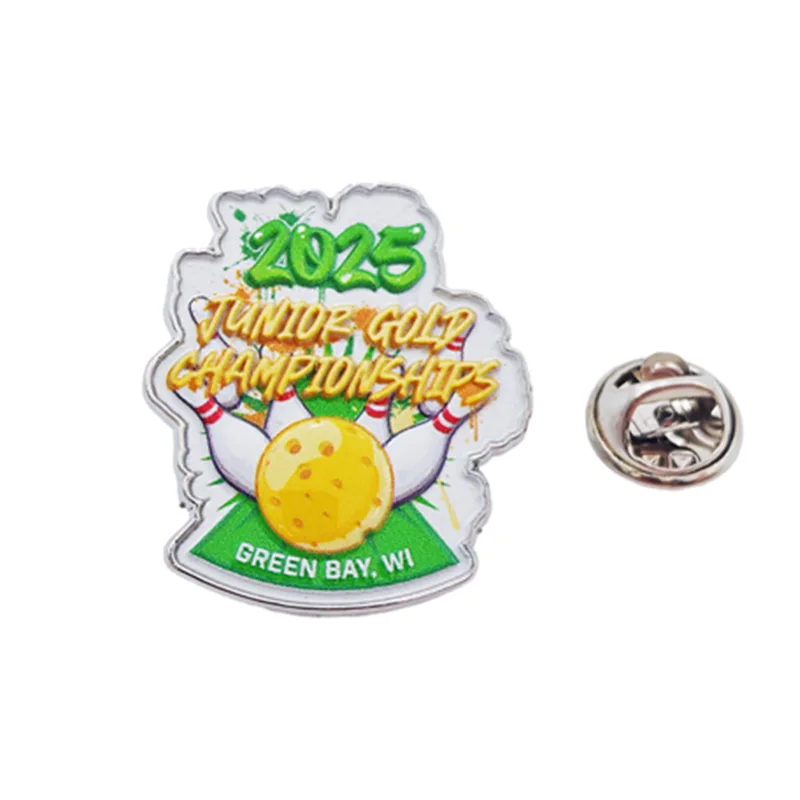
Junior Gold bowling tournament
Method: UV print
Size: 30 × 27 × 1.5 mm
Plating: shiny silver
Material: zinc alloy
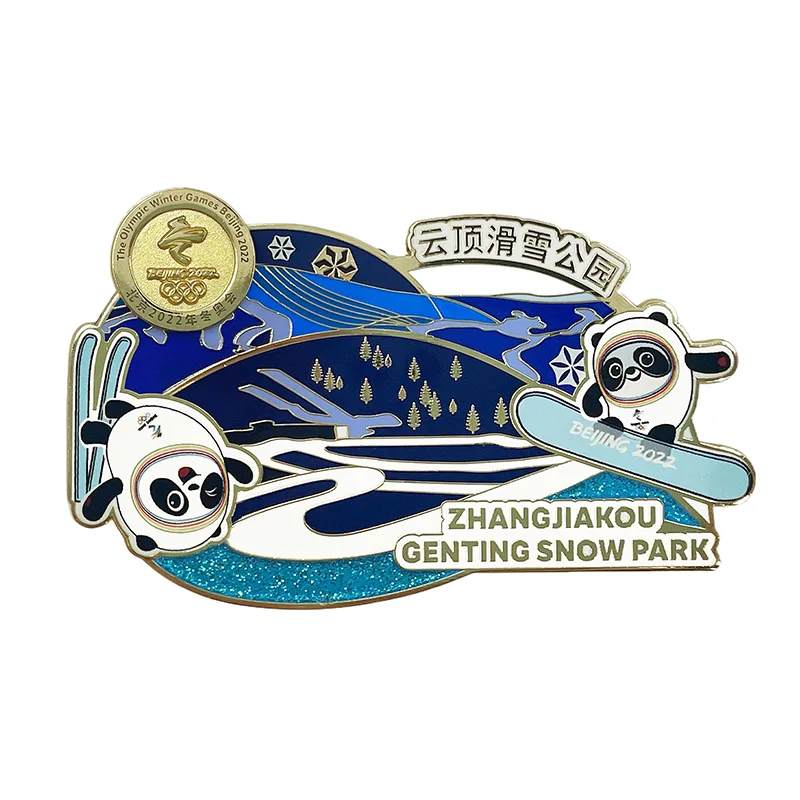
Genting Snow Park, Winter Olympics
Method: UV print
Size: multiple pieces
Plating: dual plating, imitation gold and matte gold
Material: zinc alloy
Where Printed Lapel Pins Are Used
Print has one capability enamel does not: changing the copy does not change the tool. A year, a heat number, a name or a serial number can be changed by replacing a file. On enamel the same change means filling color again. That is why print wins wherever the design is reissued every year.
Ordered by how much of our 624 customer records each group makes up.
Sports and events
47.1 percent of our buyers. A new year, a new distance, a new event mark, and one tool that keeps working across all of them.
Police, fire and uniformed services
19.6 percent of our buyers. A name, a badge number, a unit crest, years of service. None of it is shared between two people.
Associations and membership bodies
6.9 percent of our buyers. Membership year, grade, chapter name. One design with one line changed is a new version.
Schools and clubs
Class, graduation year, club name. School orders often come once a year with one small change.
Corporate and brand events
5.3 percent of our buyers. Event merchandise, fan merchandise, retail collectibles. This group asks for full color and fine detail.
Not sure which group you are
Send the file and the quantity. If your order fits one of these five, we will say which. If it does not, we will still answer on the contact page.
What We Check Before Packing Printed Pins
Printed pieces fail differently from enamel. Enamel mostly fails at the fill: a recess not filled, or color across a metal line. Print fails at registration, at color and at the dome. So the checks are separate.
Answered within 24 hours
A batch that fails stays inside the plant. Any problem gets an answer within 24 hours, with photographs and video rather than an explanation.
The full inspection process is on the quality control page.
|
Check |
What counts as a reject |
|---|---|
|
Registration |
Artwork offset against the trimmed edge beyond the accepted range |
|
Color |
A visible shift against the signed proof, or a shift between pieces in the same batch |
|
Dome |
Bubbles, inclusions, a pulled edge, or uneven flow |
|
Trim |
Bare metal showing, burrs, or artwork cut into |
|
Adhesion |
Ink lifting under a scratch test after doming |
|
Quantity and packing |
Counted against the order line by line |
What Drives the Price of a Printed Lapel Pin
Start with the basis, or no price means anything.
All prices in this section are quoted on
1.5 mm thickness, UV print, standard gold or nickel plating, tooling and freight excluded.
That line is not boilerplate. Metal weight differs by 25 percent between 1.2 mm and 1.5 mm. A dome is a separate operation. Tooling is a separate line. Published price tables almost never state the basis they are quoted on, so two tables that both leave it out cannot be compared with each other.
Size
Priced on the longest side, but cost follows area rather than diameter. Going from 1 inch to 1.25 inch grows the area by 56 percent, and the unit price steps with it. If budget is the constraint, staying at or under 1 inch carries the most value.
Quantity
From 100 to 500 pieces we quote one unit price. The common practice is to band it, one price at 100 and a lower one at 200, and for one team, one chapter or one event, 100 to 300 pieces is the real order size. Above 500 pieces the ladder starts.
Color count, on silk screen only
Silk screen is priced by color count, because each color takes a screen, an ink mix and a cure pass. Merging two close colors in a logo drops the unit price by a step. Offset and UV are not priced this way, because both print the design in one pass.
Finishing
Plating color, with antique gold, antique silver and black nickel above shiny gold and shiny silver; the fitting, with magnet and deluxe clutch costing more; and packaging, from poly bag to backing card to gift box. All of these are quoted as separate lines.
Why there is no full price grid on this page
Size by quantity by color count by plating by fitting by packaging is too many combinations for one table, and any single grid would mislead on the rows it leaves out. Send the size, the quantity, the color count, the plating and the fitting, and the number you get back has all of them inside it.
MOQ, Lead Time and Tooling
Five terms that decide whether an order is worth running, and the one cost buyers most often leave out.
MOQ
100 pcs per design. Different plating and different fittings on the same design count as the same design and can be combined to reach the minimum.
Sampling
7 to 10 days. The sample can be a digital proof, photographs, video, or a physical piece sent to you.
Bulk production
15 to 18 days, counted from approval of the pre-production sample and receipt of the deposit.
Rush
As fast as 7 days where the tool already exists. UV print has more room on a rush order than offset or silk screen, because there is no plate to cut.
Tooling
Kept for 3 years. When cumulative orders for the same design reach 10,000 pieces, the tooling charge is refunded. Repeat orders count toward the total and the count does not reset at year end.
Why tooling pays back
Tooling is the cost buyers most often leave out and the one that pays back most on a repeat. On a 100-piece order it spreads to more per piece than the piece is worth; by 500 pieces it is under a third of that. It is also the reason we suggest combining several versions of one design into a single order.
Frequently Asked Questions
Twelve questions in three groups. The answers are the ones our sales desk gives.
Choosing a process
Production and specification
Quotation, lead time and after-sales
More answers on ordering, shipping and payment are on our FAQ page.
Request a Quote
Send the file and four things with it: size, quantity, color count, plating. If there is no file yet, send a logo or a sketch and we will start from there.
What happens after you send it
1. You senda the file and the four items.
2. We confirm in writing whether it will print cleanly, against the five checks in the limits section.
3. You get a quote with tooling, unit price, finishing and lead time on separate lines.
4. You approve a free digital proof, revised until you can sign it off.
5. You approve the pre-production sample, and bulk production starts.
Still working out whether print is the right process at all? The wider range, which covers die struck, enamel and printed pins side by side, is on custom lapel pins.