CUSTOM SHAPE LAPEL PINS
Custom Shape Lapel Pins: Any Outline, Any Cut-Out
Custom shape lapel pins are cut to your logo outline, not set inside a round badge. The outline is one decision; interior cut-outs are another. One is cut from sheet, the other usually needs casting. We check the outline before quoting, confirm the cut line before tooling, and produce from 100 pieces per design. Free proof, samples in 7-10 days, bulk in 15-18 days. These pins sit inside our custom lapel pins range for brands, clubs, schools and distributors.
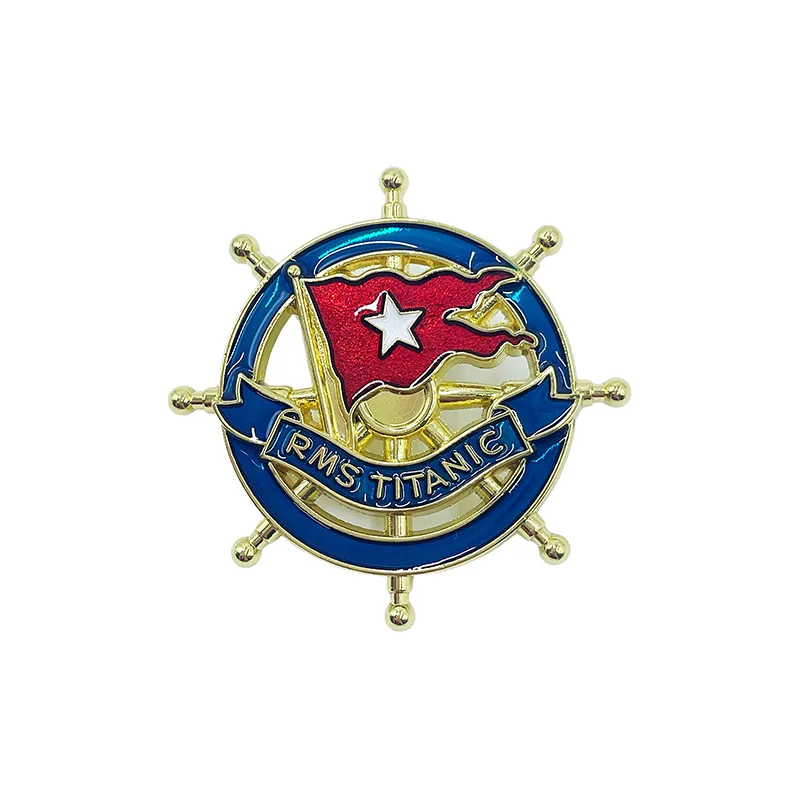
The outline is cut to the drawing; the cut edge is plated with the rest of the pin.
10. Custom Shape Lapel Pins We Have Produced
Below are custom shape pins from our line. Each one lists shape type, process, size, plating and backing.
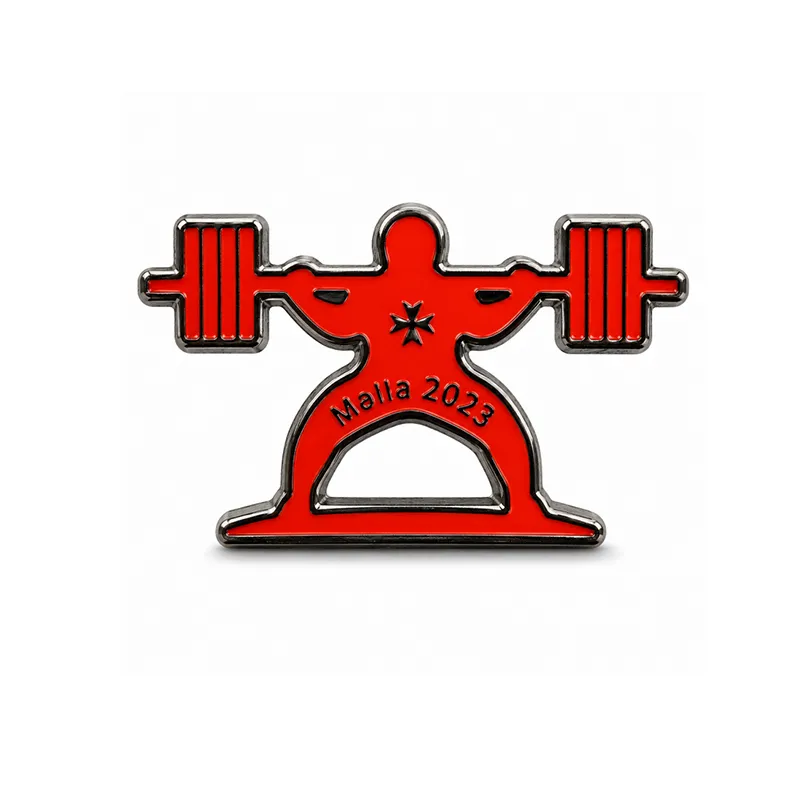
Malla 2023 Weightlifting Pin
| Size | 38 × 28 mm |
| Shape | Custom weightlifter silhouette with interior cut-out |
| Process | Die cast + soft enamel |
| Plating | Black nickel |
| Backing | Butterfly clutch |
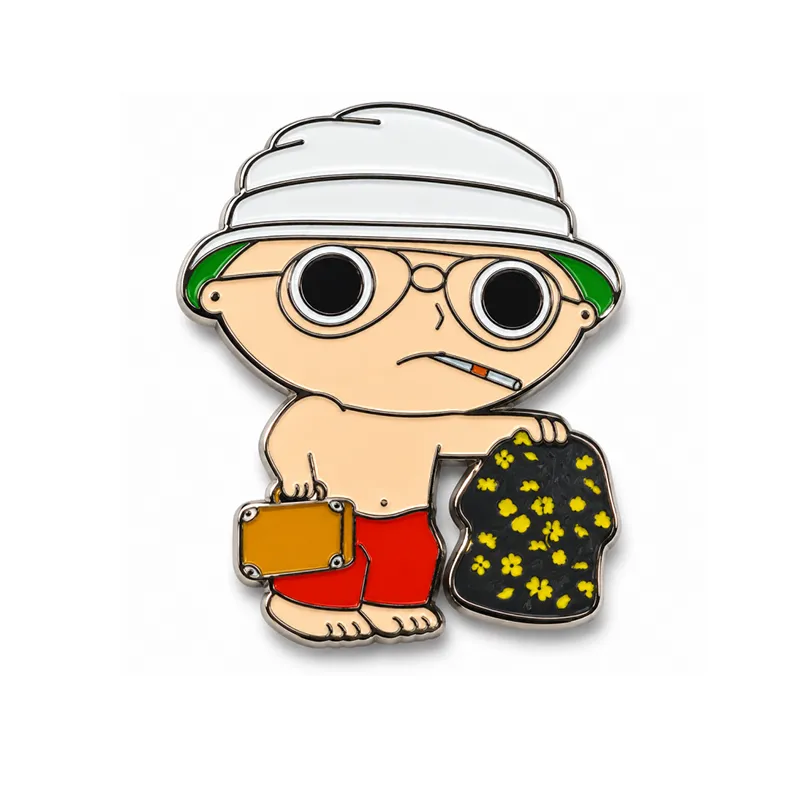
Cartoon Traveler Enamel Pin
| Size | 35 × 38 mm |
| Shape | Custom cartoon character outline |
| Process | Die struck + soft enamel |
| Plating | Shiny silver |
| Backing | Butterfly clutch |

Sileby Town Football Club Pin
| Size | 40 × 45 mm |
| Shape | Custom shield outline with ribbon banner |
| Process | Die struck + soft enamel |
| Plating | Shiny gold |
| Backing | Butterfly clutch |
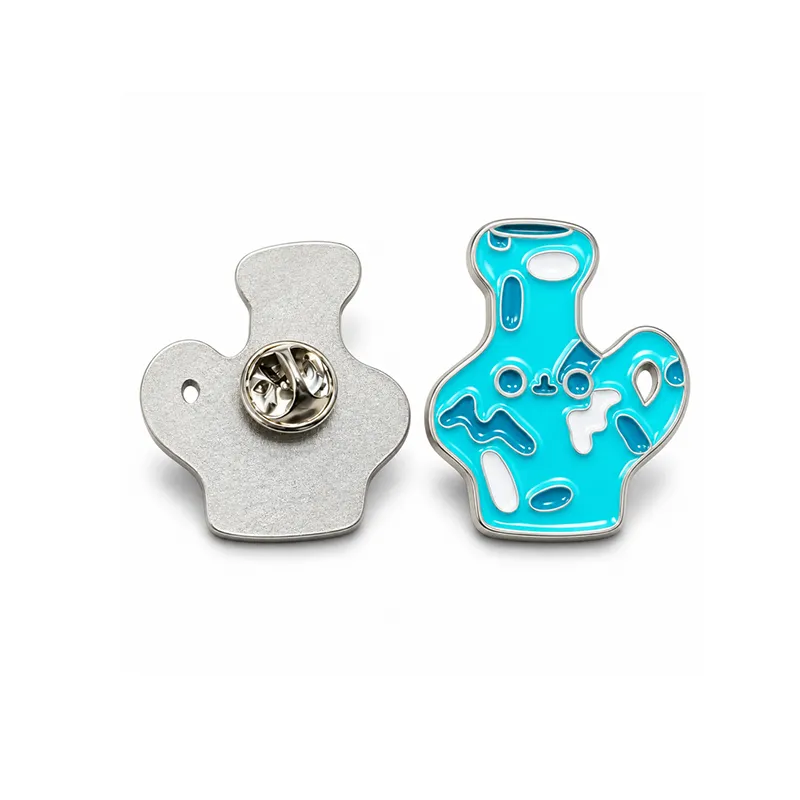
Abstract Bottle Enamel Pin
| Size | 30 × 35 mm |
| Shape | Irregular abstract outline |
| Process | Die struck + enamel fill |
| Plating | Shiny silver |
| Backing | Metal butterfly clutch |
Case parameters are filled from the original sample records, not estimated. Only lapel-size pins appear here. Police, school and shield badges belong to custom badges.
Since 2010
Focused on custom pins
30,000+ pcs a day
In-house production
MOQ 100 pcs
Start your project easily
Bulk 15-18 days
Counted from approval
1. What Counts as a Custom Shape: Outline, Cut-Out, or Relief
When a buyer says custom shape, they can mean three different jobs. Each one runs on a different line and carries a different tooling cost.
Outline only
The pin follows the logo, mascot or lettering, with no holes inside.
Route: Stamped trim die, or printed sheet cut to outline. One trim die.
Outline + cut-out
A real through-hole or negative space inside the shape.
Route: Die casting; thin sheet can be etched. A cast mold.
Outline + relief
The face rises in levels or curves.
Route: Die casting. Priced on relief volume and levels.
| Type | What the artwork shows | Route and tooling |
|---|---|---|
| Outline only | Logo, mascot or lettering follows the edge, no holes inside | Stamped trim die or printed sheet; one trim die |
| Outline + cut-out | A real through-hole or negative space inside the shape | Die casting; thin sheet can be etched; cast mold |
| Outline + relief | The face rises in levels or curves | Die casting; priced on relief volume and levels |
Most requests fall into the first group. The second group is where quotes diverge: it looks like a few extra holes, but it changes the production line. Relief depth is covered on our 3D die cast lapel pins page.
2. Custom Shape vs Standard Pin: When the Outline Pays for Itself
A custom outline is not automatically the better choice. It is a tooling decision: the more specific the outline, the more dedicated the trim die.
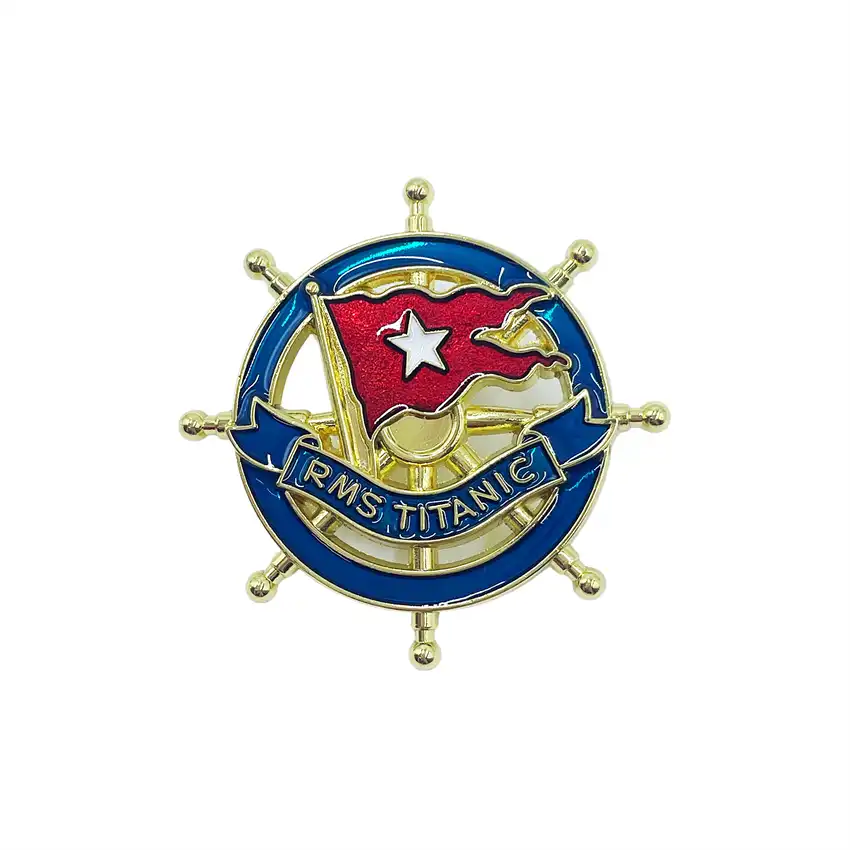
When the outline is worth it
The outline is the brand asset. Logo silhouette, mascot, fixed lettering, state or city shape.
The run reaches 100 pieces per design and is likely to repeat. The mold is kept for 3 years, and the mold fee is refunded at 10,000 pieces.
The shape replaces explanation. An animal silhouette is remembered faster than an animal printed inside a round badge.
When it may not pay
The artwork is a photo, gradient or detailed illustration. The quantity is small and one-off. A standard shape plus print already carries the recognition.
| Dimension | Standard shape | Custom outline |
|---|---|---|
| Tooling | Existing tooling or low mold cost | New trim die; a changed outline means another die |
| Pricing | Standard size bands | Bounding rectangle plus sheet yield |
| Lead time | Faster, and faster on reorder | New tooling quoted separately; first run longer |
| Suited to | Photos, gradients, complex illustrations | Logo outlines, mascots, lettering, state or city shapes |
| Recognition | Carried by the artwork | Carried by the outline itself |
Related: printed lapel pins | custom badges
Our recommendation. If the outline is the idea, cut it. If the artwork is the idea, print it on a standard shape and spend the tooling budget on color and quantity. Large identity badges, including police, school and shield shapes, belong to custom badges, not this page.
3. How the Outline Is Cut: Trim Die, Casting, Etching or Printing
An outline is not cut one way. Four routes have different limits. Pick the wrong one and a clean drawing still cannot be produced.
| Route | Can do / cannot do | Material |
|---|---|---|
| Stamping / trim die | Can cut any outer outline, shallow relief and recess fill. Cannot open an interior hole or form true 3D relief. | Brass, iron, copper; stainless or aluminum by order |
| Die casting | Can make outer outlines, interior holes, cut-outs and 3D relief. Higher mold cost; not economical for thin sheet. | Zamak 3 |
| Etching | Can make fine lines, thin parts and complex outlines. Limited thickness. | Brass, iron |
| Printing | Can print full color, gradients and photos, then cut the outline from sheet. Interior holes limited. | Sheet plus printed face |
Our stamping line cuts the outline only. It cannot open an interior hole. If the shape has a real through-hole, the route changes to die casting. If it is a thin sheet with fine lines, etching can run it. This is a process boundary, not a weakness. Saying it before tooling is cheaper than fixing it after.
Related: die struck lapel pins | 3D die cast lapel pins | zinc alloy die casting process
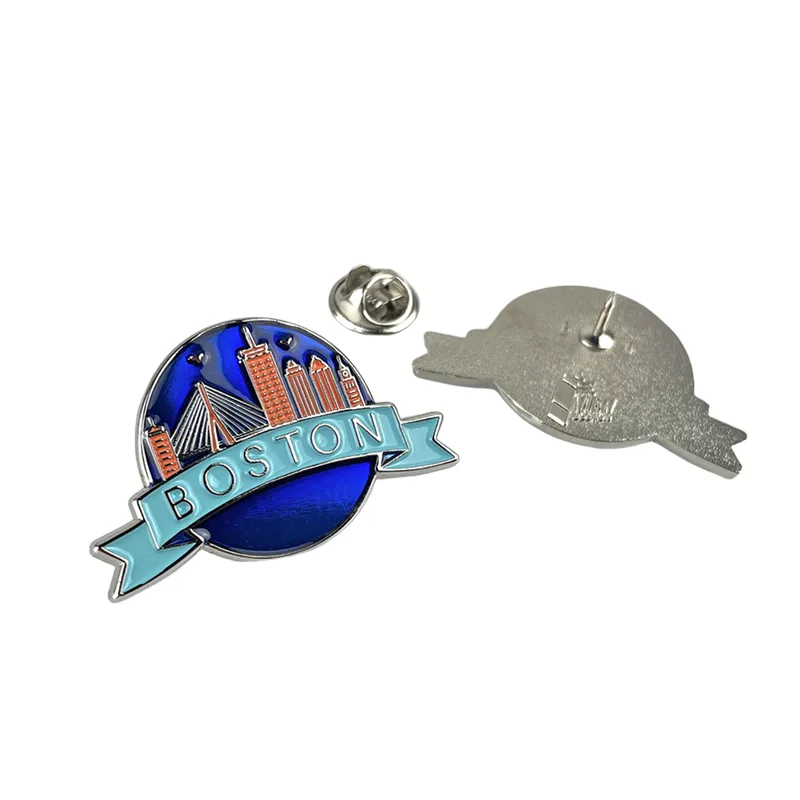
A standard outline and a custom outline, same product family.
4. Interior Cut-Outs: What the Metal Can Hold
An interior cut-out is where custom shape pins fail. On screen it is a hole. On the line it is four checks.
2 mm
Minimum hole
Below 2 mm the mold cannot hold the hole reliably, and plating or polishing can close it. Above 2.5 mm thickness, the hole needs to be larger.
0.2 mm
Minimum metal line
Outline edges, letter strokes and cut-out edges all count. Below 0.2 mm, metal does not fill during casting.
Bridge
Between two cut-outs
If the bridge is too narrow, plating cannot hang on it and polishing distorts it. We mark bridges that need widening on the proof.
Radius
Internal corners
Sharp corners concentrate stress and crack. We round them on the proof. The outside look barely changes.
Three examples show where a drawing breaks
Letter O. The inner hole must be at least 2 mm, the ring wall at least 0.2 mm, and the enamel space has to fit inside the ring.
State or city outline. Long thin projections bend. The backing has to avoid them, and narrow bridges have to be widened.
Mascot eye. If the pupil is under 2 mm, do not cut it through. Render it in enamel or print.
If a decorative opening is under 2 mm, we recommend rendering it with enamel or print rather than making it a through-cut. Related: artwork requirements
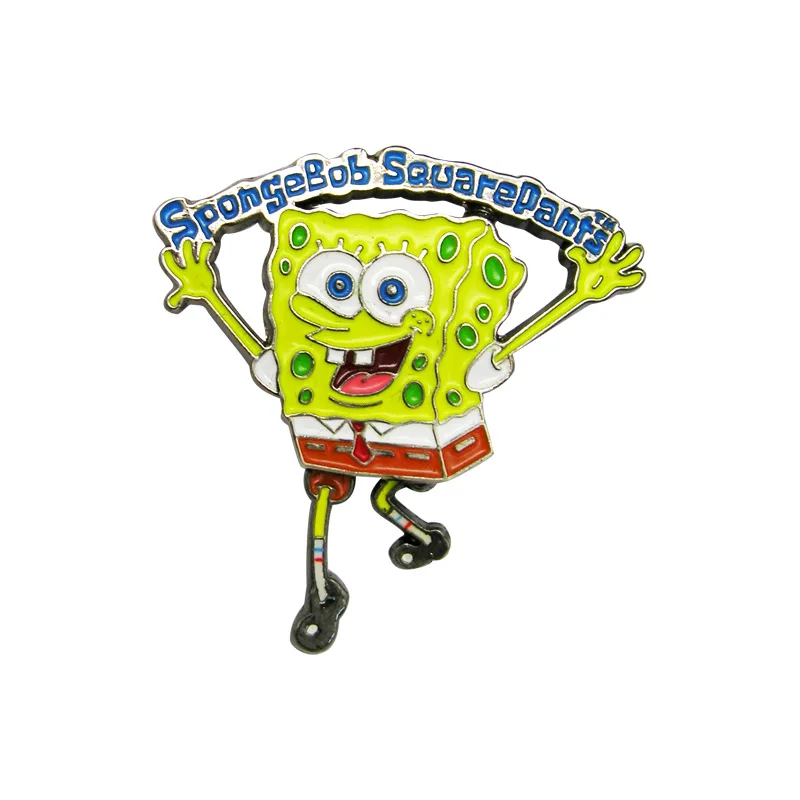
A cut-out follows the drawing; the bridge is the part that decides whether it holds.
5. Will Your Outline Cut? Five Checks Before Quoting
We check the drawing before we quote, not after. If one of the five checks fails, the first reply is a drawing fix.
| Check | Limit or method | If it fails |
|---|---|---|
| Outline closed | Vector path closed, no breaks | Redraw the path |
| Minimum line width | 0.2 mm | Thicken the line or enlarge the pin |
| Minimum hole | 2 mm, larger above 2.5 mm thickness | Enlarge the hole, or fill it with enamel or print |
| Enamel space | Soft 0.3 mm, imitation hard 0.5 mm | Simplify the detail, or switch to print |
| Size | 15-60 mm, measured on the longest side | Reduce, split, or move to another product type |
Three file rules. Vector only: AI, EPS or PDF. Cut line on its own layer, separate from color. No drop shadow, glow or transparency stacking; flatten them to solid outlines.
Related: artwork requirements
Not sure whether your shape will cut?
Send the vector file and the size. We will return a manufacturability check and a cut-line proof before any tooling is quoted.
6. What You Approve Before Tooling Is Cut
Most after-sales disputes on custom shape pins are not about color. They are about the piece not matching the drawing.
| What you approve | What you see | Why it is settled now |
|---|---|---|
| Outer cut line | Outline drawing with the cut line marked | Changing the outline after tooling means a new trim die |
| Hole position and size | Holes drawn to scale; under 2 mm flagged | An undersized hole can only be fixed by changing the drawing or the process |
| Metal bridges | Bridges that need widening are marked | A narrow bridge distorts during plating and polishing |
| Backing position | Post drawn on the shape, placed on the balance point | An off-center post makes the pin tip or rotate |
| Size | Bounding rectangle, longest side | Size drives material and price |
| Material and process | Stamping, casting, etching or printing | A material that does not match the shape runs over budget |
| Plating and fill | Plating color, fill method, edge appearance | The cut edge is plated, so it does not feel sharp or oxidize |
| Quantity | From 100 pieces per design | Quantity spreads the tooling cost |
The approval flow. You send a vector file. We run the manufacturability check. We return an annotated outline proof. You approve. We cut tooling. For cast 3D pieces, the proof includes a 3D drawing for the side, levels and cut-outs.
This is not a formality. Changing the shape after tooling means buying another mold.
7. What Makes an Irregular Shape Cost More
An irregular shape costs more for three specific reasons, not because the process is complex.
01
A new trim die
A standard round, square or oval runs on existing tooling. A custom outline needs its own trim die. A changed outline, even a square corner turned into a radius, needs a new die.
02
Bounding rectangle and sheet yield
Custom shapes are priced on the bounding rectangle, not the actual area. A long, thin outline can have a bounding rectangle much larger than the metal it uses.
03
Interior holes move the job to casting
If the outline contains a real through-hole, stamping cannot run it. The job moves to die casting. A cast mold costs more than a trim die.
What does not change: MOQ 100 per design, plating options, fill options, backing options, samples in 7-10 days, bulk in 15-18 days.
Four ways to control cost: fewer sharp corners and long thin projections; fewer interior holes, and color instead of a through-hole where possible; keep the size within 15-60 mm; reuse the original tool on reorders.
8. Finishing the Shape: Edge, Plating and Backing
Cutting is only half the job. The cut edge and the backing decide whether it feels like a finished pin.
1
Trim
Cut away the waste outside the outline.
2
Deburr
Remove the burr left by the cut.
3
Polish
Rough and fine polish; thin projections get a lighter pass.
4
Plate
The cut edge is plated on the 13-station line.
Backing and balance
An irregular shape does not always balance at its geometric center. A post placed in the middle can make the pin tip forward or rotate. We find where the weight sits, then place the post where it carries that weight. Long thin projections are kept away from the post. Butterfly clutch, rubber clutch and magnet are available; the choice follows weight and wearing situation.
The outline decides what it looks like. The edge and the backing decide whether it stays on.
Related: zinc alloy die casting process | plating options
9. Shape and Color: Enamel, Print, Bare Metal or Cast
Once the shape is set, choose the fill. Not every shape suits every fill. The table routes the decision.
| Fill | Suits / does not suit | Read more |
|---|---|---|
| Soft enamel | Suits outline plus medium detail and a tactile surface. Does not suit photos, gradients or very fine lines. | Enamel lapel pins |
| Imitation hard enamel | Suits outline plus finer detail and a smooth surface. Does not suit large photo areas or very small text. | Enamel lapel pins |
| Suits full color, gradients, photos and detailed illustrations. Does not suit the classic metal-line badge look. | Printed lapel pins | |
| Bare die struck | Suits outline plus shallow relief, where plating and light carry the design. Does not suit multicolor illustrations or photos. | Die struck lapel pins |
| 3D die cast | Suits outline plus interior holes, relief and multiple levels. Does not suit thin sheet, low budget or very small size. | 3D die cast lapel pins |
If the shape has holes or cut-outs, look at casting first. If the artwork is a photo or gradient, look at print first. If the outline and the metal surface are the idea, look at stamping.
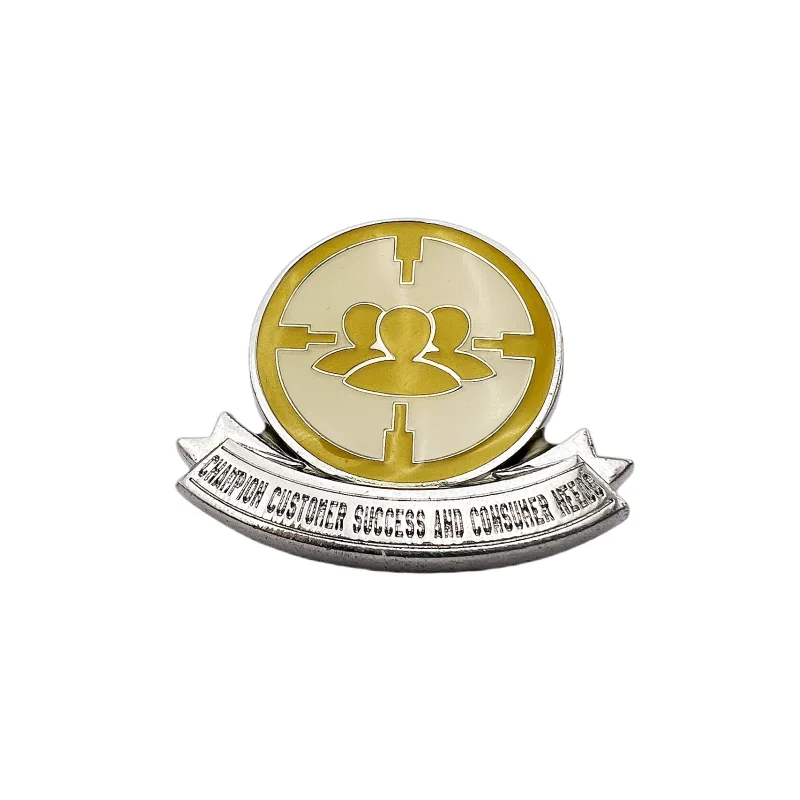
Hard Enamel Pins Sileby-Town-Football-Club-Pin 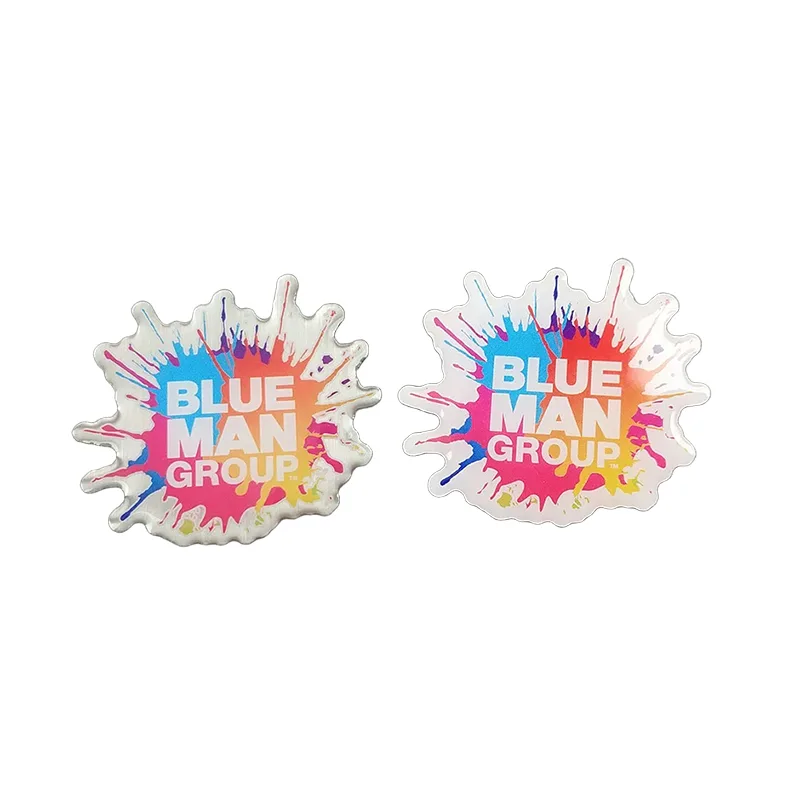
Printed-photo-style-pins 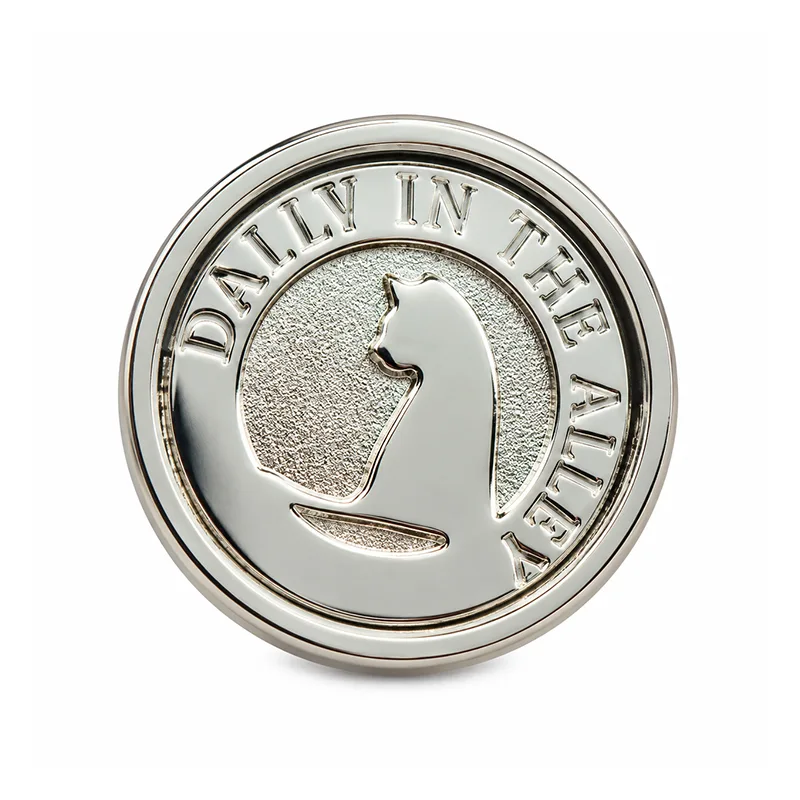
Two-Tone-Without-Color-Die-Struck-Lapel-Pin 
3D Lapel Pins
11. What We Check Before Packing Custom Shape Pins
Custom shape pins add four checks to the standard four: outline dimensions, plating appearance, post and fitting, and quantity against the packing list.
Burr on the cut edge
Hand feel plus visual
If it fails: Re-deburr or polish
Cut-out symmetry
Overlay against the approved proof
If it fails: Off-center pieces pulled for rework or scrap
Bridge integrity
Visual plus light pressure
If it fails: The batch is isolated if a bridge is broken
Post alignment to balance
Lay flat, watch for tip or rotation
If it fails: Reposition the post and remake
Every piece is inspected before packing, with photos or video available. An issue gets a response within 24 hours. Related: quality control
LEAD TIME & TOOLING
12. MOQ, Lead Time and Tooling
| Item | Terms |
|---|---|
| MOQ | 100 pieces per design |
| Sampling | 7-10 days |
| Bulk | 15-18 days |
| New trim die or cast mold | Quoted separately; lead time confirmed from the drawing; not inside the 15-18 days |
| Reorder on existing tool | Faster; 7-day rush applies to existing tool, UV or short-cycle work only |
| Mold storage | 3 years; mold fee refunded at 10,000 pieces |
| Quote | Detailed quote within 12 hours when the information is complete |
What to send for the fastest quote.
1. Vector file with the outline and holes on separate layers.
2. Size, measured on the longest side, and quantity.
3. Material preference: sheet metal or Zamak 3.
4. Plating color and fill method.
5. Backing type and packaging requirements.
Related: packaging options
13. Frequently Asked Questions
The questions that come up most often once a buyer has the shape, the limits and the price in front of them.
Start Your Custom Shape Pin Project
Send a vector file with the outline and holes on separate layers. We will return a manufacturability check and a cut-line proof before any tooling is cut.
1. Send your outline. A vector file, sketch or photo of an existing pin all work.
2. Check and proof. We confirm the route, the cut line and the backing, then send the approval proof.
3. Sample and production. Sample in 7-10 days; bulk in 15-18 days from written approval.