CORPORATE & COMPANY LOGO PINS
Custom Corporate Lapel Pins for Company Logo Programs
Corporate lapel pins and company logo pins are rarely a single order. One company logo runs across recognition, service awards, onboarding, trade shows and client gifts, and the same artwork has to survive every format. We make them in-house: artwork review, mold cutting, stamping or casting, plating, enamel fill and packing. Programs start at 100 pieces per design, with samples in 7-10 days and bulk in 15-18 days. This page sits inside our custom lapel pins range; send a logo for a written spec and quote within 12 hours.
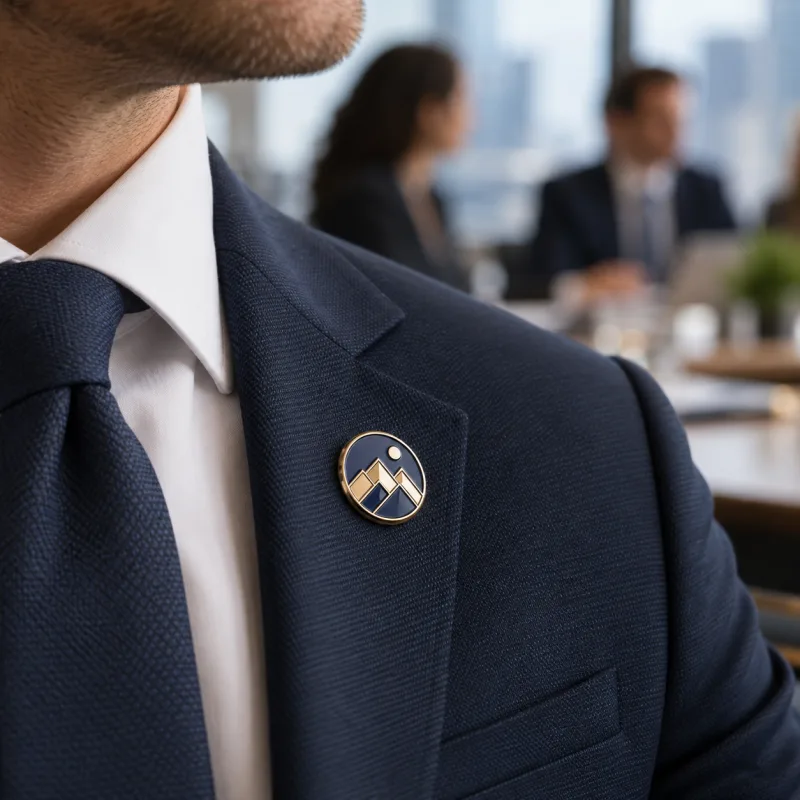
A company logo pin on a blazer: plating, enamel fill and backing all read at arm’s length.
Since 2010
Focused on custom pins
30,000+ pcs a day
In-house production
MOQ 100 pcs
Start your project easily
Bulk 15-18 days
Counted from approval
1. Custom Corporate Lapel Pins We Have Produced
Below are custom corporate pins from our line. Each one lists logo, process, size, plating and backing.
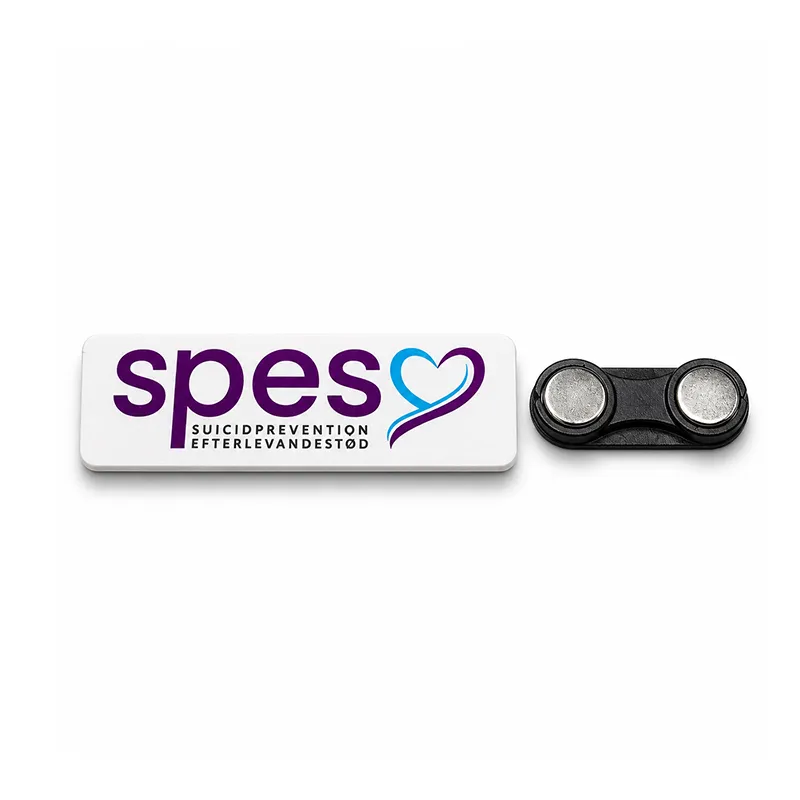
Acrylic Awareness Corporate Lapel Pin
| Size | 45 × 20 mm |
| Logo | SPES |
| Process | UV Printing |
| Plating | No Plating |
| Backing | Magnetic Backing (Dual Magnets) |
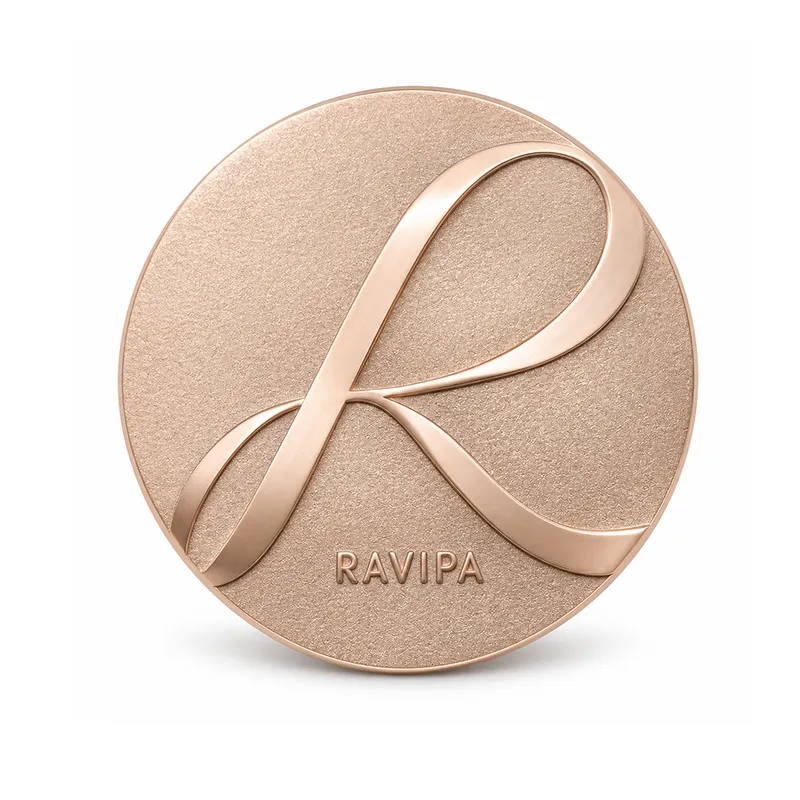
Matte Copper Brand Identity Corporate Lapel Pin
| Size | Ø30 mm |
| Logo | RAVIPA |
| Process | Die Casting + Raised Relief |
| Plating | Rose Gold |
| Backing | Butterfly clutch |
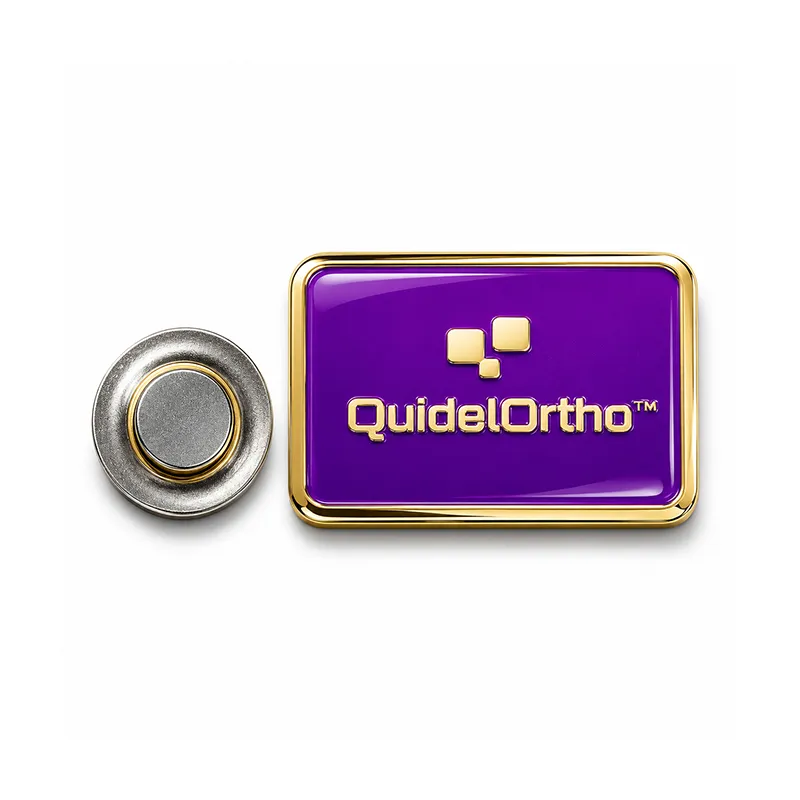
Soft Enamel Corporate Branding Corporate Lapel Pin
| Size | 30 × 25 mm |
| Logo | QuidelOrtho |
| Process | Die Casting + Soft Enamel |
| Plating | Shiny gold |
| Backing | Butterfly clutch |
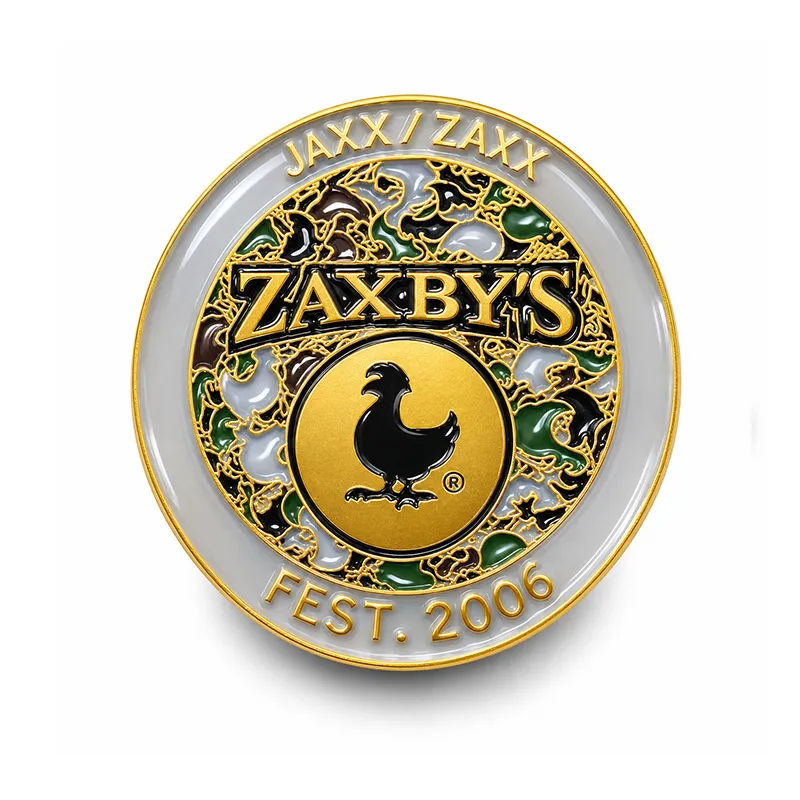
Engraving Employee Engagement Company Logo Pin
| Size | Ø40 mm |
| Logo | Zaxby’s |
| Process | Die Casting + Engraving+Enamel |
| Plating | Gold |
| Backing | Metal butterfly clutch |
Case parameters are filled from the original sample records, not estimated. Only custom company logo pins appear here. Employee Recognition Pins belong to custom employee recognition pins.
1. Where Corporate and Company Logo Pins Do Real Work
Corporate pin projects differ less by process than by program type. A 25mm soft enamel pin worn on a uniform every day asks for a different backing and packing than one given away over three days at a trade show. Sort the project into the right type first, and the build follows.
Employee recognition
Soft enamel or printed, with name or year added
What changes: High volume, frequent wear, secure backing
Settle first: Batches? Name needed?
Years of service
Die struck or imitation hard enamel, with a year plate
What changes: One outline reused for years, tiers added over time
Settle first: How many tiers this year?
Onboarding and daily staff wear
Soft enamel, one standard size
What changes: Large quantity, fixed date, packing by department
Settle first: Hires at once? Split by location?
Trade shows and conferences
Printed or soft enamel, simple backing card
What changes: Short lead time, price sensitive, fast handout
Settle first: Show date? Booth number on card?
Client and partner gifts
Die struck or imitation hard enamel, with a gift box
What changes: Small quantity, higher presentation standard
Settle first: Gift box? Printed card?
Brand merchandise and retail
Printed or imitation hard enamel, backing card or hang tag
What changes: Design-led, retail-ready packing
Settle first: Retail packaging or barcode?

Uniform and daily wear: the pin has to stay put through a shift.

Client and partner events: presentation matters more than volume.

Trade shows and giveaways: short lead time, fast handout.
Employee recognition and years of service are the two types buyers most often mix. The difference is whether the pin is tiered by year: one design given once is recognition; one outline reordered each year with a new year plate is a service series.
If a project spans two types, set the build by the type with the highest wear frequency, then add a separate gift tier for presentation. Do not use one backing and one packing spec for everything.
2. How a Company Logo Becomes a Wearable Pin
Not every company logo pin survives the move to metal at 1:1. The losses usually happen in four places: size, thin lines and small text, color count, and gradients or photographs. Check these before a quote, so the price is not built on artwork that cannot run.
Size
The regular range is 15-60mm, priced by the longest edge, with 2mm a common thickness. Most corporate pins are single-sided. Double-sided work costs noticeably more because it needs two forming passes and alignment. Bigger is not always clearer: at the same line weight, a larger pin makes the lines relatively thinner, and they can break up after plating.
Line weight and small text
Raised or recessed metal lines need a minimum width of 0.2mm. Below that, lines can break during polishing and plating. Small text has no single millimetre threshold. It depends on the final height and stroke count: the smaller the letters and the more strokes, the closer they sit to the line limit. We mark text that needs bolder strokes or simplification on the approval drawing, and cut the mold after it is changed.
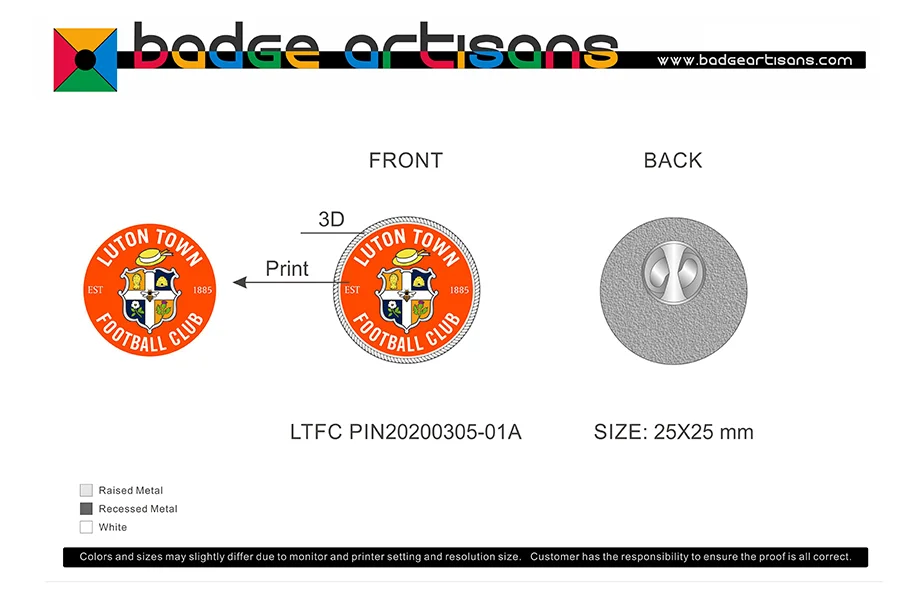
An artwork proof: front and back views, finished size and the raised areas marked before tooling.
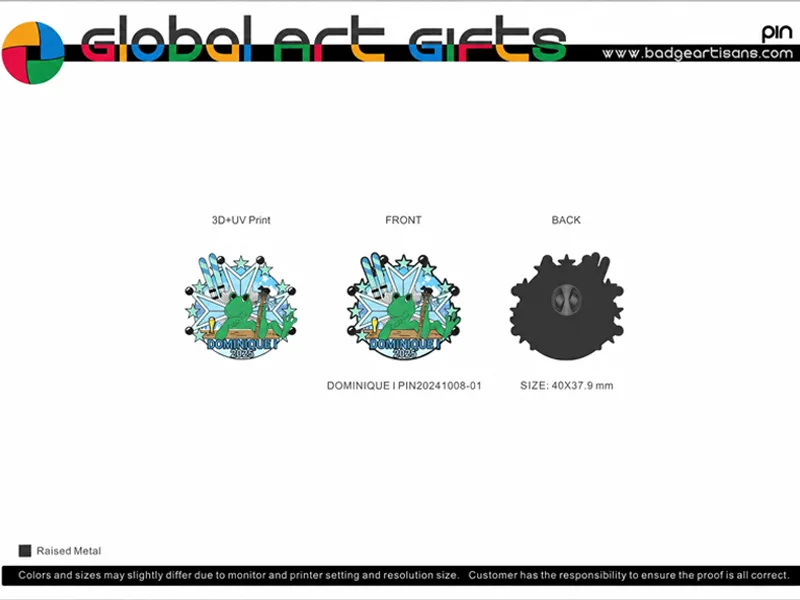
A print proof for a full-colour artwork: gradients and photographic detail move to UV print.
Color count and Pantone
Soft enamel holds color in a 0.3mm recess; imitation hard enamel uses 0.5mm. More colors mean more metal dividers and a busier face. Most corporate logos run 2-4 colors; above six, printing is usually the better route. Colors are matched to Pantone references. The approved sample and color record stay on file for the next reorder. We do not promise a Delta E figure; we compare against the retained standard.
Gradients, shadows and photographs
Enamel is a flat fill. It cannot carry a continuous gradient, soft shadow or photograph. Those artworks go to UV printing, offset printing or screen printing, which hold transitions and detail but feel different from metal relief. The test is simple: gradients, shadows or real photographs mean print; flat color blocks mean enamel.
Send AI, EPS or an editable PDF. We return an artwork review within 24 hours, with the lines, text and color references that need changing marked on the drawing. Third-party trademarks need written authorization before the mold is cut. More on file requirements: custom artwork service.
3. Which Pin Build Fits Each Program
The process pages explain how each build works. This section only routes a program to a build. No process is inherently better; the fit matters.
|
Program |
First choice |
Alternative |
Avoid |
Why |
|---|---|---|---|---|
|
Employee daily wear |
Soft enamel |
Printed |
Bare die struck with no color |
Full color, resists daily friction |
|
Service awards |
Die struck or imitation hard enamel |
Soft enamel with a year plate |
Printed, which reads light |
Metal weight and ceremony |
|
Trade show giveaway |
Printed or soft enamel |
Die struck |
Imitation hard enamel, which adds cost |
Short lead time, price sensitive |
|
Client gifts |
Imitation hard enamel or die struck |
Soft enamel with a gift box |
Plain printed pin |
Close-up finish and presentation |
|
Retail merchandise |
Printed or imitation hard enamel |
Soft enamel |
Loose pins with no backing card |
Design detail and shelf packing |
|
Uniforms and high-movement roles |
Soft enamel with rubber clutch or magnet |
Printed |
Butterfly clutch, which can snag |
Stays on, protects clothing |
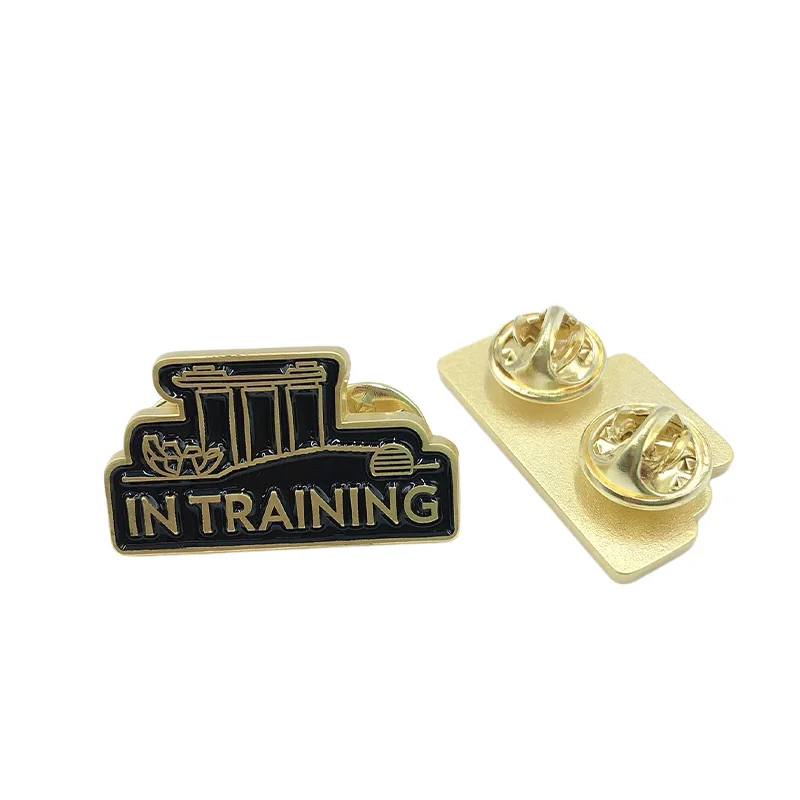
Soft enamel
Recessed colour, raised metal lines. The workhorse for daily wear and high volume.
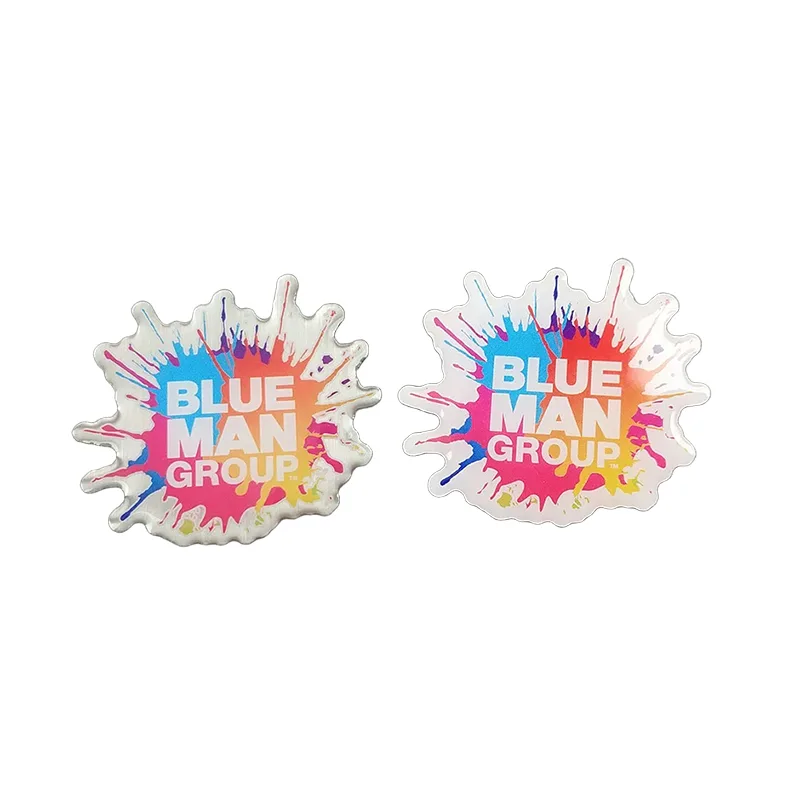
Three tests settle most cases:
1. Gradients or photographs in the artwork: print.
2. Metal feel, few colors, multi-year reorders: die struck or imitation hard.
3. Many colors, budget first, short lead time: soft enamel or print.
Send the artwork, quantity, in-hand date and wearing context. We return a build recommendation for the program, not the highest unit price. Detail lives on the process pages: enamel lapel pins, die struck lapel pins, printed lapel pins.
4. Building a Recognition or Service-Award Series
A corporate program earns its value in year two and year three, not on the first order. The first version has to leave room for tiers, or every year brings a new mold and a new color match.
What changes between tiers
Keep tier changes on parts that do not touch the mold:
Plating: gold, silver, antique gold or antique silver. Changing plating does not change the mold.
Color band: same artwork, different main color, useful for departments or regions.
Year plate or small attachment: a separate piece mounted on the same body.
Size: enlarging or shrinking the same artwork needs a new mold, so avoid it if the series is meant to last.
Changing the outline, even rounding a square corner, needs a new trim die. Lock the outline in the first version and let tiers move through plating, color and attachments.

One outline, many tiers: the same body can carry different plating, color bands and year plates.
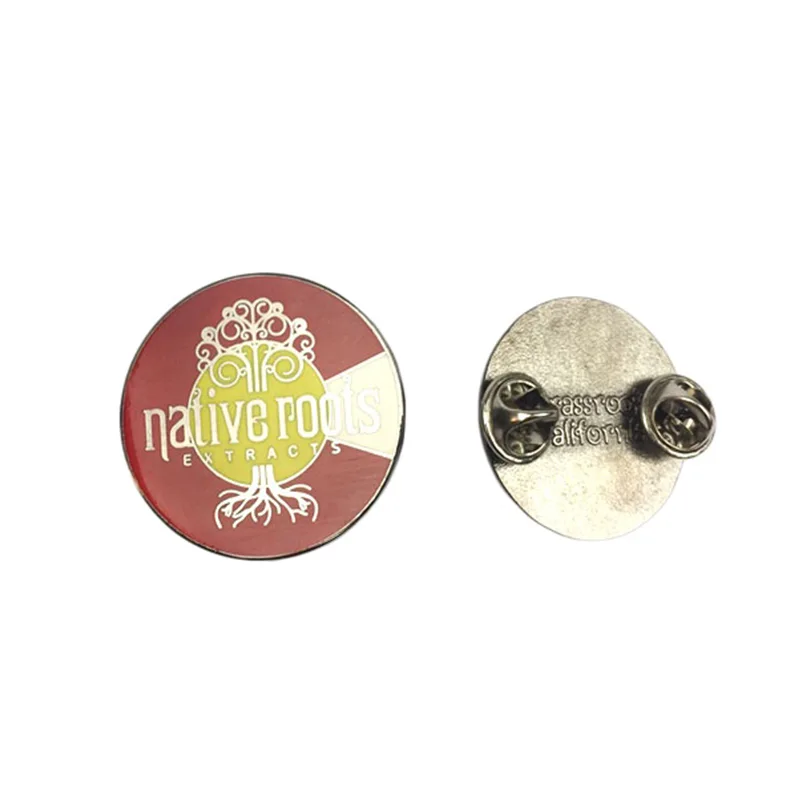
The same body in year two: new plating, a new colour band or a new year plate, with no new mold.
Keeping reorders consistent
Keep three records per design: the approval drawing, the approved sample and the color record. Reorders are checked against those files, not memory. Molds are kept for three years, and the mold fee is refunded at 10,000 pieces. For a multi-year series, that means the tooling cost is paid once.
Planning the release
Release the core tier first, the one most people receive. Add higher tiers by year or grade later. Do not produce five tiers in year one: the higher tiers sit in stock unused and make the budget harder to justify. Change one variable per tier, and compare each new approval drawing against the previous tier.
Award design, ceremony flow and recognition strategy are outside this page. This section covers the pin series itself.
5. Keeping the Logo Color Consistent Across Reorders
Color drift on a reorder usually comes from missing records, not from a bad match. A new supplier, a new batch or a gap of a year leaves no one able to say what the last run looked like.
01
Set the Pantone reference
At artwork approval, every color is tied to a Pantone number, not described as gold or blue.
02
Approve the sample
Check the sample against the Pantone reference and the approval drawing, including plating, fill and surface finish.
03
Keep the record
The approved sample, color record and plating batch information stay with the approval drawing.
04
Compare before the next run
Before a reorder, the new sample is checked against the retained standard, then production starts.
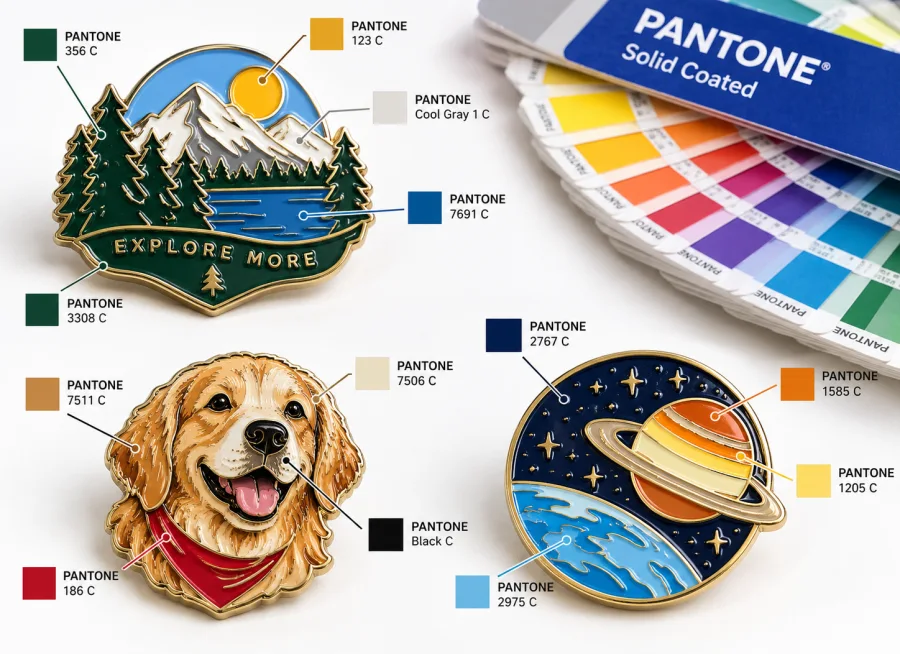
Every fill is tied to a Pantone reference, and the approved sample is kept with it.
On your side, keep one pin from the previous run. Send it back or photograph it with the reorder. The original order number also helps us pull the artwork and color record.
We do not promise an instrument-grade Delta E. We compare against the retained standard. For a corporate program, that is more useful than a claim that the color will match.
6. Backing and Packaging for Corporate Wear and Gifting
Backing is a wearing question, not an upsell. Packaging is a distribution question, not a factory carton rule. Set both by how the pins will be worn and handed out.
Backing by wearing context
|
Wearing context |
Backing |
Strength |
Watch out for |
|---|---|---|---|
|
Suit or shirt, no hole wanted |
Magnet |
No hole, fast to put on and take off |
Magnet strength; thick fabric can slide |
|
Uniform, daily wear |
Butterfly clutch or rubber clutch |
Secure, low cost |
Butterfly edges can snag fabric |
|
Award or collectible, boxed |
Butterfly clutch with gift box |
Traditional, presents well |
Fix the pin inside the box to avoid scratches |
|
High-movement or safety role |
Rubber clutch or magnet |
Less likely to catch |
Not for children or any use where a small part could be swallowed |
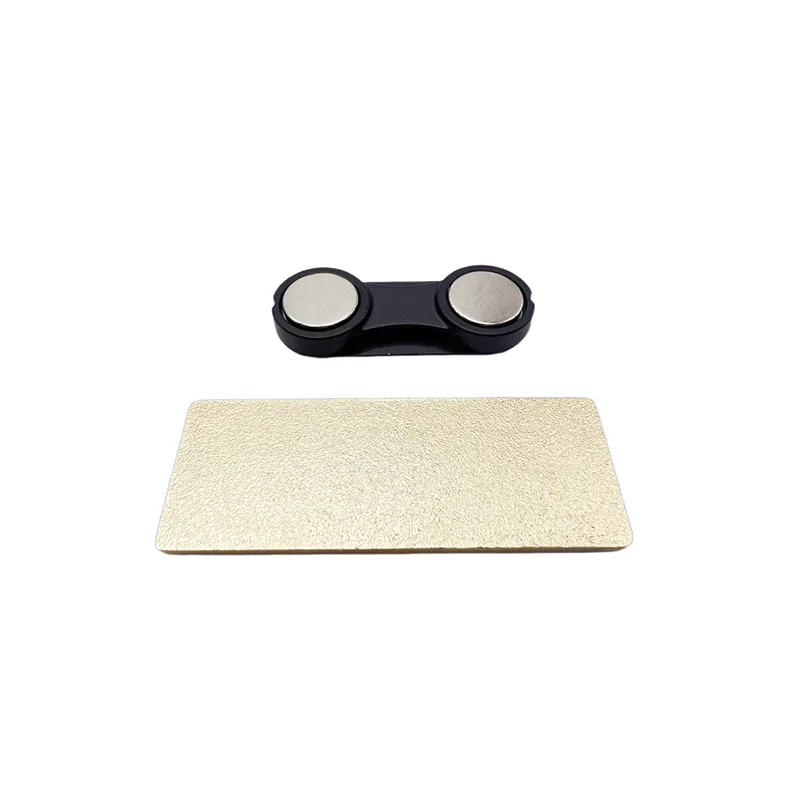
Magnet backing: no hole in the fabric, and fast to take off.
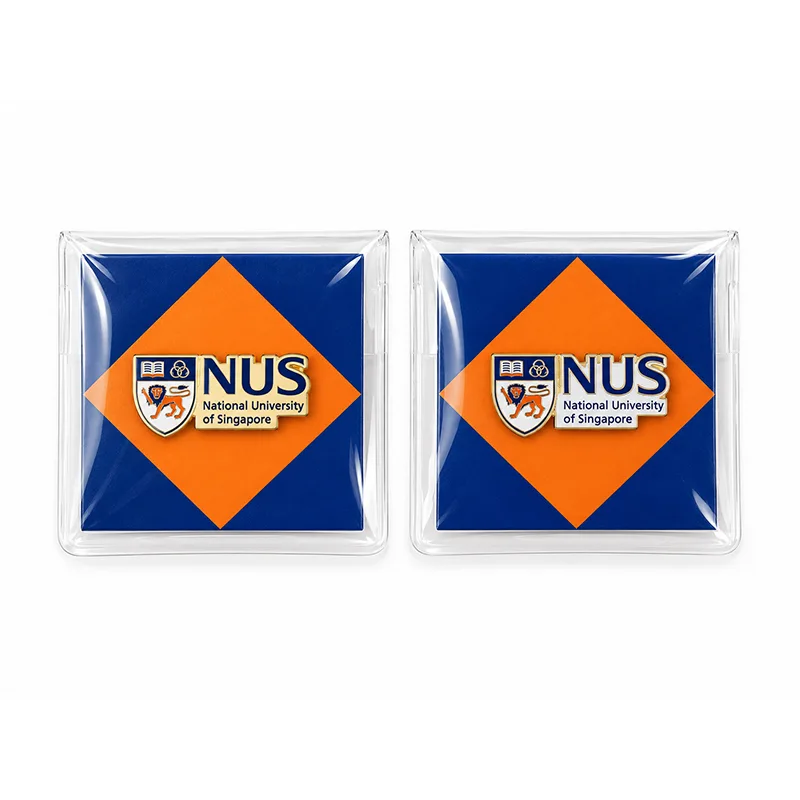
Packed to the distribution list: by person, department, location or tier.
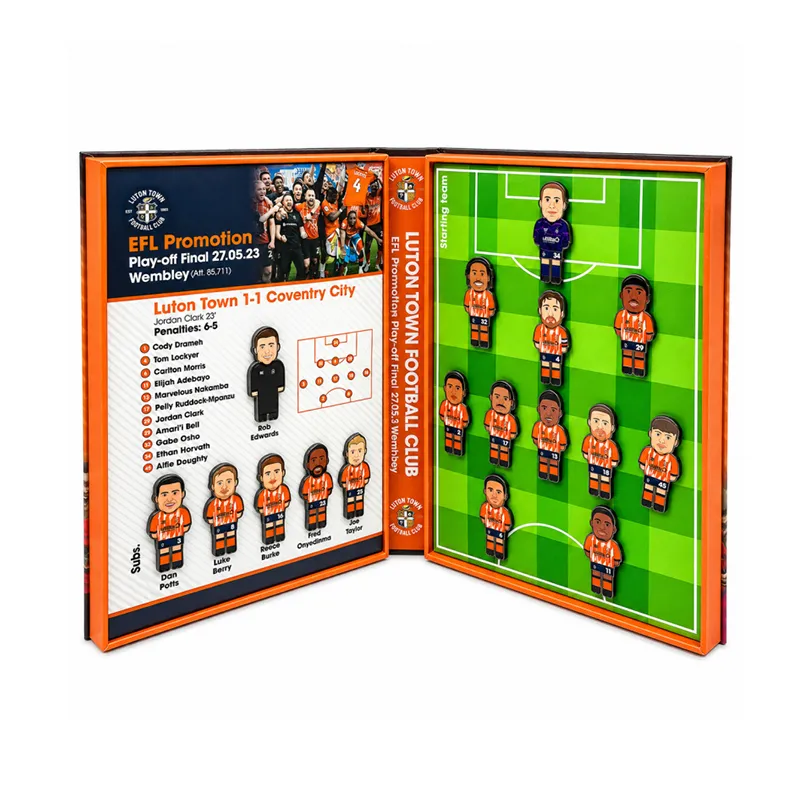
Book-Style Display Box:Opens like a book to showcase a complete pin collection alongside custom artwork.
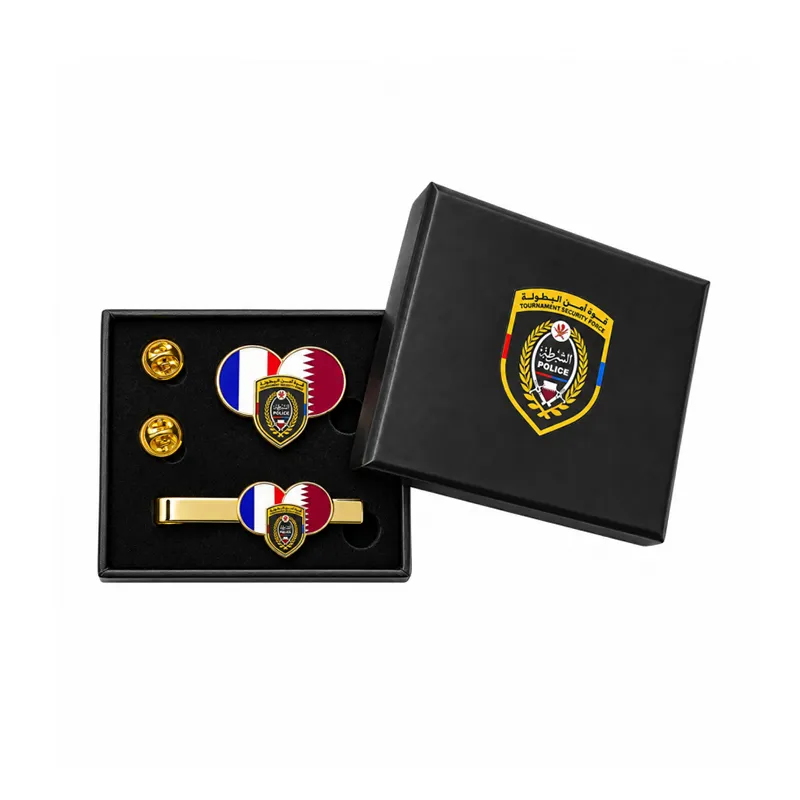
Foam Insert Gift Box :Custom-cut foam holds each pin and accessory securely in place for gifting.
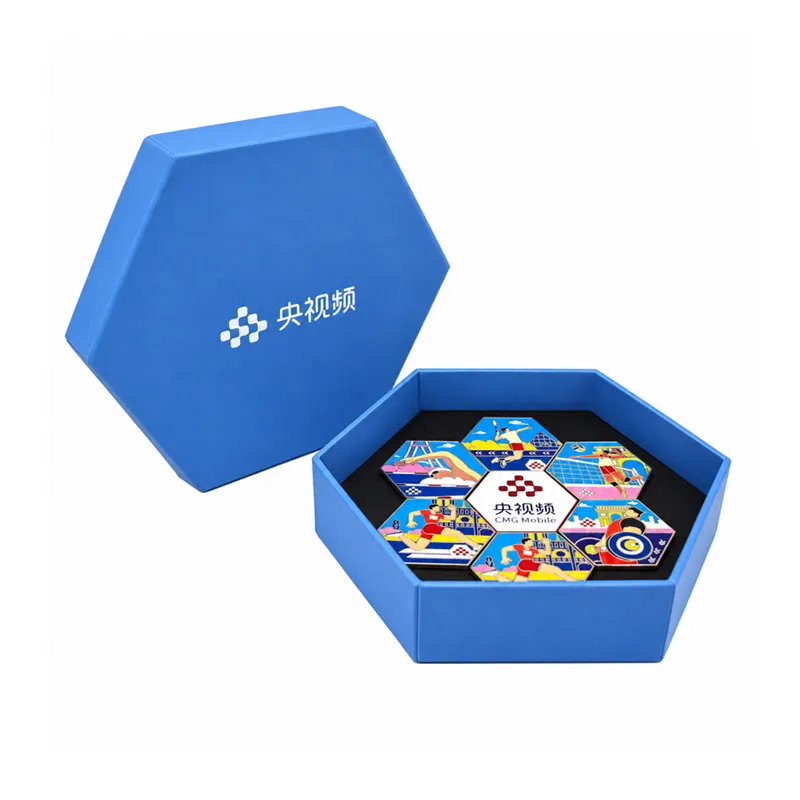
Hexagon Rigid Gift Box:A custom-shaped rigid box designed to present collectible pin sets.
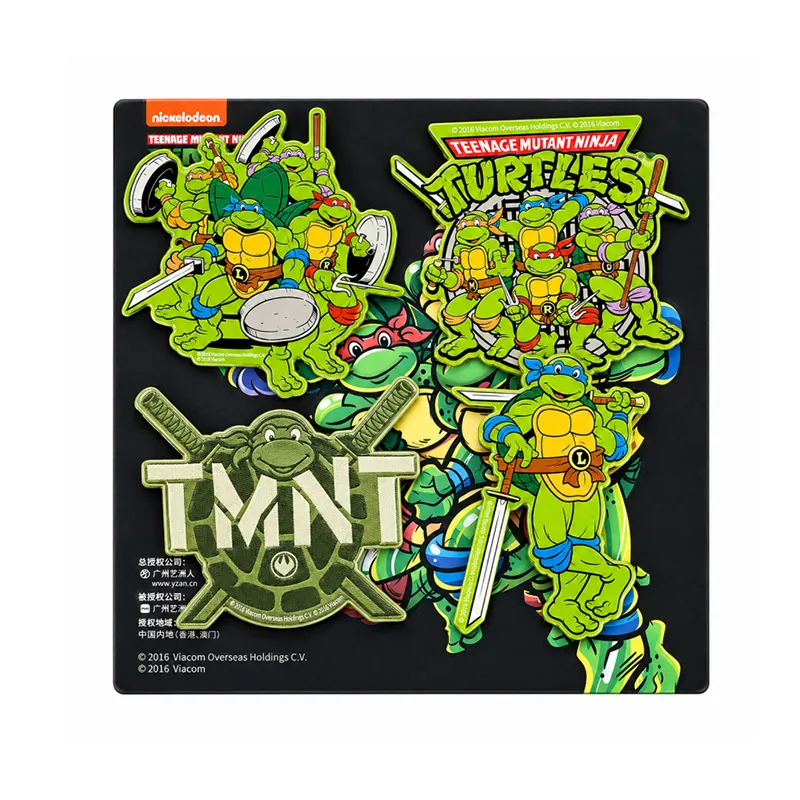
Printed Backing Card:Custom-printed cards display pins with branding, ideal for retail and promotions.
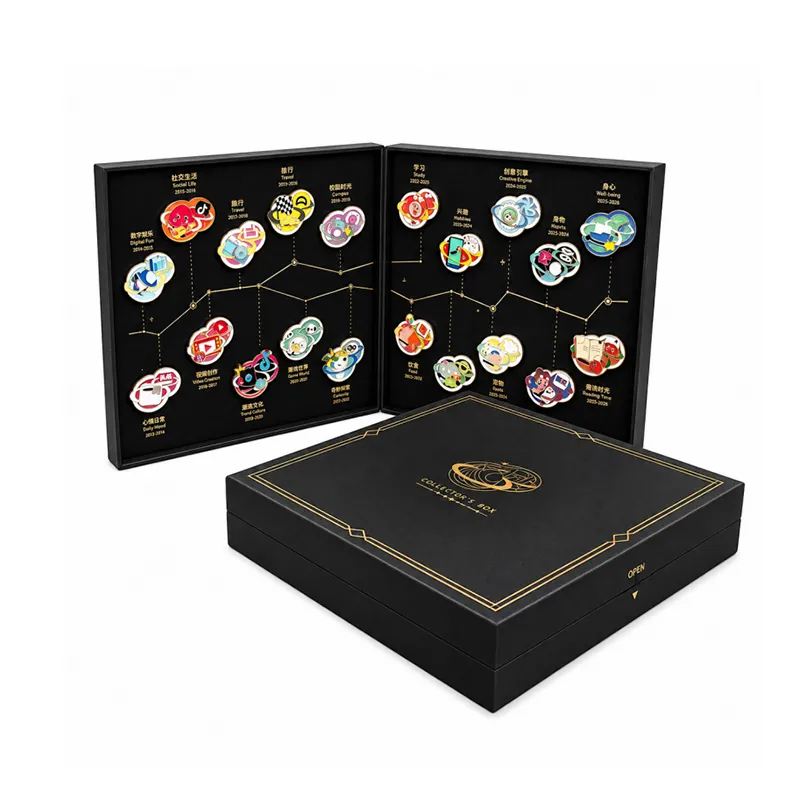
Collector Presentation Box:Displays multiple pins in an organized layout, ideal for themed collections.
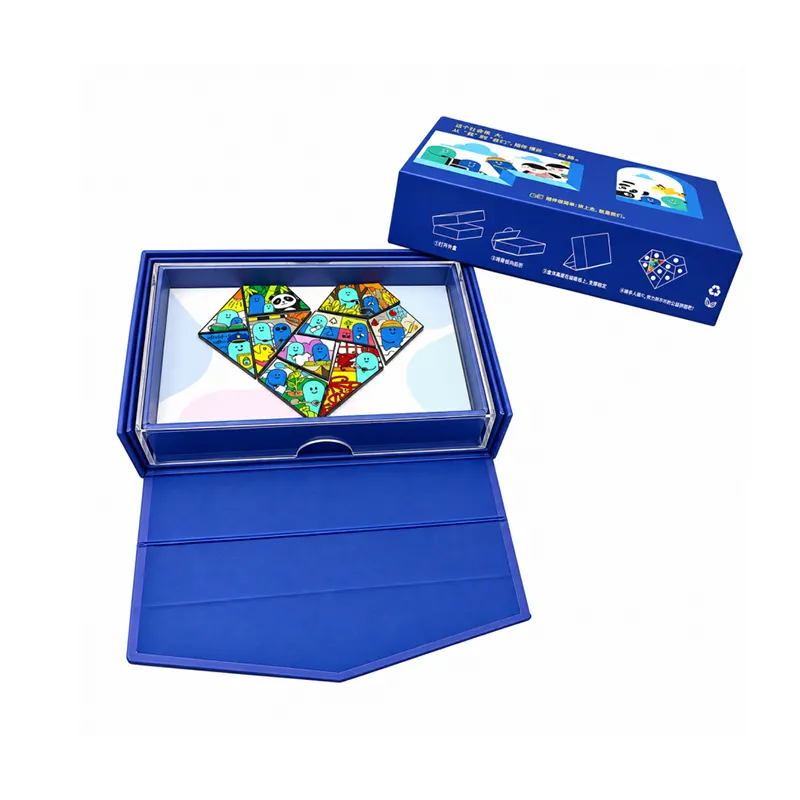
Clear Plastic Display Box:A transparent hinged case keeps individual pins visible and protected.
Packaging by distribution
Corporate handouts usually follow one of three patterns:
By person: one bag per person, backing card printed with name, department or year.
By department or location: carton labeled by department or address, inner bags left unprinted.
By tier: bags sorted by year or grade, with a distribution list in each carton.
Backing cards can carry a project name, year, internal line or QR code. They are printed separately from the pins. The packing unit follows your distribution list, not the factory carton size. Packaging stock and finishes: packaging options and materials and finishes.
7. Proofing, Samples and Quality Control Before Bulk
Corporate buyers need an approval trail they can screenshot and file. A verbal OK is not a confirmation. Each step should leave a document or a physical sample.
01. Artwork approval, within 24 hours
After the vector file arrives, we issue an approval drawing with size, color, plating, backing and packing marked. Production starts after your written approval.
02. Pre-production sample, 7-10 days
A physical sample is made to the approval drawing and checked for color, plating, line quality and backing. Photos are filed before it ships.
03. Sample sign-off
You approve the sample or request changes. A change to the outline means a new mold; a change to color or plating is a parameter adjustment.
04. Bulk run, 15-18 days
First-article check, plating inspection, enamel fill check, backing assembly and packing audit. Key stages are photographed.
05. Pre-shipment check
The order is checked against the approved sample and quantity, with photos or video. Anything out of spec is handled before dispatch.
The approval drawing, sample photos and inspection records stay in the order file. Reorders and disputes are checked against that file, not recalled from memory. Our quality process: quality control process.
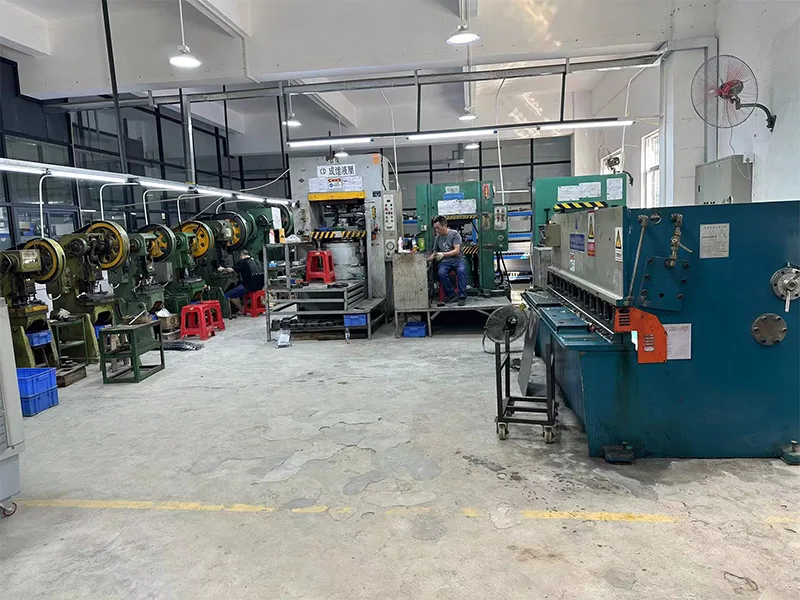
Key stages are photographed: first article, plating, enamel fill and packing.
APPROVAL TRAIL
Approval drawing signed before tooling
Sample photos filed before the sample ships
Inspection records kept for the run
8. What Drives the Price of a Corporate Pin
Two pins at the same one-inch size can differ several times in price. Six variables explain most of the gap, and each one tells a buyer where to save and where not to.
|
Variable |
Why it moves the price |
When it rises |
How to save |
|---|---|---|---|
|
Size |
Priced by the longest edge; metal and plating area grow with size |
Above the regular range; irregular shapes priced by bounding rectangle |
Stay inside the regular range; check nesting before choosing an odd shape |
|
Material |
Iron, brass and zinc alloy differ in cost and forming route |
Thicker sheet or a special alloy |
Match the material to the use, not to a default |
|
Process |
Printing, soft enamel, die striking and casting use different step counts |
More colors, more plating steps, sculpted detail |
Keep colors under four; choose flat fills first |
|
Plating and color count |
Every extra plating step or color adds a pass |
Antique finishes, two-tone work, special colors |
Use one plating across the program; merge colors |
|
Backing and packing |
Magnets, gift boxes, printed cards and sorting are separate operations |
Gift boxes, named cards, packing by person |
Match packing to the handout; do not box every pin |
|
Quantity and tooling |
Mold cost is spread across the run |
New mold, outline change, many small designs |
Reuse one outline across tiers; cut fewer molds |
What a quote needs
Longest edge or size · Quantity per design · In-hand date
Artwork helps; a clear photo or sketch works for an estimate. With complete information, we return a detailed quote within 12 hours, with mold, sample, bulk and packing listed separately instead of folded into one unit price.
9. Frequently Asked Questions
SEND YOUR LOGO
Have a logo file ready?
Send AI, EPS or PDF with the Pantone references. We return an artwork review within 24 hours and a written spec and quote within 12 hours.
· One quote per design, no total to calculate
· Line, text and color checks marked on the drawing
· Samples in 7-10 days, bulk in 15-18 days
Start a Corporate Pin Program
Send your logo file, the quantity for each design, the in-hand date and the wearing context. We return a written spec and quote within 12 hours, with an artwork review within 24. A physical sample takes 7-10 days; bulk runs 15-18 days after approval.