
Home – Custom Lapel Pins – Promotional Lapel Pins
PROMOTIONAL LAPEL PINS
Custom Promotional Lapel Pins for Events and Giveaways
We manufacture custom lapel pins for the orders that promotional distributors, event companies and brand marketing teams place at volume: trade show giveaways, retail and channel gifts, campaign pins and event souvenirs. Soft enamel, printed and imitation hard enamel builds, from 100 pieces per design upward.
You send the event date, the design count and the quantity. We come back with a cost structure and a production calendar, because a 2,000-piece giveaway that arrives two days late has no value at the booth.
· 100 pcs per design, calculated per design rather than per order
· Samples in 7–10 days; bulk in 15–18 days after sample approval
· A 12-hour quote that includes a production calendar, not just a unit price
· Packed for the booth, the retail box or the client’s hand
1. Custom Promotional Lapel Pins We Have Produced
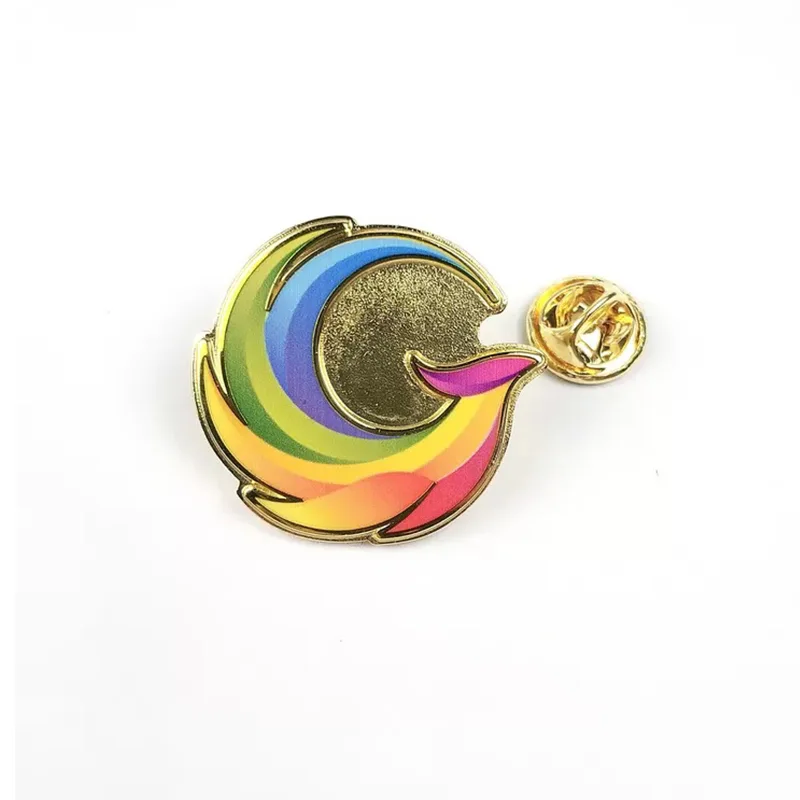
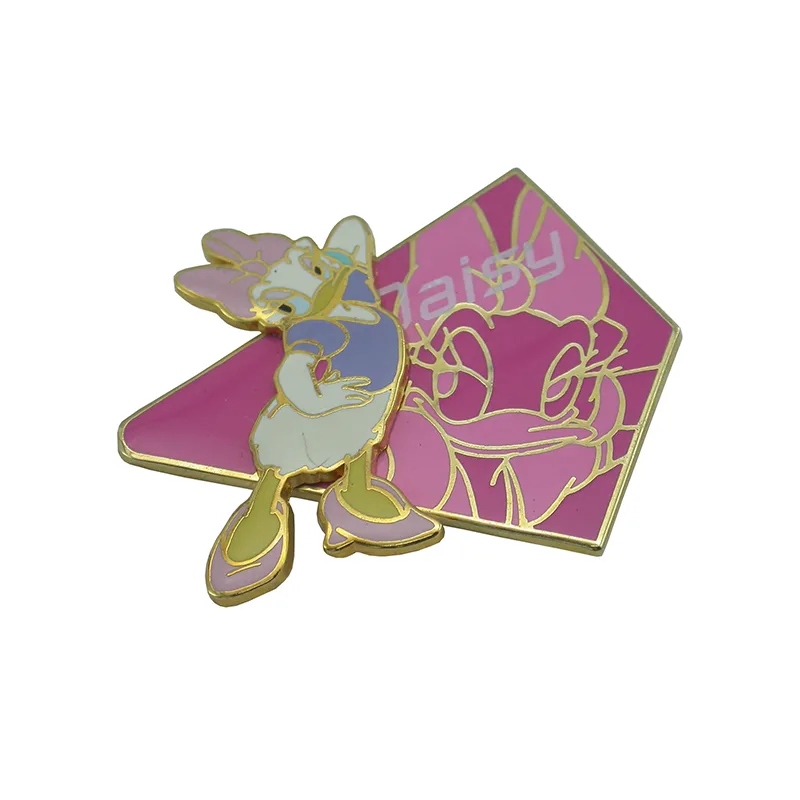
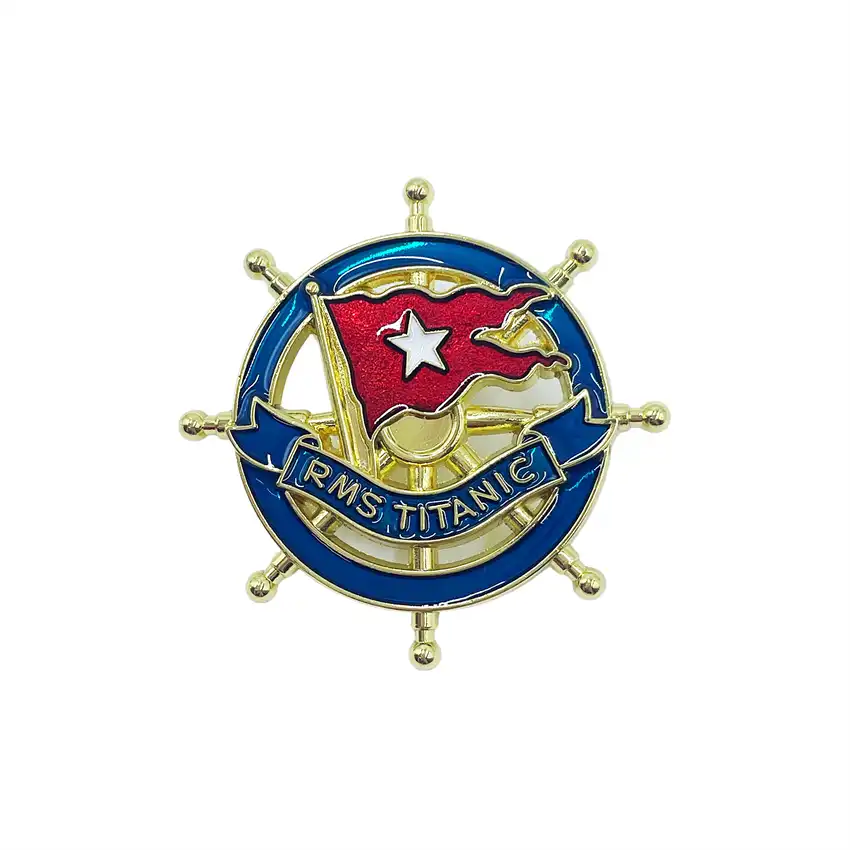
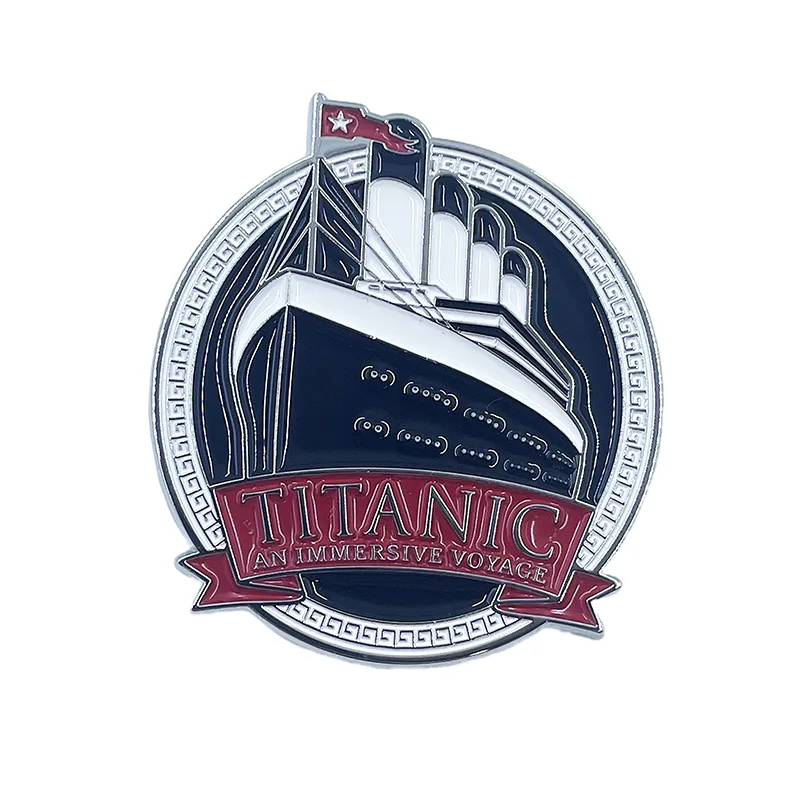
Below are custom promotional lapel pins from our line. Each one lists logo, process, size, plating and backing.
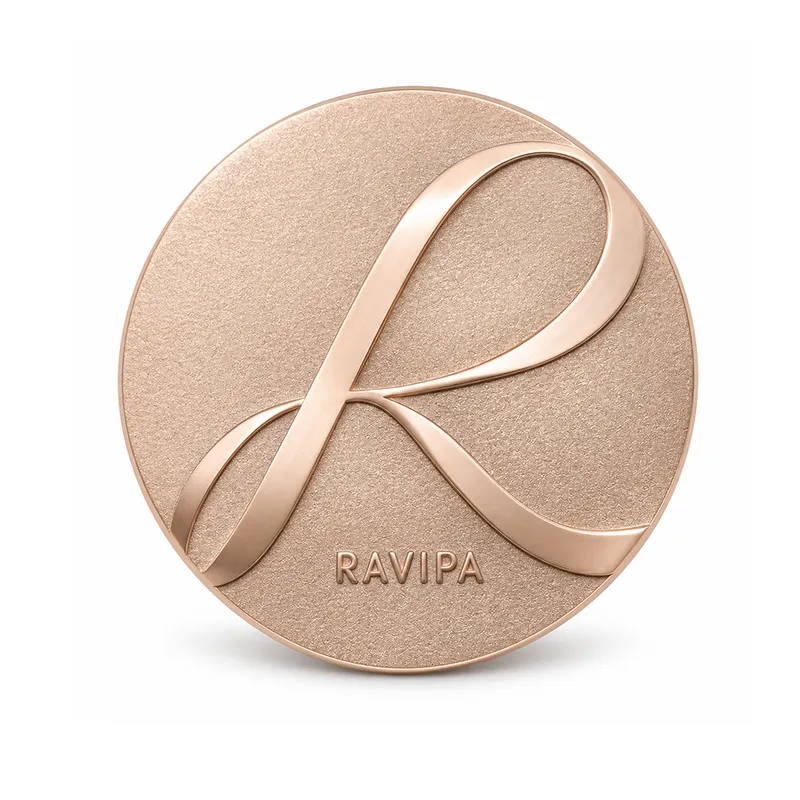
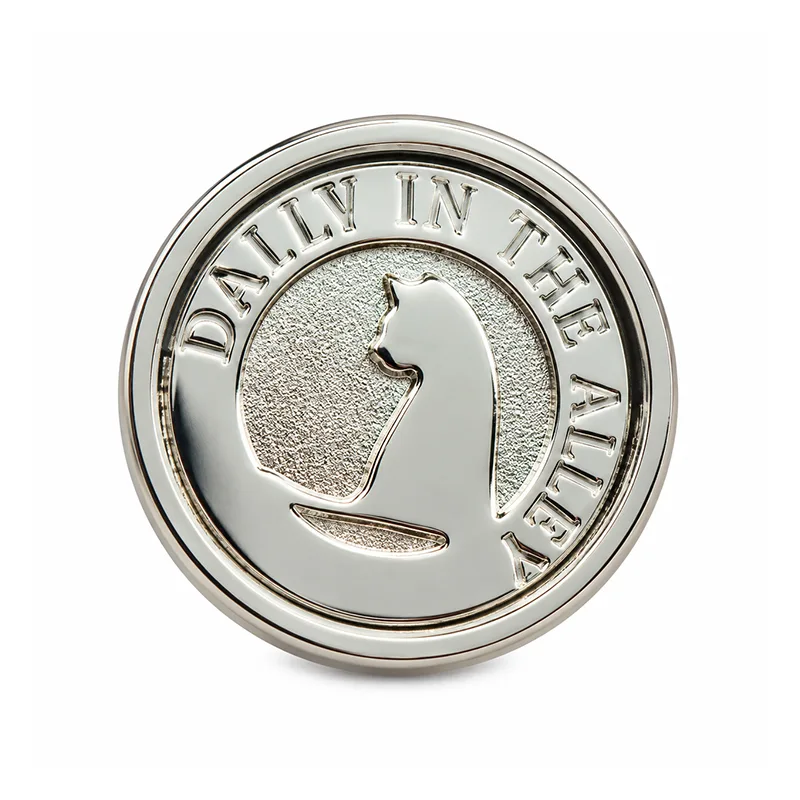
RAVIPA Rose Gold Logo Promotional Pin
| Size | 32 mm |
| Use | Brand promotion, corporate events |
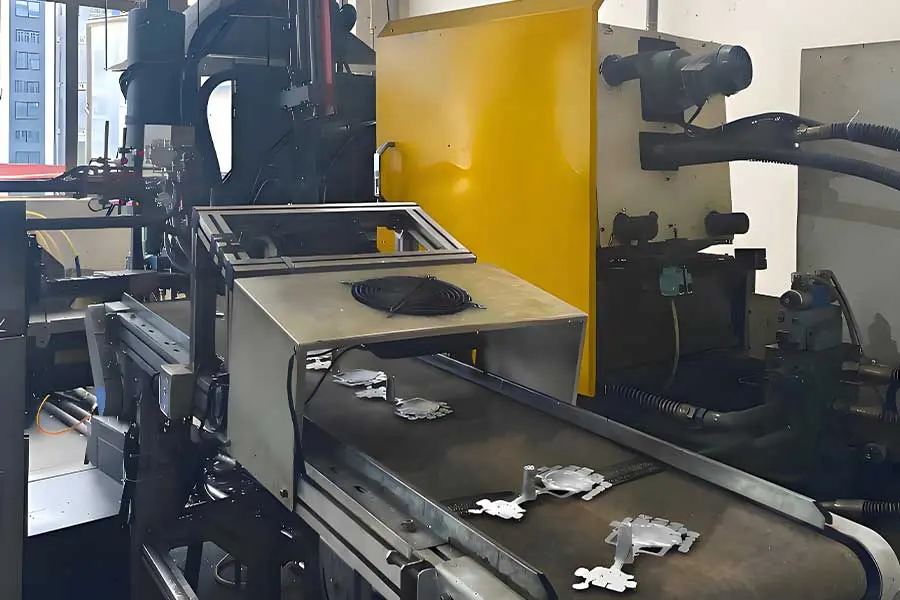
| Process | Die casting+sandblasted |
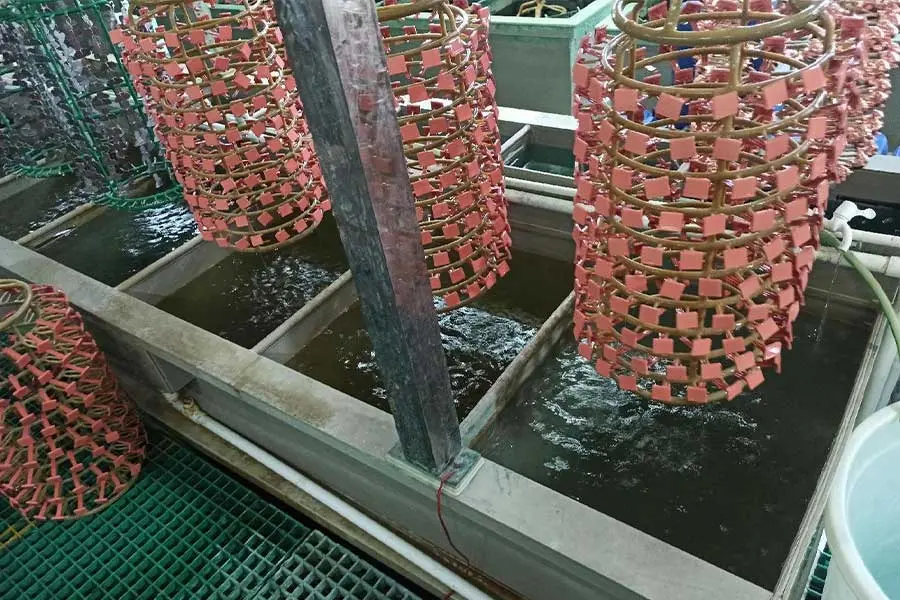
| Plating | Rose gold |
| Backing | Butterfly clutch |
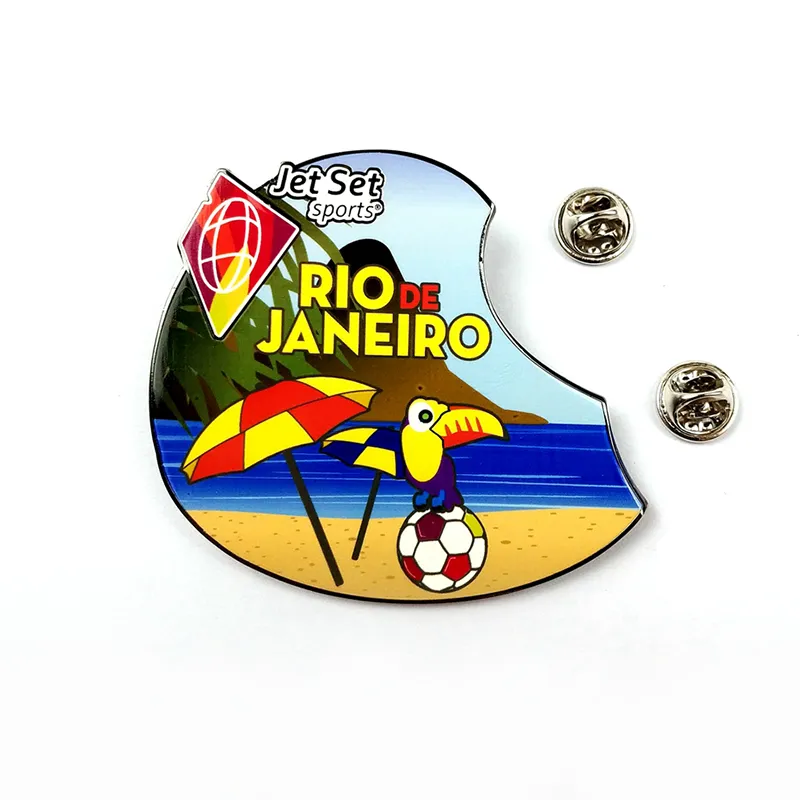
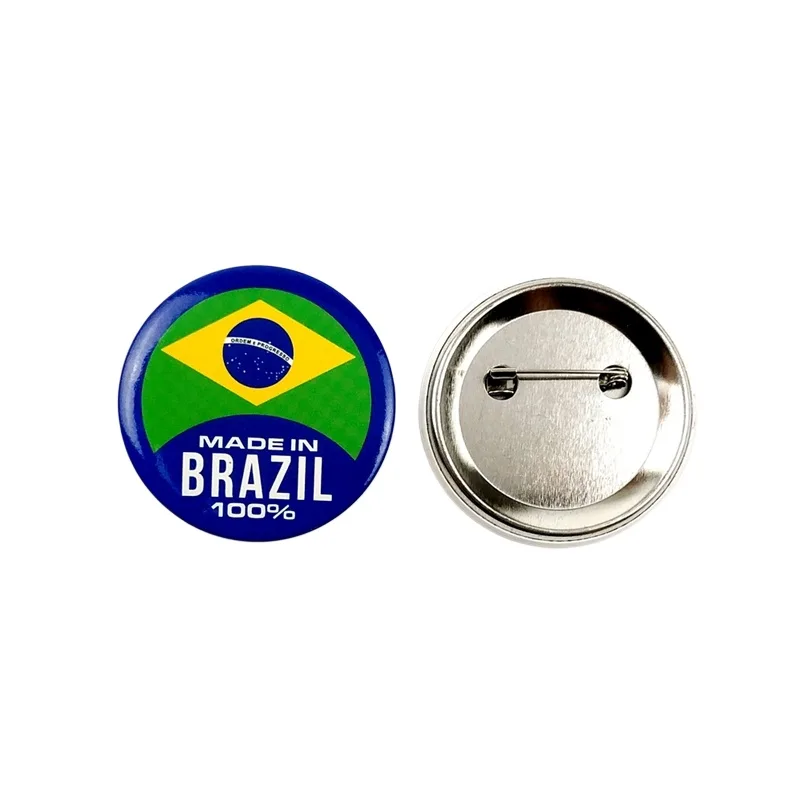
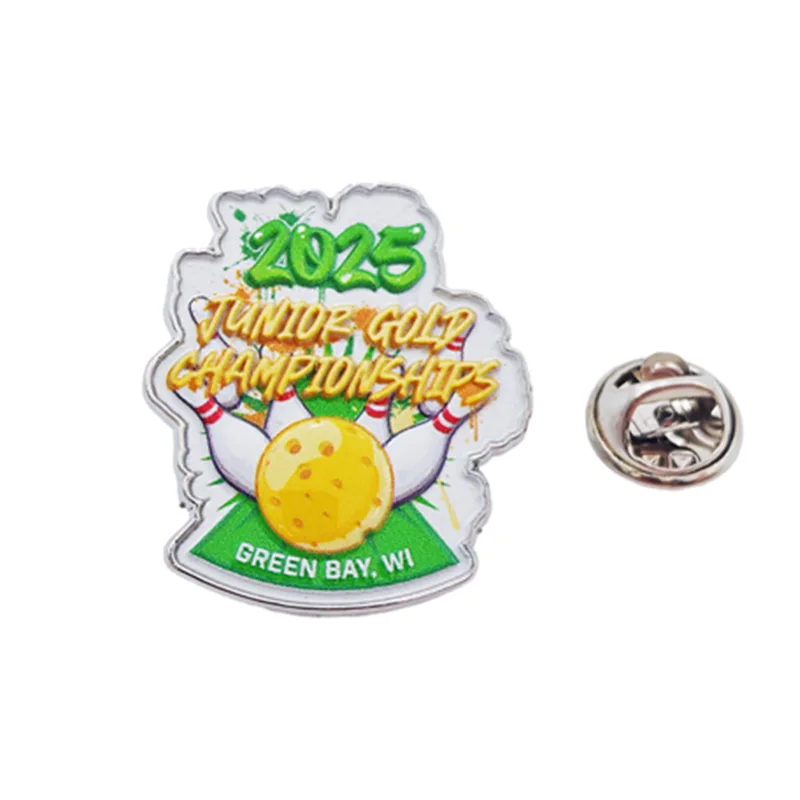
Rio de Janeiro Travel Promotional Pin
| Size | 45 × 42 mm |
| Use | Tourism promotion, sports events, souvenir programs |
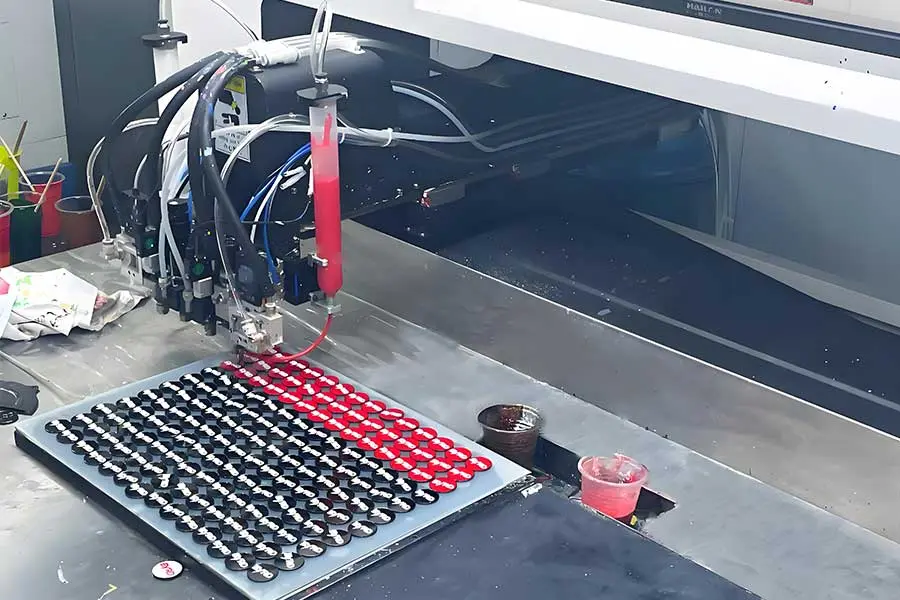
| Process | Custom shape + full-color UV Print |
| Plating | Shiny silver |
| Backing | Dual butterfly clutch |
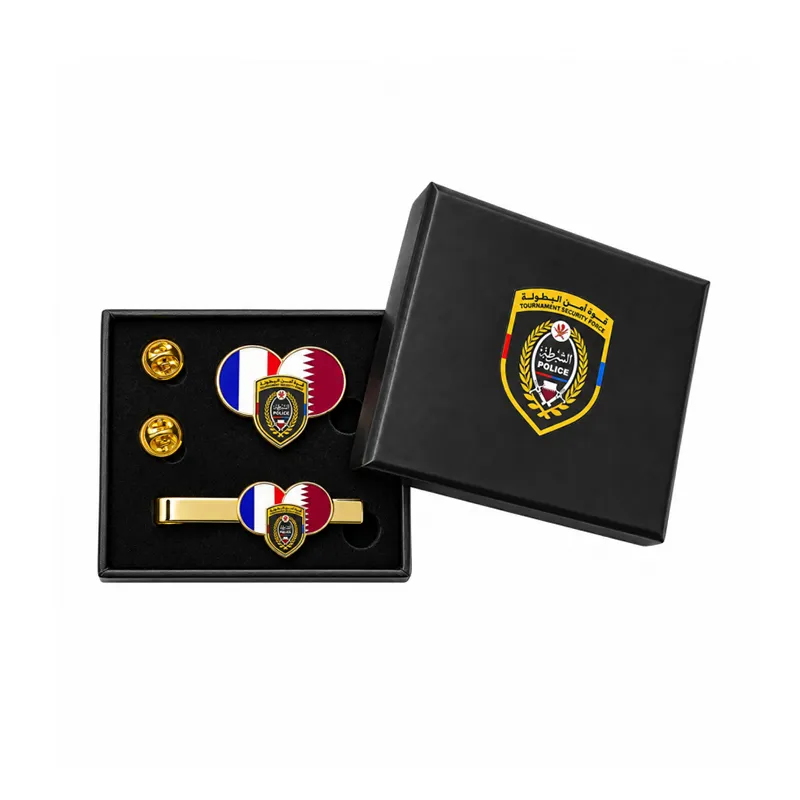
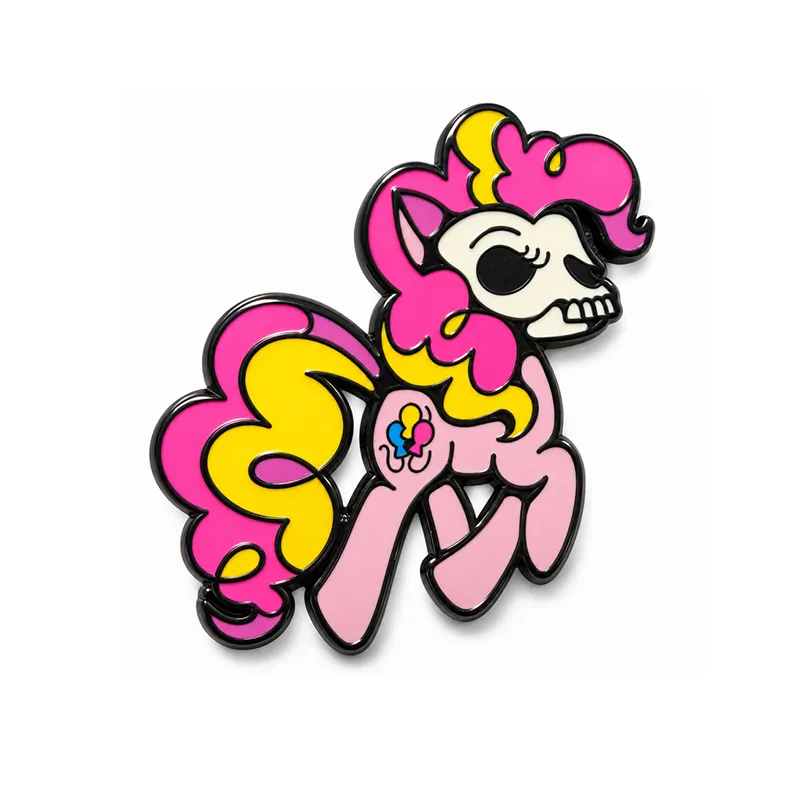
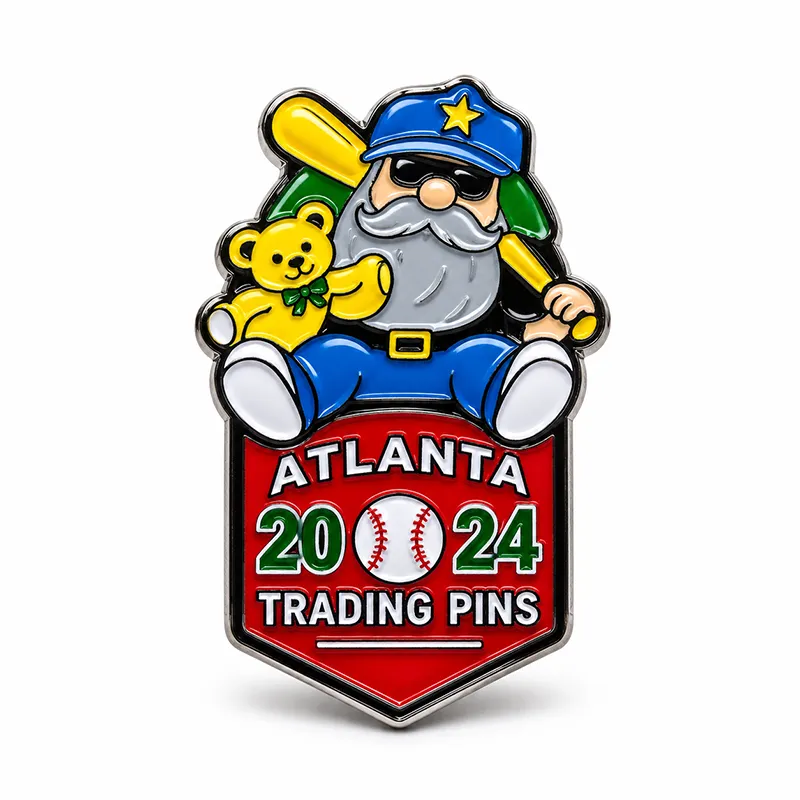
International Tournament Police Promotional Pin
| Size | 35 × 28 mm |
| Use | International events, commemorative programs |
| Process | Die Casting + Soft Enamel |
| Plating | Shiny gold |
| Backing | Dual butterfly clutch |
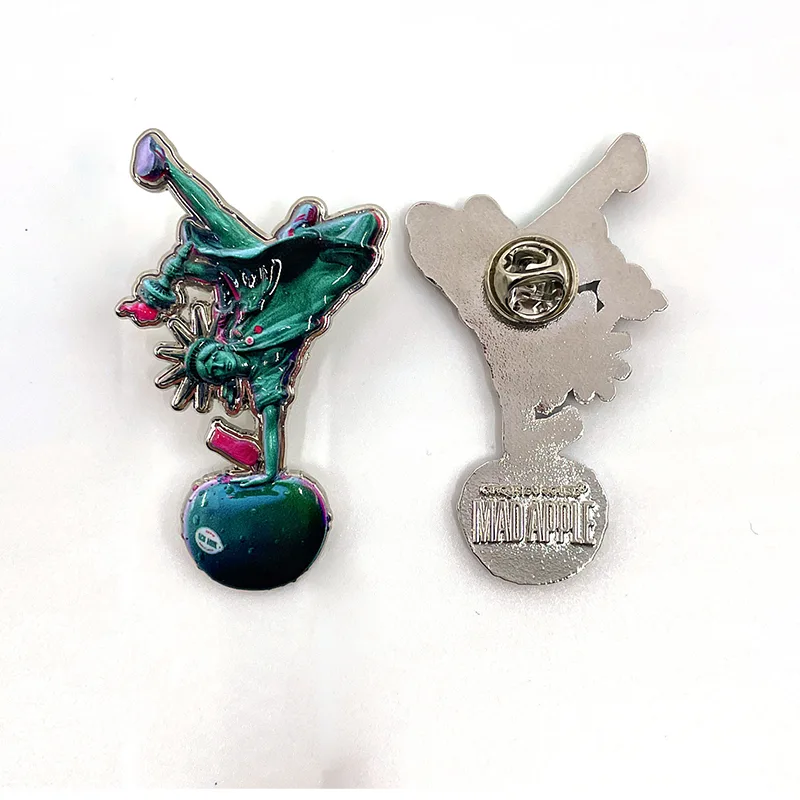
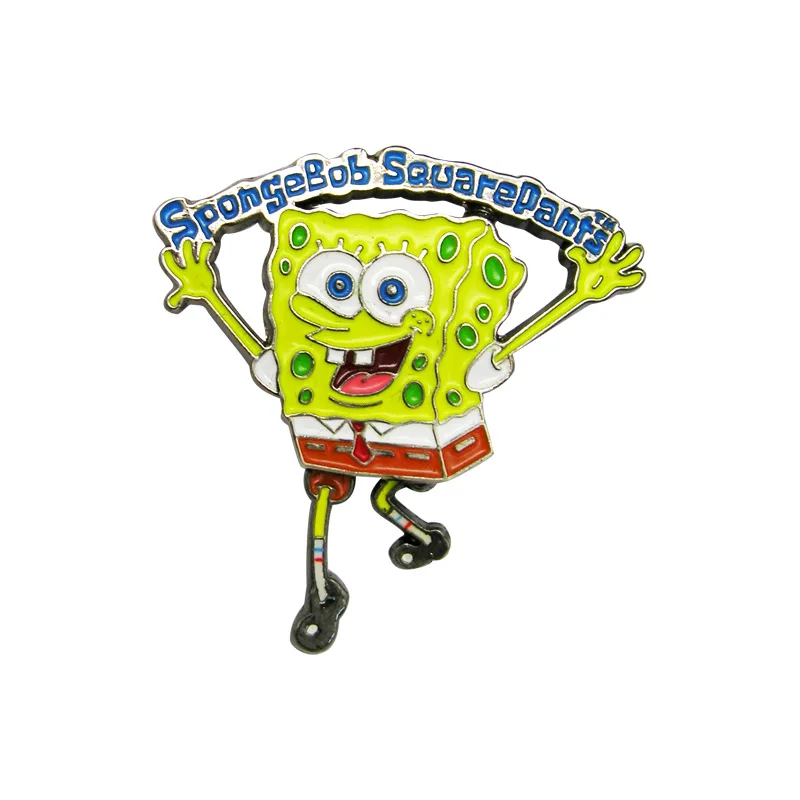
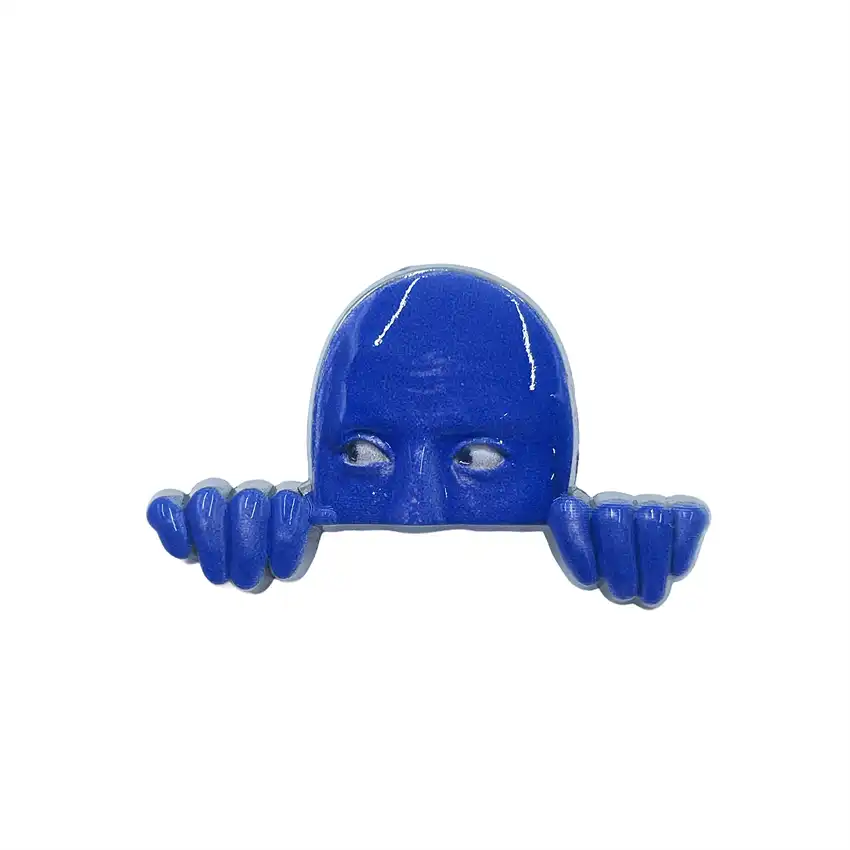
Mad Apple Character Promotional Pin
| Size | 30 × 55 mm |
| Use | Entertainment promotion, merchandise, collector campaigns |
| Process | 3D die cast + soft enamel |
| Plating | Shiny silver |
| Backing | Butterfly clutch |
Case parameters are filled from the original sample records, not estimated. Only custom promotional lapel pins appear here.More other custom lapel pins.
2. Trade Show, Retail and Event Orders: Where Each One Fits
Promotional pin orders tend to fall into four patterns, and each one is under a different kind of pressure. A trade show order is judged at arm’s length by someone walking past a booth. A retail order is judged on a shelf, in a backing card, under store lighting. A campaign order is judged against a brand guideline. A sports or festival order is judged by whether the boxes arrive before the first day.
The questions we ask first are therefore not about plating. They are about the date, the number of designs and the quantity per design, because those three decide the tooling plan and the schedule. Size and colour count come after that.
|
Order pattern |
What decides success |
Typical quantity |
Decide this first |
|---|---|---|---|
|
Trade show or conference giveaway |
Clearing the booth and being recognised across an aisle |
250–2,000 |
Size and colour count |
|
Retail or channel gift |
How it looks on a shelf or in a branded card |
500–5,000 |
Packaging and backing card artwork |
|
Brand campaign or product launch |
Faithfulness to the campaign artwork |
100–1,000 per design |
Build: printed or enamel |
|
Sports event, festival or carnival |
Date certainty with several designs running together |
500–10,000 |
Schedule and mold splitting |

This page covers pins that are given away, sold as promotional stock or handed out at an event. A single company’s uniform, conference or client-gift programme is covered on our corporate lapel pins page, and award programmes with tiers and recipient lists are covered on our employee recognition pins page.
3. MOQ 100 per Design and How to Allocate It
Our minimum is 100 pieces per design, and we say it before the quote rather than after it. The number comes from tooling and set-up: one die is cut for one outline, and the press and colour lines have a minimum run. A 3,000-piece order with one design is a straightforward job. A 3,000-piece order spread across twelve designs is twelve toolings and twelve set-ups, and it will not price like the first one.
That is why we start by counting designs, then pieces.
Four ways to handle a thin design
|
Situation |
Option |
What it costs you |
When it works |
|---|---|---|---|
|
One design under 100 pieces |
Raise it to 100 and keep the balance as stock |
A few dozen extra units |
There is a second event or a likely reorder within the year |
|
Several related designs |
Share one outline and change plating, fill colour or backing card |
No second tooling |
Series pins, sponsor variants, city or chapter editions |
|
Seasonal variants |
One mold, different fill colours |
Colour matching and fill time only |
Holiday and seasonal programmes |
|
Artwork too detailed for enamel |
Switch to a printed build |
A different build, not a different mold |
Gradients, photographs, very small text |
A shared outline is the most useful of the four. The mold defines the silhouette and the size; plating, enamel colour, backing card and packaging are all set after the mold. A distributor running four sponsor versions of the same event badge can hold one tooling and still deliver four visibly different pins.
Mid-campaign top-ups
If you expect a second wave — a follow-up show, a replenishment order, a client who under-ordered — put the buffer into the first run. The mold is already open and the colour match is already approved, so the extra pieces are cheap compared with a separate later run that repeats set-up, sampling and freight. This is also why we ask what the next twelve months look like, not only what this event needs.
What to send for a quote
Design count, quantity per design, size, build, plating, backing, packing, delivery city and event date. With those items we can quote in 12 hours and give you a schedule on the same sheet. Without them, any price we give is a guess that will be revised later.
4. What 500, 1,000 and 5,000 Pins Actually Change
Quantity changes the unit cost, but not in a straight line. Three levers do most of the work, and only one of them is quantity.
|
Lever |
What it changes |
Where it stops helping |
|---|---|---|
|
Size (0.5″, 0.75″, 1″, 1.25″) |
Metal area, weight and the time spent filling colour |
Below roughly 0.6″ (15 mm), detail starts to disappear |
|
Build (soft enamel, printed, imitation hard enamel, die struck) |
The number of process steps and the handwork involved |
Choosing an upmarket build for a giveaway nobody keeps |
|
Colour count |
Fill passes and colour matching |
After six or seven colours, the saving per colour flattens |

Where the price actually breaks
The first quantities in any order carry the tooling and the set-up. Until those are spread across enough pieces, doubling the order does not halve the unit price. This is why a table showing “500 pieces: $x, 1,000 pieces: $y” can mislead without the size, the colour count and the build attached to it.
The useful question is not “what does a pin cost at 5,000” but “at what quantity does the unit price stop falling quickly”. Once the tooling is spread, additional pieces mostly pay for metal, fill and packing, and the curve flattens. If your budget is fixed, that point is where extra volume stops buying you anything and extra specification starts to.
What to cut first when the budget is fixed
· Colour count. At booth distance, two colours fewer are rarely noticed. Two colours fewer on the invoice usually are.
· Size. A simple mark still reads at 0.75″ (19 mm). A detailed one does not, so cut detail before you cut size.
· Build. Leave this last. The build is what the recipient feels in the hand, and it is the difference between a pin that is kept and one left on a table.
What you should not cut is the outline. The silhouette is what makes the pin recognisable before anyone reads it.
5. Working Backwards From the Event Date: Samples, Bulk and Shipping
The date decides the schedule, not the other way round. We work backwards from the day the pins must be in hand, and we publish the whole chain so you can see where the buffer sits.
|
Point |
What happens |
Who acts |
|---|---|---|
|
T-60 to T-45 |
Brief, artwork, design count, quote |
You and our design team (first artwork in 24 hours) |
|
T-45 |
Artwork approval |
You |
|
T-45 to T-35 |
Sampling, 7–10 days |
Us |
|
T-35 |
Pre-production sample approval |
You |
|
T-35 to T-17 |
Bulk production, 15–18 days |
Us |
|
T-17 to T-10 |
Inspection, packing, documents |
Us |
|
T-10 to T-0 |
Shipping and customs |
Carrier |
The last day you can approve artwork
On the standard path, artwork is approved at T-45. If that date slips, there are three remedies, and they are not equally good. You can reduce size or colour count to shorten production. You can switch to a printed build, which removes several fill and plating steps. Or you can ask about rush production, which depends on what is already running in the factory.
What you cannot do is compress the sample and bulk stages into each other. The pre-production sample exists so that colour and outline are settled before the run, and skipping it turns a possible colour correction into a full reprint.
When rush is real
Our fastest production is 7 days. It applies to existing molds, UV print and short-cycle builds, and only when the schedule has room. We will tell you yes or no against a specific date rather than quoting a generic rush claim, because a rush order that misses the show is worse than an honest no.
Shipping is part of the calendar
The dates above are production dates and do not include transit. Tell us the delivery city and we will quote the shipping option separately, then agree the buffer together. Air freight and express courier have different cut-off behaviour, and the answer changes depending on whether the boxes go to a warehouse or straight to a venue.

6. One Event, Several Designs: Splitting the Mold
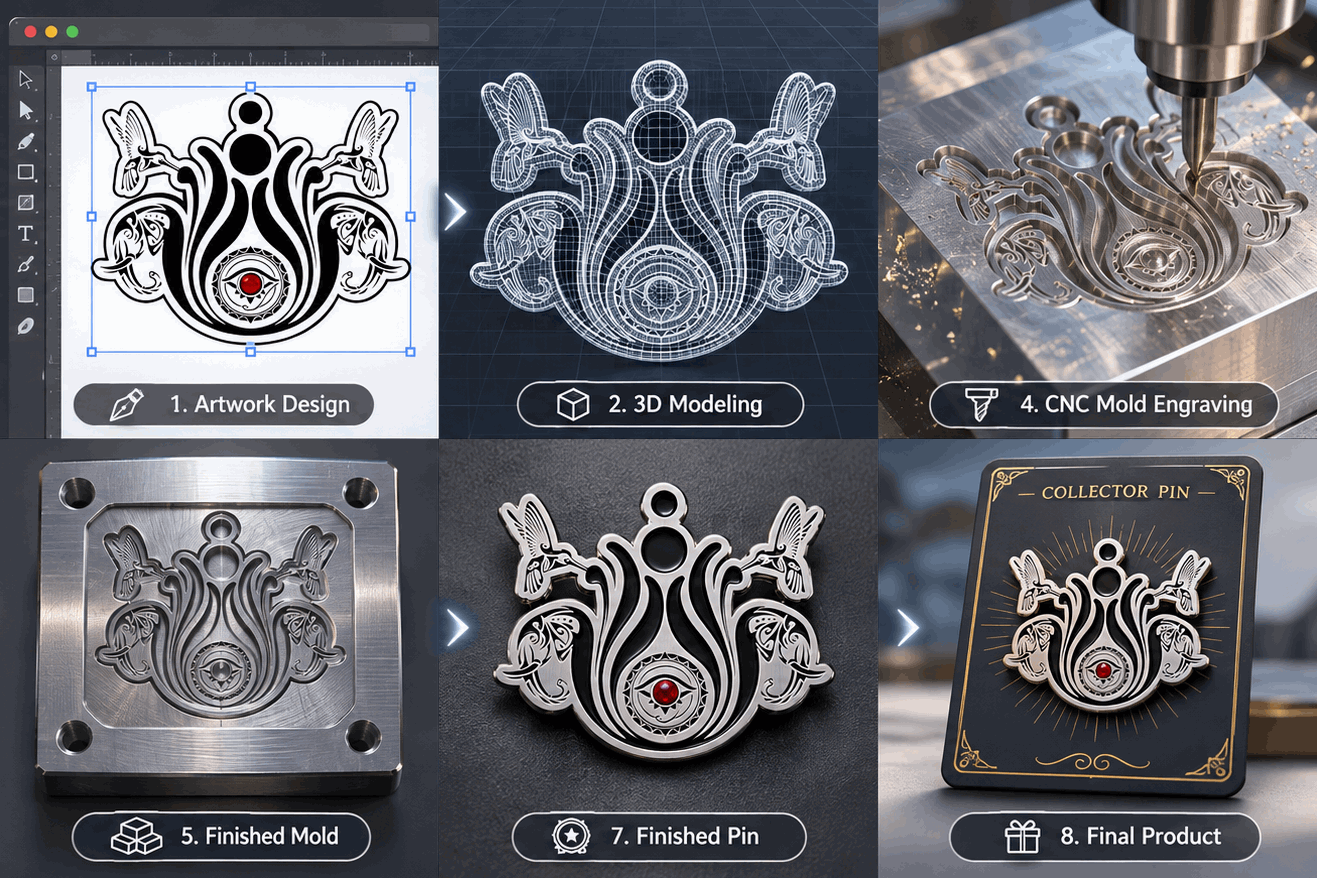
A mold defines the outline. It does not define the colour, the plating or the card the pin is mounted on. That single fact decides most of the cost and most of the scheduling in a multi-design order.
What the mold actually defines
The mold fixes the silhouette, the size and the edge treatment. Everything a recipient notices after that — gold or nickel, one colour or six, a plain poly bag or a printed backing card — is set downstream of the mold. Two pins can come off the same tooling and look like different products.
When to share a mold, when to cut a new one
|
Change |
New mold? |
What it costs |
|---|---|---|
|
Colour or plating |
No |
Colour matching only |
|
Backing card or packaging |
No |
A print set-up for the card |
|
Same outline, different artwork |
No |
New fill artwork |
|
Different outline or size |
Yes |
New tooling and a new sample |
The rule is simple enough to plan around: if the outer shape is the same, you are buying colour. If the outer shape changes, you are buying a tool.
Sequencing several designs
Approve all outlines together, then approve all colours together. Running one design at a time repeats set-up for each, and it pushes the last design into the shipping window, which is exactly where a multi-design order usually goes wrong. A series should be sampled as a series.
If the outer shape is custom rather than round or square, the outline rules are on our custom shape lapel pins page.
7. Matching the Pin Build to the Giveaway
The build should match how the pin will be handed out, not how it looks on a monitor. A pin that looks rich on screen and disappears at three metres is the wrong build for a booth.
|
Giveaway pattern |
Build |
Why |
|---|---|---|
|
High-volume booth handout |
Soft enamel |
Lowest per-piece cost, fast fill, strong flat colour |
|
Full-colour campaign artwork |
Printed (UV or offset) with an epoxy dome |
Gradients and photographs survive the process |
|
Higher-value client gift |
Imitation hard enamel |
Level, polished surface that reads as jewellery |
|
Budget for weight and shadow |
Die struck, with or without colour |
Metal depth does the work instead of colour |
Each of these is a different production route with different constraints. The detail sits on the craft pages: soft and imitation hard enamel, printed pins, die struck pins, die cast pins and custom shape pins. What matters here is the routing: pick the build from the giveaway, then leave the process detail to the page that owns it.
8. Designing a 0.75-Inch Pin That Still Reads Across a Booth
Most promotional pins are between 0.75″ (19 mm) and 1″ (25.4 mm). At that size, production rules decide what survives, not design preference.
The numbers that decide it
The minimum metal line is 0.2 mm. The minimum fill space is 0.3 mm for soft enamel and 0.5 mm for imitation hard enamel. Anything thinner, tighter or smaller will either break, fill in, or blur during production. These are not stylistic limits; they are the physical limits of the process.
What disappears first
|
Element |
At 0.75″ |
What to do |
|---|---|---|
|
Small text or long lines |
Unreadable |
Cut it or move it to the backing card |
|
Thin outlines |
Break or fill in |
Thicken to 0.2 mm or more |
|
Gradients in enamel |
Turn into bands |
Switch to a printed build |
|
Tiny negative space |
Fills during production |
Open it up or remove it |
What to cut first
Cut the slogan, then the tagline, then the secondary logo, then the date. Keep the shape and one primary mark. A pin that carries one idea at arm’s length beats a pin that carries four ideas at reading distance, because nobody at a booth is at reading distance.
When to enlarge
If three elements genuinely have to coexist, go to 1″ (25.4 mm) or 1.25″ (31.75 mm). A larger pin is a smaller cost than a pin nobody can read. The exception is a deliberately minimal mark on a very large run, where the point is recognition rather than information. For artwork checks before tooling, see our custom artwork service.
9. Packing for the Booth: Poly Bags, Backing Cards and Cartons
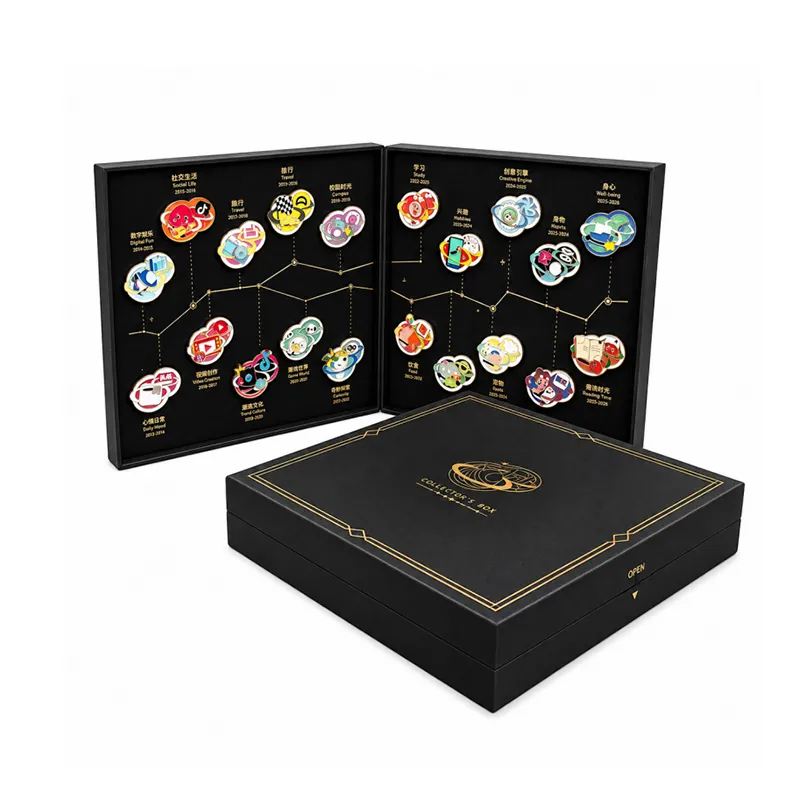
The last mile is the hand that receives the pin. Packing decides whether that hand gets one pin quickly, a carded set that looks like a gift, or a carton that has to be opened and sorted while a queue builds.
|
Packing |
Use |
What it changes |
|---|---|---|
|
Bulk in cartons |
Fast booth handout |
Lowest cost; needs a tray or bowl |
|
Individual poly bag |
Hygiene and counting |
A small per-piece cost; easier distribution |
|
Backing card |
Retail or client gift |
Card artwork plus assembly |
|
Sorted by design or carton |
Multi-design orders |
Packing list, labels and counting discipline |
What goes on the packing list
Design reference, quantity per design, carton count, purchase order or reference number, and destination. For a distributor, the packing list is often the document the client’s receiving team works from, so it needs to match their wording rather than ours.
Per-carton labelling and label format are confirmed per order rather than assumed. If the client needs a specific label layout, send it with the purchase order and we will confirm before packing starts.
For the wider range of cards, bags and boxes, see packaging options.
10. Keeping Bulk Pins Consistent: Pantone, Plating Batches and Reorders
A 5,000-piece run and a 500-piece reorder are two separate production events. Consistency between them is a record, not a promise.
What we keep
For each order we hold the Pantone reference for every colour, the plating finish, the approved pre-production sample, the artwork file, the packing specification and the mold. The mold is kept for three years. Once cumulative production on that mold reaches 10,000 pieces, the mold fee is refunded.
How the next run is checked
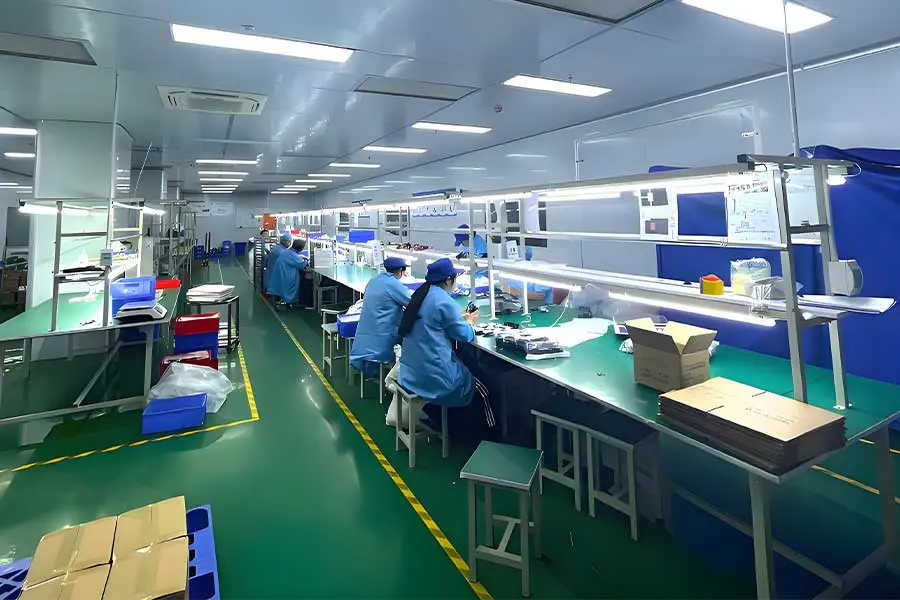
Before a reorder goes into bulk, the new sample is compared against the retained approved sample and the recorded Pantone references. Colour is checked under the same light, not against memory or a photograph. If the new batch drifts, it is caught at sample stage, when correcting it is still cheap. Our quality control process and plating and finishes pages cover the checks in more detail.
What actually changes between runs
The metal batch, the plating bath, the press and the operator. These are the variables that move a colour, and they move in every factory. What differs is whether there is a record to compare against. That record is the only real defence a buyer has on a reorder, and it is worth asking any supplier what they keep.
11. For Promotional Distributors: Quoting, Scheduling, Delivering
If you resell promotional products, this pin is one line in a larger programme. Your client will judge you on the date and on the box, not on our factory floor. That changes what you need from a supplier.
Quoting to your client
Send us the design count, quantity , size, build, color, backing, packing, delivery city and event date. We return a cost structure rather than a single number, so you can price your own tiers without re-asking for every quantity
Committing to a date
Treat our production dates as the inner boundary. Add transit, add your own buffer, and quote that number. Quoting our bulk completion date as the delivery date is the most common way a distributor ends up explaining a late delivery that was never late in production.
Delivering ready to hand over
Backing cards, poly bags, cartons sorted by design and a packing list that matches your client’s reference. Certification documentation — Sedex, BSCI, Disney FAMA, TÜV and SGS — is available on request, which matters when the end client is a retailer or a licensed brand.
When your client changes artwork late
Before artwork approval, a change costs nothing beyond a new proof. After tooling, it costs a new die or rework. After bulk has started, it is not possible. Put that boundary into your own client terms; it saves an argument later, and it is the same boundary every factory works to.
For a fixed event date, we will confirm the schedule against it before you commit. If the date does not work, it is better to know at quoting stage than three weeks later.
12. What Drives Cost: Mold, Size, Colors and Quantity
A promotional pin has two costs. What it costs to make, and what it costs per pin that actually leaves the booth.
Cost per pin taken
If you make 1,000 pins and 600 are taken, the cost per taken pin is the unit cost multiplied by 1,000/600, plus the booth and freight amortised across the ones that went. A cheaper pin taken by fewer people can cost more per impression than a more expensive one that people keep. This is the number worth reporting internally, and it is why a slightly better build sometimes wins on budget.
The variables
|
Variable |
Effect |
Where you control it |
|---|---|---|
|
Size |
Metal area and weight |
Specification |
|
Colour count |
Fill passes and matching |
Artwork |
|
Build |
Process steps |
Specification |
|
Plating |
Handwork and bath time |
Specification |
|
Backing |
Component cost |
Specification |
|
Packing |
Labour |
Specification |
|
Quantity |
How far the tooling spreads |
Order size |
Why we do not publish a unit price table
A table without your size, colour count, build and packing is a guess dressed as a price. We quote against your specification in 12 hours and show the variables separately, so you can see what each choice costs and decide which one to change.
13. Frequently Asked Questions About Promotional Lapel Pins
SEND FOUR NUMBERS
Event date, designs, quantity, city.
With those four we can tell you whether the date works before you spend time on artwork. Quote in 12 hours, artwork in 24.
14. Start a Promotional Pin Order
Send us the event date, the design count, the quantity per design, the size, the build, the packing and the delivery city. We will return a cost structure and a production calendar within 12 hours, and tell you plainly if the date does not work.