What Is a Lapel Pin? A Buyer’s Guide for Brands and Organizations
Written by the Badge Artisans production team · Last updated: 2026-11-10
What is a lapel pin? It is a small pin worn on a jacket lapel, a uniform, a lanyard, or a bag. The definition sounds simple until a quote comes back for the wrong format or the wrong finish. Most first orders go wrong on vocabulary, not manufacturing. This guide explains what the term covers, how buyers and suppliers name the same pin differently, and what to put in a brief before you ask for custom lapel pins.
What we’ll cover:
- What the term covers, and what it does not.
- How US, UK and Australian buyers name the same pin.
- Four product words and five terms that change a quote.
- A short glossary for the first quote.

What the Term Lapel Pin Refers To
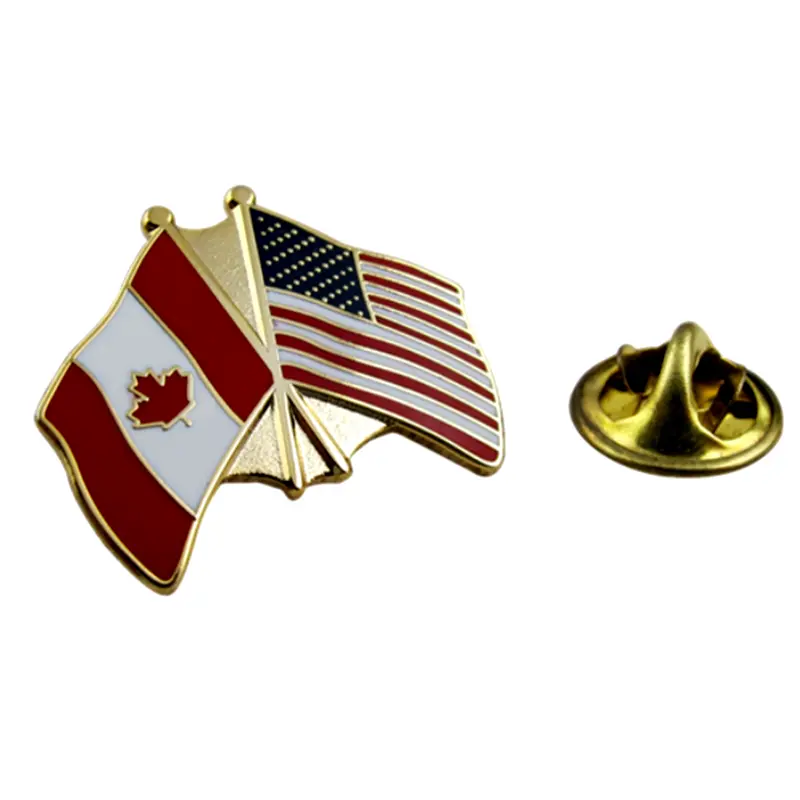
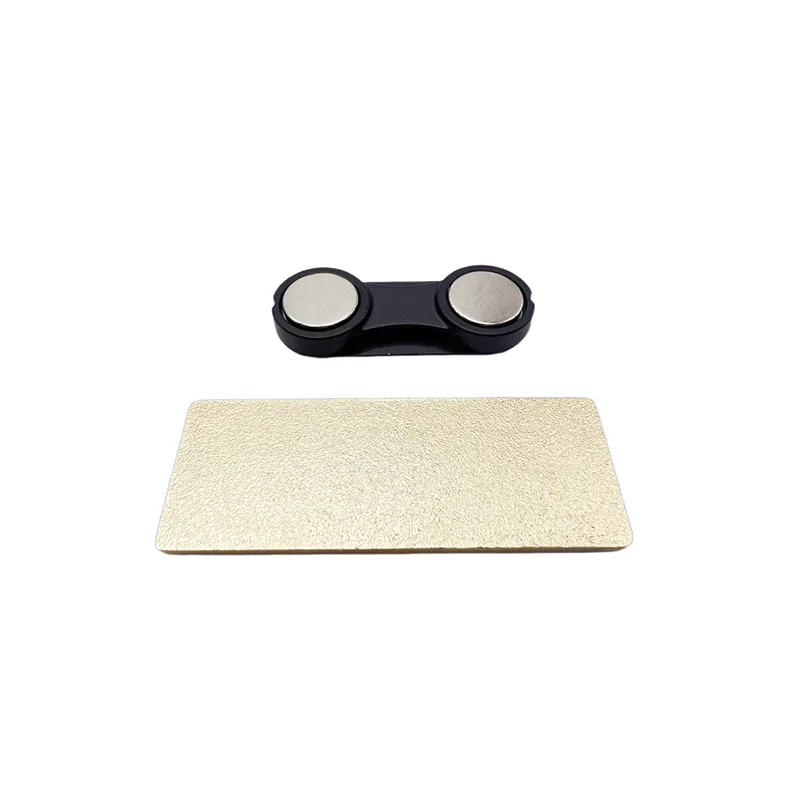
A lapel pin is a small decorative pin worn on clothing, usually on the lapel of a jacket or blazer. In a purchase order, the term should also describe the body and the attachment: a metal pin with a post and a clutch, a magnet, or a safety pin. That second part matters. Two pins can look the same in a photo and behave differently on a uniform. In plain English, the lapel pin meaning is a small worn pin that signals identity, membership, or recognition.
Most of the pins we quote fall between 15 mm and 60 mm along the longest side. One inch, or 25.4 mm, is the most common size for a worn pin. Thickness usually runs from 1.5 mm to 5 mm. The standard back is a butterfly clutch with an 11 mm base. Rubber clutches, magnetic backs, safety pins and screw-and-nut backs are also available.
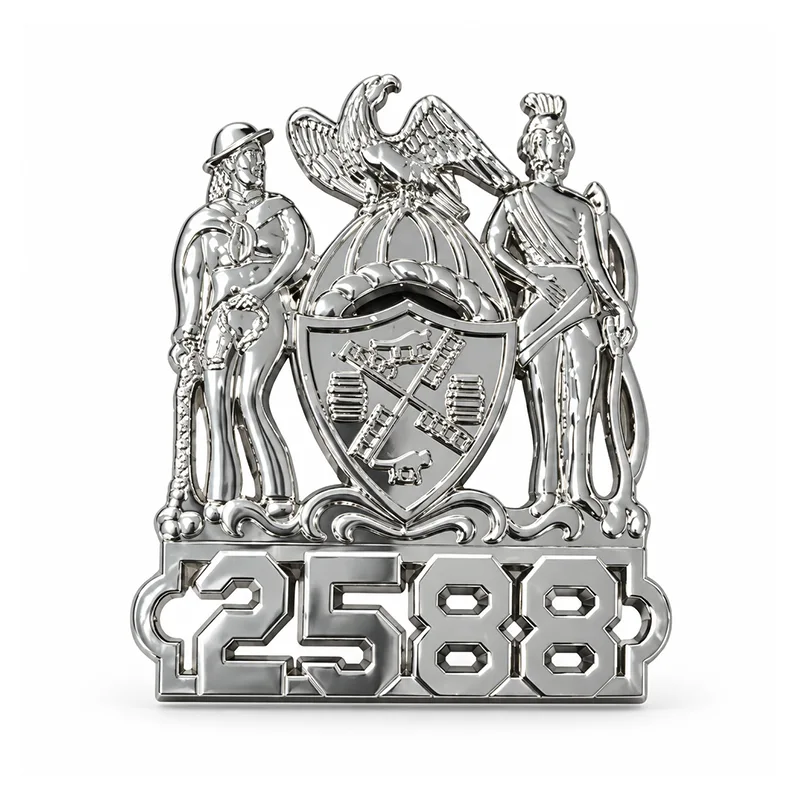
The word is often stretched to cover things it should not. A name badge is not a lapel pin. An ID badge is not a lapel pin. A brooch is jewelry, not a trade pin. A tin button is a printed button, not a metal pin. A display frame or rack is an accessory, not the pin itself.
What a Lapel Pin Is Used For
Brands use lapel pins to mark a launch, a milestone, or a team identity. Associations use them for membership. Event teams use them as a keepsake or a staff marker. Employers use them in recognition programs. Distributors buy them in bulk for resale or for client programs. The common thread is a small worn object that carries a logo or a symbol. For the full product range, see custom lapel pins.
How the Same Pin Is Named in Different Markets
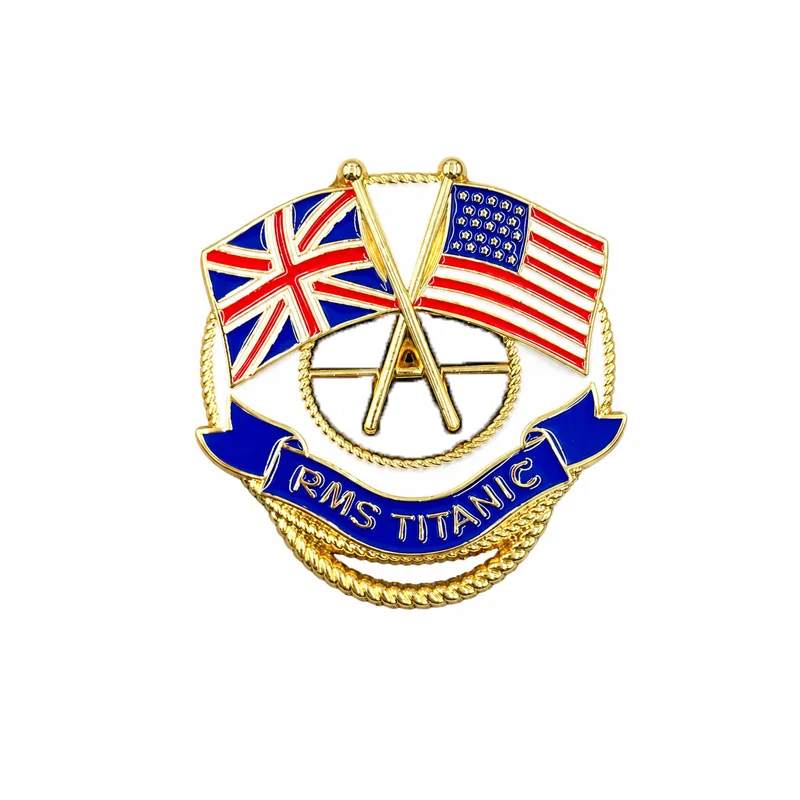
The same pin can be called a lapel pin in the US, a pin badge in the UK, and a badge in Australia. The name changes what a supplier thinks you want. A short brief with the wrong word can send the quote toward a different size, backing, or production route.
| Market | Common term | What it usually signals | Useful RFQ wording |
|---|---|---|---|
| United States | Lapel pin | Small worn pin, often enamel or die struck | 1-inch lapel pin, soft enamel, butterfly clutch, 100 pcs |
| United Kingdom | Pin badge or badge | Small pin badge; badge can also mean a larger ID badge | 25 mm pin badge, soft enamel, butterfly clutch |
| Australia and New Zealand | Badge | Small pin badge; lapel pin is understood | 25 mm badge, soft enamel, butterfly clutch |
| Trade and wholesale | Enamel pin, custom pin, die struck pin | Construction terms, not product categories | Custom enamel pin, 1 inch, 100 pcs |
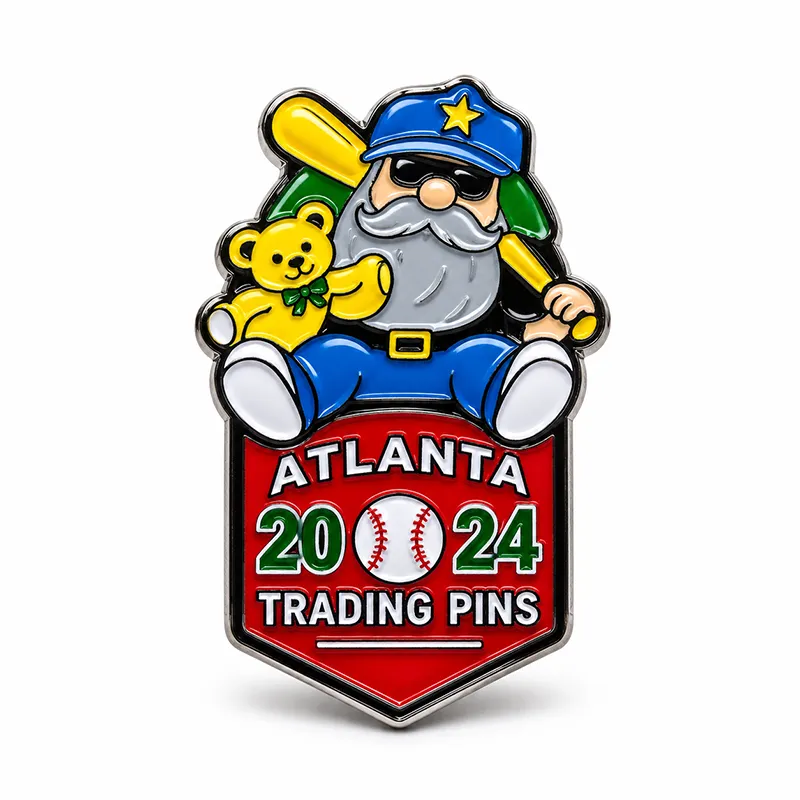
If you ask for a badge in the UK, a supplier may quote a larger ID badge or a name badge. If you ask for a pin in the US, you may get a lapel pin or a trading pin. The fix is simple: put the size in both units, name the attachment, and name the finish. A line like “1-inch (25 mm) lapel pin, soft enamel, butterfly clutch” removes most of the ambiguity.
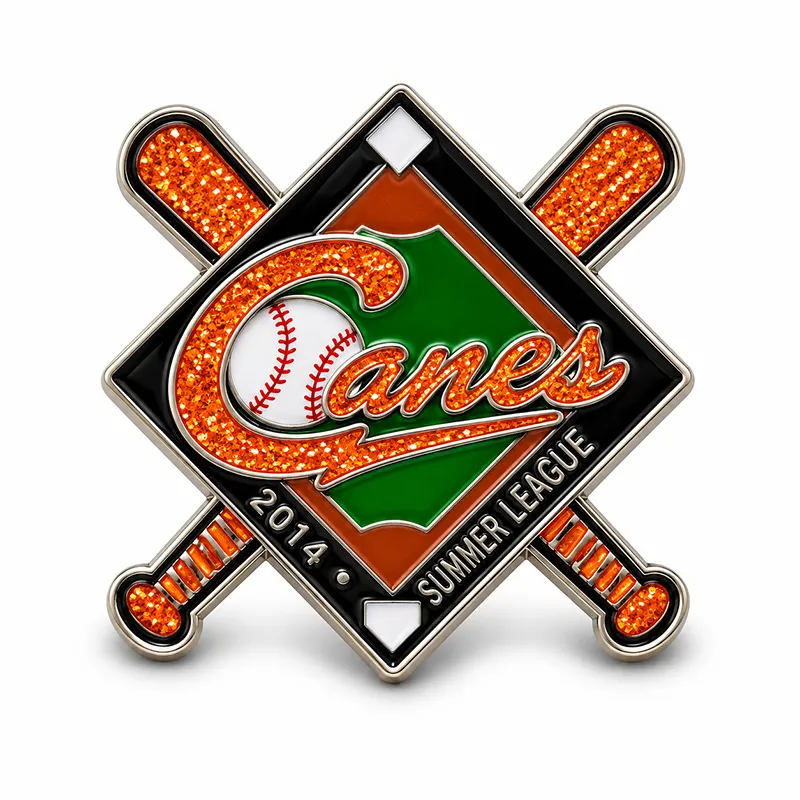
In trade quotes, enamel pin and custom pin are construction words. They tell the supplier the face is color-filled, not printed or bare metal. They do not tell the supplier the size or the backing. For badge formats, see custom badges.

What Each Word Means in a Purchase Brief
Four words do most of the work in a first email. Each one points a supplier toward a different default. Buyers use them as synonyms; suppliers read them as specifications.
| Word | What it usually means | What it implies for the order | Use it when |
|---|---|---|---|
| Lapel pin | A small worn pin with a metal body and a clutch, magnet or safety pin | Default size around one inch; worn on a jacket, uniform or lanyard | You need a small decorative or recognition pin |
| Enamel pin | A metal pin with color-filled recesses | A construction description, not a separate product category | The color fill matters more than the size or backing |
| Badge | A broad term for a worn or identification piece | Can mean a pin badge, name badge, ID badge or police badge; often larger and more functional | You mean a badge format, not a one-inch worn pin |
| Brooch | A decorative jewelry piece | Usually larger, with a bar pin or safety catch; fashion rather than corporate | You want a jewelry-style piece, not a trade pin |
Enamel pin is not the opposite of lapel pin. It describes how the face is colored. A lapel pin can be enamel, printed, die struck, or bare metal. An enamel pin is usually a lapel pin, but the word does not give the size or backing.
Badge is the widest word in the group. In the US, it can mean a pin badge, a name badge, an ID badge, or a police badge. In the UK, it often means a small pin badge. Brooch is jewelry language. It usually implies a larger decorative piece with a different attachment.
Use lapel pin when you mean a small worn pin. Use enamel pin when the color fill matters. Use badge only when you mean a badge format. Use brooch only when you mean jewelry. For the color-filled route, see custom enamel lapel pins. For full-color artwork without metal borders, see custom printed lapel pins.
Five Words That Mean Something Different to a Supplier
Most first-order disputes start with a word both sides thought they understood. These five change the tooling, the finish, or the approval step.
| Buyer says | Supplier hears | Say this instead | Why it matters |
|---|---|---|---|
| The short market term for a smooth finish | A production tier the supplier may or may not run | Imitation hard enamel (Epola), polished and leveled | The short term can promise a process the factory does not run |
| 3D | Die-cast geometry with curved relief | 3D die cast, or die struck with a flat wall | Tooling and price differ |
| Double-sided | Two different faces, or a two-sided print | Same design on both faces, or two-sided print front and back | Alignment and price change |
| Gold | A color family, not a specific finish | Shiny gold, antique gold, or matte gold | Silver and matt silver are different finishes; the name must be written |
| Sample | A concept sample, or a pre-production sample | Pre-production sample for approval, or concept sample | Approval, cost and lead time differ |
Here is the term that causes the most rework. A buyer asks for the smooth, polished finish using the two-word market term. In our plant, that finish is imitation hard enamel, or Epola. True cloisonné is fired at 750-850°C; we do not produce it. Imitation hard enamel is built by filling the recess, curing, then grinding and polishing the surface flat. If the brief uses the short term without the qualifier, a supplier may quote a finish you did not intend, or promise a process they do not run. Write “imitation hard enamel, polished and leveled” and the quote becomes comparable.
3D is a die-cast geometry with curved relief. Die struck is a flat-wall stamping. The same artwork cannot always be both. If your design needs rounded volume, say 3D die cast. If it needs crisp flat metal lines, say die struck. For the stamped route, see die struck lapel pins. For the cast route, see custom die cast lapel pins.
Gold is a color family, not a finish. Shiny gold, antique gold and matte gold are different plating finishes. Write the finish name and attach a reference. For the full range, see plating options.
A concept sample shows the idea. A pre-production sample is made from the production tooling and approved before the bulk run. Say which one you are approving. For artwork and proofing, see custom artwork service.
Naming Mistakes That Delay a First Order
The mistakes are predictable. They show up in the first email, not on the production floor. Each one below can add a sample cycle: a sample runs 7-10 days, and bulk production runs 15-18 days after approval. A wrong word is cheaper to fix than a wrong tool.
- Using the short market term for a smooth finish. The buyer expects a flat, polished surface. The supplier may quote a different tier, or promise a process the factory does not run. Say “imitation hard enamel, polished and leveled.”
- Saying badge for a one-inch worn pin. The supplier may quote a larger ID badge or a name badge. Say “lapel pin, 1 inch, butterfly clutch.”
- Saying 3D for flat artwork. The supplier may plan for a cast tool when the design is a flat stamp. Say “die struck” or “3D die cast,” and send the artwork with the brief.
- Saying gold without a finish. The supplier has to guess between shiny, antique and matte. The result can be a color mismatch that only shows up after plating. Say “shiny gold,” “antique gold,” or “matte gold,” and attach a reference.
- Saying same as last time without a signed sample. The old run may have used a different plating batch or a different color reference. Say “match the approved pre-production sample and the Pantone reference on file.”
A written brief is the difference between a quote you can compare and a quote you have to re-explain. If the artwork is not production-ready, the custom artwork service can convert it before tooling. The quality control process is the next checkpoint.
A Short Glossary for the First Quote
A quote is easier to read when the words are defined. These are the terms that appear most often in a first quote; each definition is a working meaning, not a full process guide.
| Term | What it means in a quote |
|---|---|
| Lapel pin | A small decorative pin worn on clothing, usually with a metal body and a clutch. |
| Badge | A broad term for a worn or identification piece; can be a pin, name or ID badge. |
| Enamel pin | A metal pin with color-filled recesses; a construction description, not a category. |
| Soft enamel | Color sits below the metal borders; the surface has a textured, tactile feel. |
| Imitation hard enamel (Epola) | Color filled, cured, ground and polished flat; a smooth surface, not cloisonné. |
| Die struck | Stamped from sheet metal; flat-walled shallow relief, not 3D. |
| Die cast | Molten zinc alloy cast in a mold; can hold curved relief. |
| Plating | The metal finish, such as shiny, antique or matte gold or silver. |
| Recess | The lowered area that holds enamel, print or another fill. |
| Butterfly clutch | The standard 11 mm metal back with two prongs that squeeze to release. |
| Rubber clutch | A rubber back with a softer hold; common on everyday pins. |
| Backing card | A printed card the pin is mounted on for retail, gifting or sorting. |
| MOQ | Minimum order quantity; 100 pcs per design at Badge Artisans. |
| Pre-production sample | A sample made from production tooling and approved before the bulk run. |
| Lead time | Production time after approval; sample 7-10 days, bulk 15-18 days. |
For the finish and material terms behind these definitions, see plating options. For backing cards and retail presentation, see packaging options.
Frequently Asked Questions About Lapel Pins
Related reading: Custom Lapel Pins · Custom Enamel Lapel Pins · Custom Artwork Service

Recent Post
No posts